The Myth of Objectivity: How Press Photography Produces Reality
A photograph can be factually authentic and still organize the world through captions, crops, assignments and repetition. Objectivity becomes credible only when journalism accounts for the decisions that turn an encounter into evidence and evidence into social identity.
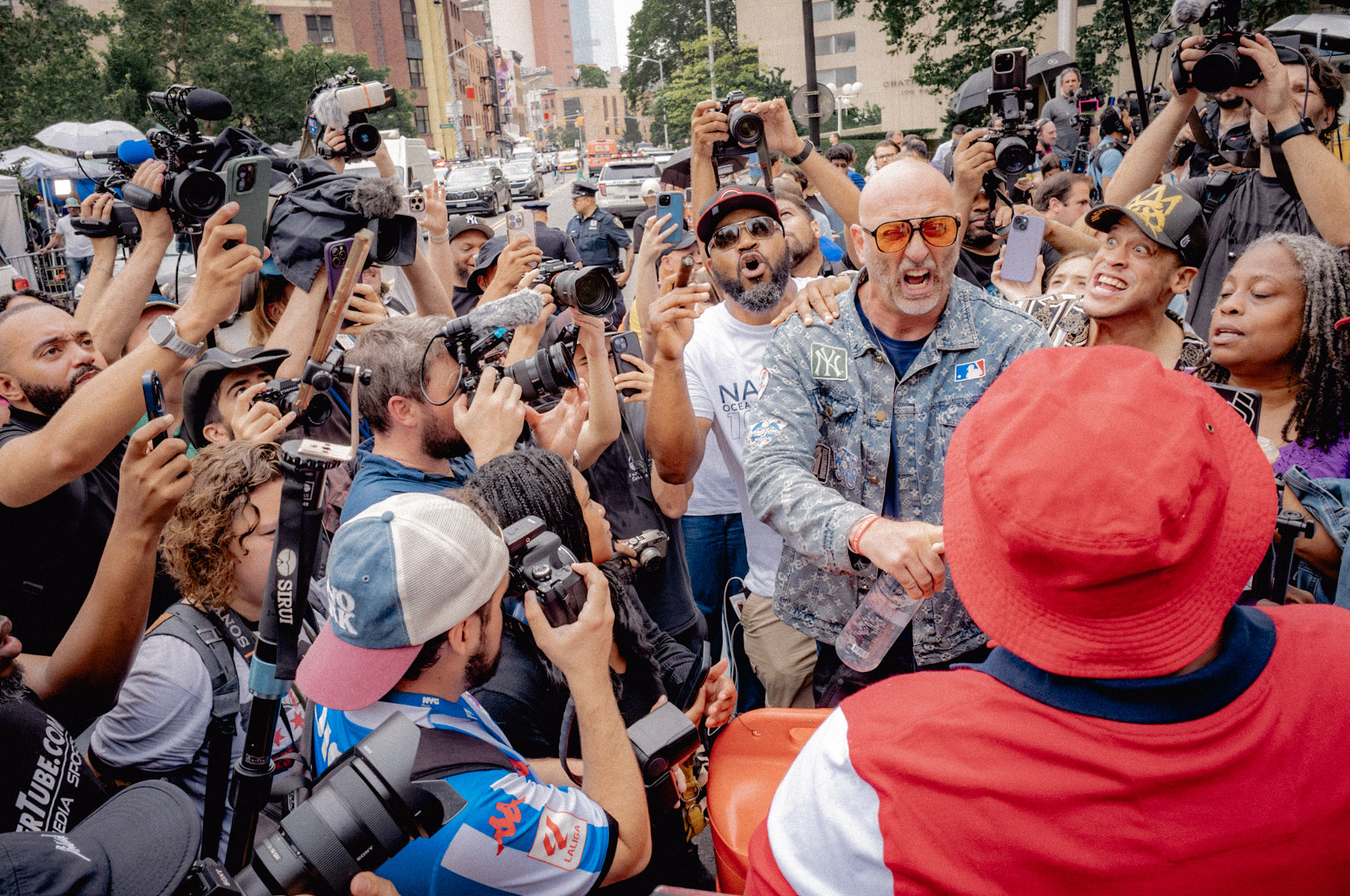
In the aftermath of Hurricane Katrina, two wire photographs appeared beside one another online. Dave Martin’s Associated Press photograph showed a young Black man wading through chest-deep water with food and soft drinks. The caption said he had been “looting a grocery store.” Chris Graythen’s photograph for Getty Images, distributed by Agence France-Presse, showed two white residents carrying bread and soda through the same flooded city. They had been “finding” them.
The comparison travelled because it seemed to expose the entire racial politics of news photography in two verbs. The Black subject looted. The white subjects found. Yet the production histories were not identical. The Associated Press said Martin had watched the man enter the store and take the goods. In a follow-up account, Graythen said the food near his subjects was floating away from a flooded grocery store. Those distinctions matter. Ignoring them would turn a critique of journalistic simplification into another simplification.
They do not settle the question, either. In the side-by-side comparison, a Black man was named as a looter while two white residents were described as finding what they needed. The captions did more than report how the food changed hands. They placed each person inside a moral and civic category.
The photographs were authentic. The flood happened. The people stood before the cameras. The food was in their hands. The instability entered elsewhere: in the words attached to the pictures, the institutional procedures that authorized those words and the older racial narratives that made one description feel natural beside one body and less natural beside another.
Press photography produces reality through this conversion. It turns visible actions into public identities, then presents those identities with the authority of evidence. The work is distributed across assignments, access, framing, captions, crops, layouts, archives and repetition. Objectivity becomes misleading when that production chain disappears and the institution’s account begins to look as though it came directly from the world.
I. What the Caption Adds
Treating a caption as a label attached to meaning already present misses what captions do. A caption narrows the field. A photograph may show a person carrying food through floodwater. The caption directs the viewer toward theft, survival, disorder, necessity or residence. It does not invent the visible action, but it tells the action what kind of social fact it will become.
Stuart Hall’s account of representation is useful because it treats meaning as something produced through shared codes rather than discovered intact inside an image. “Looter” was not waiting in Martin’s photograph for a careful viewer to retrieve it. The word drew on legal, racial and moral distinctions that already organized how the scene could be understood.
The procedural defense of the captions explains why each agency used the language it did. It cannot control what happened when the photographs circulated together. The public comparison stripped away most of the qualifying context and left two institutional descriptions beside two differently racialized bodies. One subject entered the story through criminality. The others remained residents acting under emergency conditions.
Ideology can work at this ordinary level. It does not require a fabricated photograph or an editor privately announcing a racist intention. It can operate through the categories a newsroom regards as accurate, the distinctions a caption writer inherits and the explanations an audience has already learned to recognize. Objectivity intensifies the effect when it makes classification look like neutral naming.
II. The Photograph Leaves the Camera Unfinished
My journalism training taught me to begin with the photographer’s conduct. Was the scene staged? Was the file altered? Is the caption accurate? Were the subjects identified honestly? Those questions remain necessary. They also create a convenient boundary around the individual image, as though the photograph reaches the public in the same form and with the same meaning that it had at the moment of exposure.
It does not. An assignment desk decides which conditions deserve attention. Access determines where a photographer can stand. The photographer selects an instant. An editor chooses a frame, confirms or changes the caption and places the picture beneath a headline. A page gives it scale. A wire service, search engine or social platform determines how often it returns and what new claims gather around it.
No participant controls the whole process. That does not make the result authorless. It means authorship is distributed across a chain whose separate decisions disappear from the published image.
Gaye Tuchman described journalistic objectivity as a “strategic ritual”: a set of professional procedures through which journalists defend their work against deadlines, criticism, legal risk and organizational pressure. The procedures can protect reporting from arbitrary interference. They can also allow a judgment made inside a newsroom to appear as though the event itself supplied it.
Louise Grayson’s research on editorial photography places similar pressure on the finished frame. Assignment, access, time, selection, editing and publication continue to shape an image after the shutter has closed. The viewer sees the result, not the negotiations that produced it.
Objectivity therefore does not remove authorship. At its weakest, it conceals where authorship has been exercised. The newsroom makes a series of situated decisions and releases the result under the sign of evidence.
III. How an Archive Learns a Type
The ideological force of press photography need not depend on one picture. It accumulates across assignments and years. A single photograph of a man sleeping on a sidewalk may be accurate, relevant and ethically defensible. A thousand photographs organized around the same figure begin to teach the public what homelessness looks like.
The pattern can hide behind the authenticity of each file. Every person pictured was present. Every sidewalk existed. Yet the archive may still narrow a varied social condition into an isolated adult man occupying public space. Families, children, workers, people in temporary accommodation and the policies that structure housing insecurity do not have to be explicitly denied. They only have to remain less photographically available.
Once a visual type becomes familiar, it begins to influence future production. Editors know which pictures communicate quickly. Photographers learn which scenes are likely to be selected. Audiences recognize what previous coverage has trained them to see. The archive preserves the pattern and sends it back into the next assignment as an expectation.
The problem is not that repetition makes every photograph false. Repetition gives one partial account the stability of a general truth.
IV. What I Found in the Homelessness Coverage
I encountered this pattern while completing my 2016 Master of Journalism thesis at Monash University, Visual Representations of Homelessness in Press Photography: Ethical Consequences. I examined six months of online coverage in The New York Times and the New York Post, indexing 337 images across 182 articles. I coded the visual relationships within the photographs, traced their sources and compared the people pictured with the New York City shelter-population benchmark used in the study.
The scope matters. I was not measuring every form of homelessness in New York, and shelter data could not describe the entire unhoused population. The comparison was narrower: did the people repeatedly shown by these two newspapers resemble the population their coverage most often claimed to describe?
They did not. Families with children constituted 70.06 percent of the shelter-population benchmark but were nearly absent from the photographs. Minors made up 40.52 percent of that population and only 2.19 percent of the pictured subjects. Adult men dominated the coverage, accounting for 70.80 percent of the people shown even though single adult men represented 15.85 percent of the benchmark.
The racial distribution shifted as well. Hispanic and Latino people constituted between 26.6 and 37.3 percent of the relevant shelter cohorts but only 6.93 percent of pictured subjects. White people were substantially overrepresented. Black New Yorkers remained the group pictured most often, although their share of the images still fell below the shelter data. Counting alone could not explain the ethics of the coverage, but it revealed who had been made easy to imagine and who had not.
The visual roles were even more consistent. Across both publications, 78.47 percent of subjects appeared at an impersonal distance. None appeared at an intimate distance. Most did not look toward the camera and were offered to the viewer for appraisal rather than presented as people returning the gaze. In my coding, 84.31 percent appeared socially incohesive: disorderly, disruptive or requiring control. Another 93.07 percent were framed as receiving from society rather than contributing to it.
The sourcing patterns helped explain the difference between the two papers. The New York Times obtained 84.03 percent of its images from staff photographers. Its coverage was still selective, but it was more varied and more likely to place people within reported human-interest narratives. The New York Post obtained 65.35 percent from freelancers and only 8.77 percent from staff photographers. Its recurring image was more often an isolated adult man photographed at a distance in public space.
I did not need to infer the private beliefs of individual photographers. The pattern existed at the level of the published archive. Selection, distance, sourcing and repetition turned homelessness into an adult male condition associated with dependency and disorder, while family life, labor, rent, shelter policy and ordinary social participation receded.
Each photograph could remain factually authentic. Together, they produced a social type.
V. What a Crop Removes
Institutions also produce visual categories through the people they treat as removable. In 2020, the Associated Press supplied a literal example when Ugandan climate activist Vanessa Nakate was cropped from a photograph made at Davos. Four white European activists remained. Nakate, the only Black person in the original group, disappeared from the published frame.
The Associated Press apologized and called the crop an error in judgment. The photographer initially gave a compositional explanation: the tighter image centered Greta Thunberg and removed a distracting building. That explanation should not be dismissed. It identifies the mechanism. A familiar editorial preference for a cleaner composition made one person easier to sacrifice than the others.
The crop does not prove that the photographer consciously set out to produce a racial hierarchy. Intention is not the only place where the hierarchy can operate. The published frame preserved a recognizable picture of climate authority as white and European by removing the person who interrupted it.
Nakate could challenge the decision because the uncropped photograph survived and the omission became visible. Most exclusions leave no before-and-after comparison. The family never assigned, the child never selected, the worker never recognized as homeless and the person who does not fit an established visual type remain absent without appearing to have been removed.
An omission is not empty space beyond representation. It helps the surviving picture cohere.
VI. Evidence Does Not Name Itself
Photography’s evidentiary force remains real. Someone stood before the camera. A scene occurred. Light registered an encounter. That physical relation matters, particularly now that synthetic images can imitate the appearance of documentary evidence.
Evidence cannot determine by itself what kind of person the camera recorded or what social meaning an event should carry. A photograph may establish that someone moved through floodwater holding food. It cannot, without language and context, decide whether the person was a criminal, a survivor, a resident abandoned by the state or an emblem of social collapse.
The decisive change occurs when an institutional description becomes repeatable. A caption assigns a category. A newsroom validates it. An archive gives it duration. An audience learns to recognize it. The classification then returns as common sense, already available to organize the next photograph.
Accountability therefore has to extend beyond pixel integrity and individual intention. A newsroom should be able to explain where a caption came from, why a crop was made, whose testimony informed the description, what patterns have accumulated across its archive and which people its assignments repeatedly fail to see. These questions do not weaken factual reporting. They make the institution responsible for the form in which its facts become public.
The man carrying food through Katrina remains more than the word looter. The two residents remain more than the word finding. Criticizing the captions cannot recover their whole lives, and replacing one fixed category with another would reproduce the same mistake.
The camera records an encounter. Journalism gives that encounter a public grammar. Objectivity begins to mean something only when the institution accepts responsibility for the grammar it supplies.
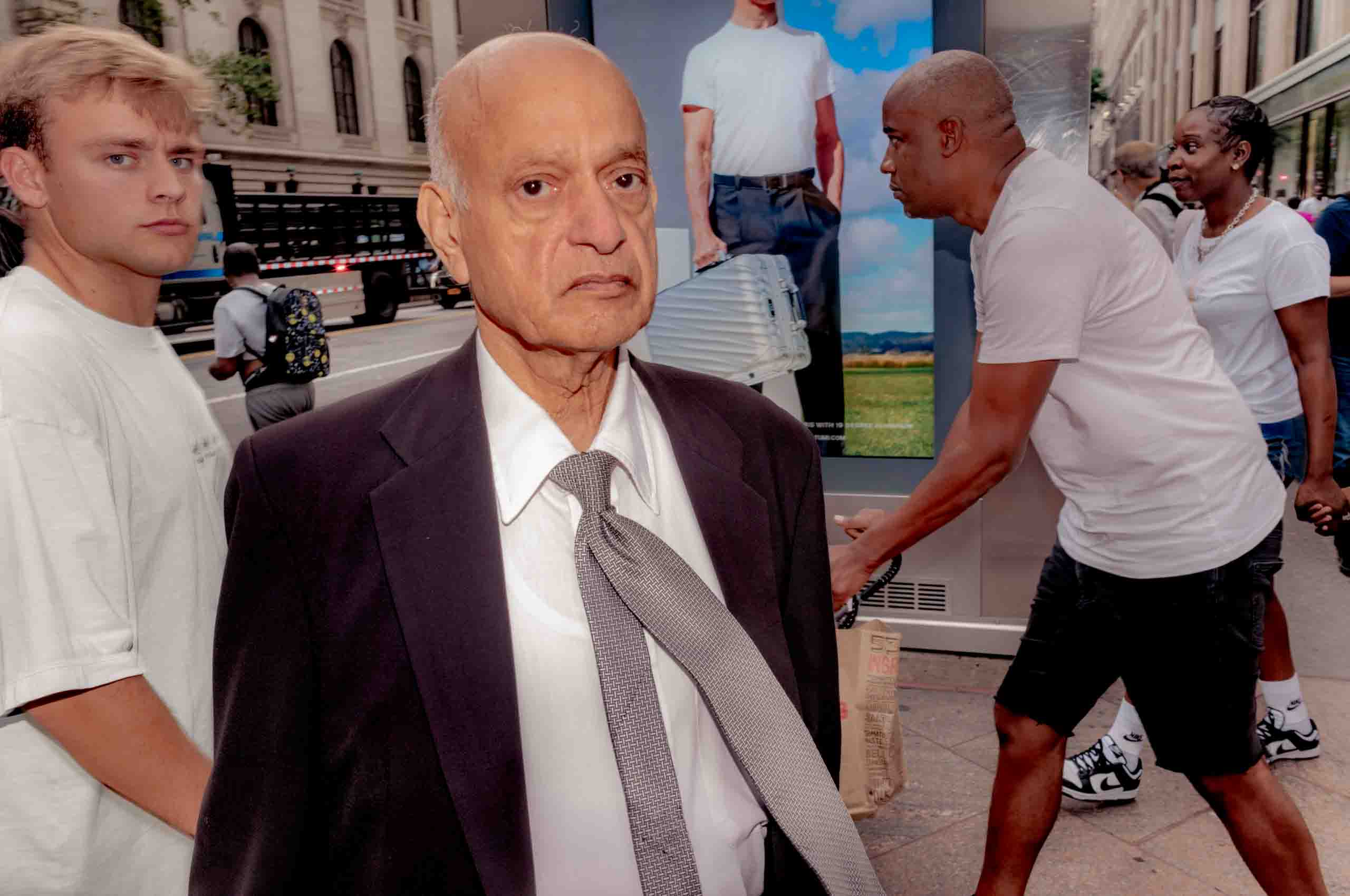
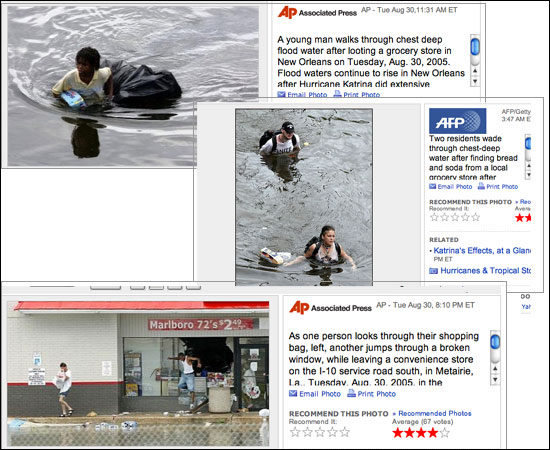
I photographed this machinery assembling itself outside two courthouses: Sean ‘P Diddy’ Combs Trial and Free Luigi Mangione.
Works Cited & Further Reading
Sources that support the essay’s historical, theoretical and empirical claims.
- Grayson, Louise. “Editorial Photographs and Patterns of Practice.” Journalism Practice 7, no. 3 (2013): 314–328.
- Hall, Stuart, ed. Representation: Cultural Representations and Signifying Practices. Sage/Open University, 1997.
- Inglis, Adam. Visual Representations of Homelessness in Press Photography: Ethical Consequences. Master of Journalism thesis, Monash University, 2016. Public thesis link pending.
- Kinney, Aaron. “‘Looting’ or ‘finding’?” Salon, September 2, 2005.
- Kinney, Aaron. “Some ‘looting’ vs. ‘finding’ answers found.” Salon, September 2, 2005.
- Tuchman, Gaye. “Objectivity as Strategic Ritual: An Examination of Newsmen’s Notions of Objectivity.” American Journal of Sociology 77, no. 4 (1972): 660–679.
- Bauder, David. “Photo Cropping Mistake Leads to AP Soul-Searching on Race.” The Associated Press, January 27, 2020.