How Photography Became Art—and Who Got to Decide
The camera made authorship difficult to see. Courts, critics and museums responded by treating pose, timing, printing and selection as evidence of an artist. Their answer admitted photography into art while leaving most ordinary photographs outside the story.
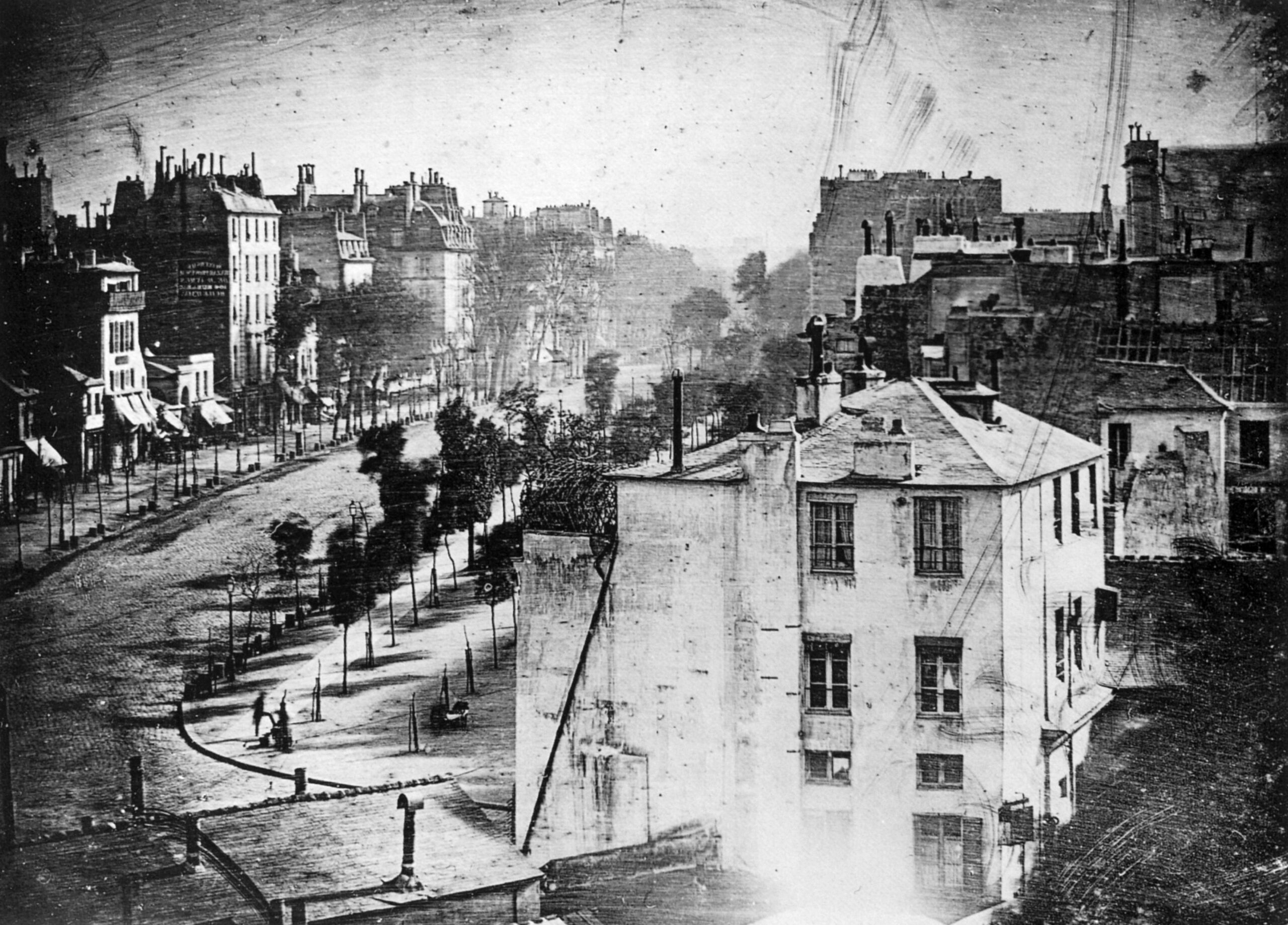
The Boulevard du Temple is crowded with buildings and almost empty of people. In Louis Daguerre’s 1838 plate, roofs, windows, bare trees and paving stones hold their shape. The carriages and pedestrians that moved through the exposure have slipped away. At the lower left, one man rests a foot on a bootblack’s stand while the person polishing it bends towards the ground.
Daguerre had not selected those two figures as subjects. They survived because, for part of the exposure, they stopped moving. The camera kept their pause and erased most of the street around it.
Long exposure helped turn their accidental stillness into part of the photograph’s legend. To describe early photography as the world drawing itself with light places agency in nature rather than the operator. But Paris did not arrive on a plate without intervention. Daguerre selected the window and the angle, prepared the surface, opened the lens and waited. The exposure favoured stone over movement. Later captions taught viewers where to look. Museums and histories eventually made the image one of photography’s founding objects (opens in a new tab).
What survives on the plate is therefore more than a boulevard. Viewpoint, exposure, chemistry and later interpretation all helped decide what the street would become in the image.
Once photography entered arguments about art, authorship became the harder problem. A machine could register extraordinary detail, but where was the author? Courts, critics, photographers, dealers and museums answered by locating intention around the apparatus: in staging, selection, timing, printing, sequencing and display. Their answer gave photography an artist and the medium a canon.
A canon emerged from those answers. It preserved extraordinary work without preserving photography whole.
I. The Camera Arrived Already Entangled
Daguerre came to photography through theatre. His Diorama used enormous painted scenes and changing light to make architecture appear to shift before an audience. The camera did not carry him from art into science along a clean line. It joined two practices he already understood: staging an illusion and controlling light.
Niépce, Talbot and Herschel were just as difficult to classify. Nicéphore Niépce approached the problem through printmaking and light-sensitive surfaces. William Henry Fox Talbot moved between drawing, mathematics, languages and botany. John Herschel worked in astronomy and chemistry. The neat division between artist and technician belongs more to the histories written afterwards than to photography’s formative years (opens in a new tab).
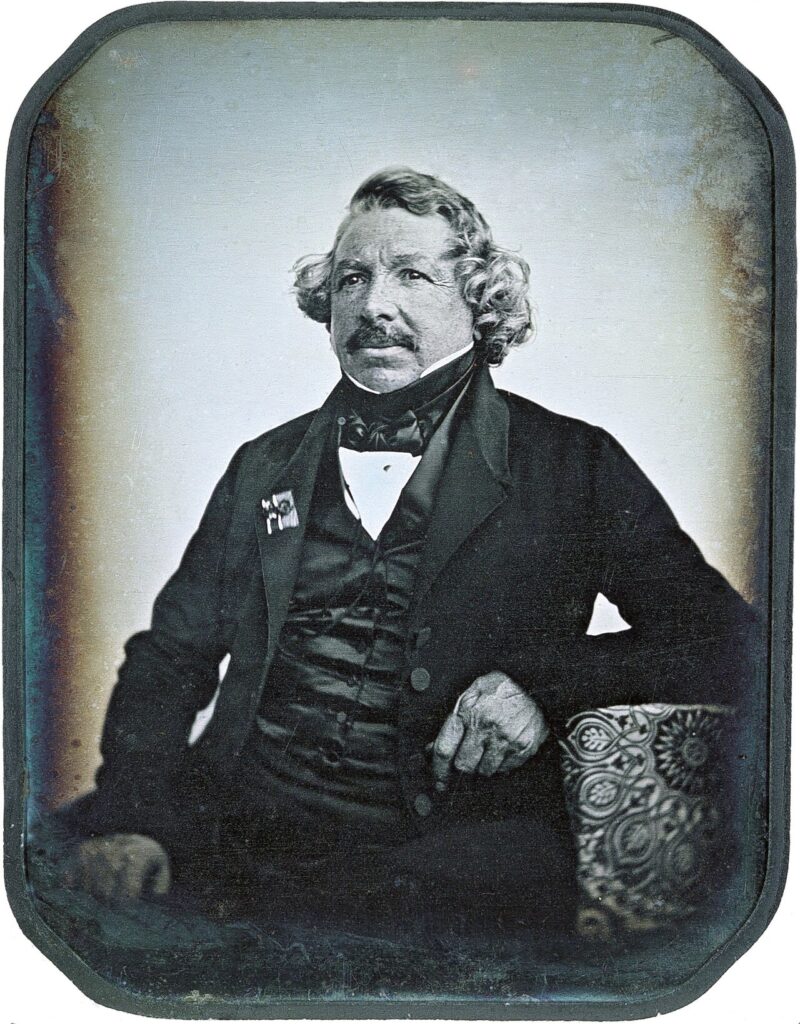
When Daguerre’s process was presented to the Académie des Sciences in Paris on January 7, 1839, the audience encountered an invention, an instrument, a spectacle and an image at the same time. Its astonishing detail seemed to exceed the hand, making the process useful to science while leaving its claim to art difficult to place.
Anna Atkins worked without a camera. She laid algae directly on sensitised paper and exposed it to light. The specimen touched the surface; its outline remained white against Prussian blue. A botanist could use the result to identify form. A viewer could also attend to the spacing of each stem, the density of the blue and the strange delicacy produced by contact.
Her photographic books (opens in a new tab) did not have to choose between evidence and image. They could perform both jobs.
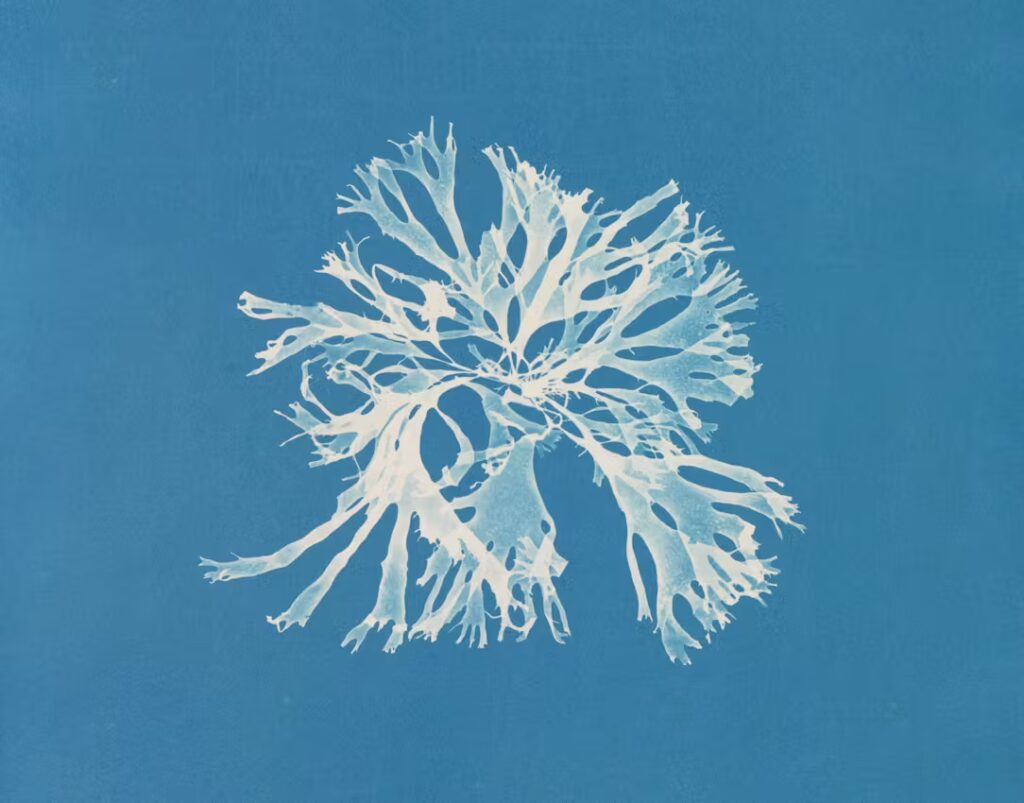
Later, rare-book collections and art museums changed the terms under which Atkins’s cyanotypes were seen. The botanical information remained, while the institution around each object invited another kind of attention.
Photography had several identities before anyone insisted that it needed one.
II. Where Does the Author Go?
A painting advertised the hand that made it. A photograph concealed much of its labour behind a lens, a prepared surface and an exposure. Light performed the visible inscription. The operator could appear to have done little more than allow it.
Photography made the division of labour conspicuous. Human agency had not vanished; it had been spread among the operator, the apparatus, the chemistry and whatever stood before the lens. Nineteenth-century criticism struggled with that arrangement because inherited ideas of art expected an author whose touch could be seen.
Elizabeth Eastlake’s 1857 essay (opens in a new tab) gave the sun a strangely active role, as if nature had become the draughtsman. She admired photography’s precision and usefulness while drawing limits around its artistic authority. The distinction was less a verdict on every photograph than an attempt to decide where this new object belonged.
Law had to make the problem practical. In 1884, the United States Supreme Court considered whether Napoleon Sarony’s portrait of Oscar Wilde could be protected by copyright. Sarony had arranged the pose, costume, accessories, light and expression. The camera registered the scene, but Sarony had organised what the camera would receive.
In Burrow-Giles Lithographic Company v. Sarony (opens in a new tab), the Court accepted the portrait as the product of an original intellectual conception. It found the author not inside the mechanism but in the decisions surrounding it.
By recognising arrangement, direction and control, the Court made photographic authorship legible. Its solution favoured photographs in which those acts resembled the organisation of a painting or theatrical set.
A studio portrait made the argument easy. An anonymous snapshot, a scientific plate, a police file or a photograph produced by several workers did not. The law had not uncovered the natural location of the photographic author. It had drawn a perimeter around the forms of intention it was prepared to recognise.
III. Pictorialism Makes the Labour Visible
Edward Steichen’s The Flatiron (opens in a new tab) refuses the look of an impersonal record. The building rises through damp blue-grey air. Branches interrupt its outline. Figures and carriages darken the street below. The city is recognisable, but the print feels worked over rather than taken.
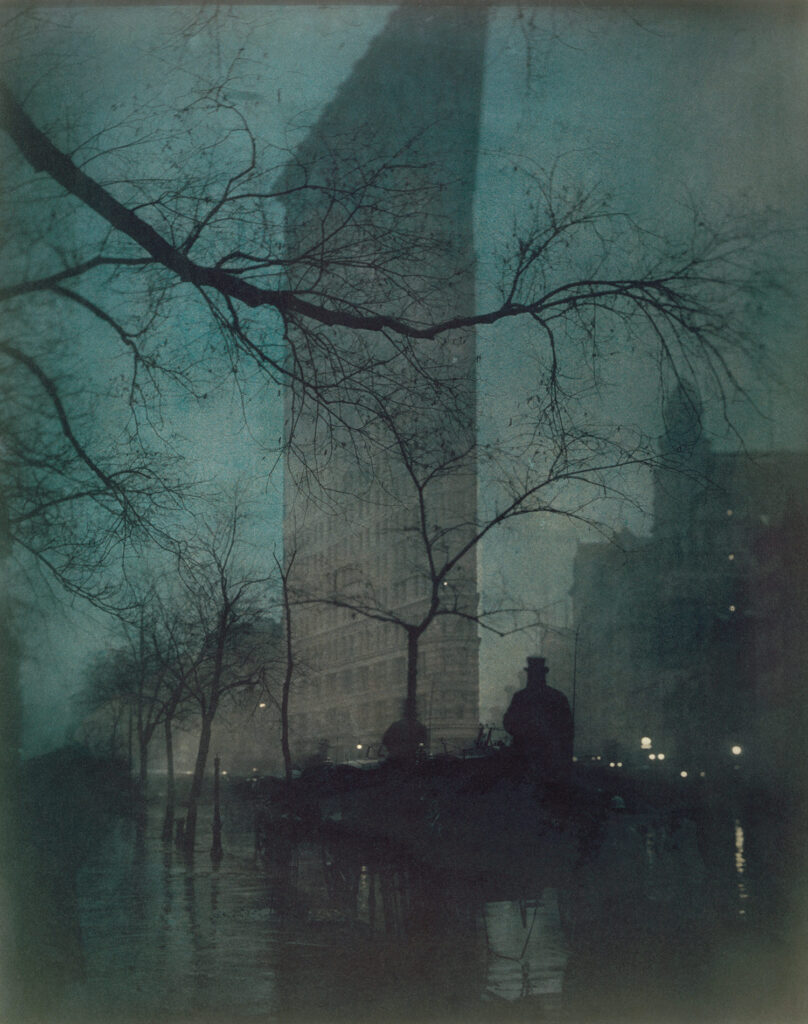
Pictorialist photographers softened focus, selected textured papers, layered processes and altered negatives and prints by hand. The resemblance to drawing or painting was deliberate, but imitation was only part of the strategy.
A negative could produce many photographs. Commerce depended on that repeatability. Handworked processes interrupted it. Two impressions made from the same negative could differ in colour, density and surface. The photographer’s decisions became visible in the object, and the object could be presented as singular rather than interchangeable.
Steichen printed the Flatiron in more than one form. The building stays put while the atmosphere changes. Variation is not an embarrassment to the photograph. It is the point. The print declares that description has passed through judgment.
Pictorialism also needed rooms, journals and people willing to argue over the work. Alfred Stieglitz’s Photo-Secession, Camera Work and the 291 gallery supplied a public in which a photograph could be reviewed, exhibited, collected and compared with other art. The Metropolitan Museum’s account of international Pictorialism (opens in a new tab) traces that network.
Painting offered more than a visual style. It offered a social model: the named maker, the rare object, the exhibition, the collector and the history of stylistic development. Pictorialists adapted that model to photography and made it persuasive.
Pictorialists built the conditions in which particular photographs could be treated as art. The category followed the rooms, objects and judgments assembled around the work.
IV. Straight Photography Writes Its Own Myth
By the early twentieth century, sharpness had changed sides. The blurred edge and worked surface that once signalled artistic intention began to look evasive. Precision, direct printing and descriptive clarity acquired the moral force of honesty.
Paul Strand’s photographs (opens in a new tab) became important to this turn, and Stieglitz promoted them through Camera Work and 291. A new history took shape around the idea that photography had finally stopped borrowing from painting and accepted the character of its own apparatus.
What makes the story attractive is the way it turns style into destiny. Softness becomes disguise; sharpness becomes truth.
But a sharply rendered photograph is no less constructed. Someone chooses the position, lens, exposure, moment, print, sequence and caption. Refusing visible handwork removes one set of marks. It does not remove mediation.
Straight photography moved the evidence of artistry away from the surface. The untouched-looking print asked the viewer to find mastery in seeing: in the photographer’s ability to recognise a form, organise a frame and release the shutter at the right instant.
Strand’s geometries, Edward Weston’s close descriptions and Ansel Adams’s landscapes expanded what a photograph could hold. Yet calling their style the apparatus speaking in its native tongue mistakes a powerful convention for a destiny.
Pictorialism left the photographer’s fingerprints on the print. Straight photography relocated the hand into an intelligence said to precede the exposure. Each made technical decisions serve as evidence of authorship.
Photography’s old apology did not disappear. It became harder to see.
V. The Museum Edits the History
In 1940, the Museum of Modern Art established a Department of Photography with a mandate to collect, exhibit and evaluate the medium. Photography now had a permanent room inside a major modern-art institution. It also had an editor.
A department edits history whenever it places one print beside another, names a movement, writes a wall label or decides which work to acquire. MoMA’s announcement (opens in a new tab) described an ambition to address photography’s past and present. Carrying out that ambition required choices about which past, which present and whose work could represent them.
Museum display could remove a photograph from the setting in which it first worked. A magazine picture lost its headline and neighbouring stories. A scientific image lost the experiment that gave it use. A commercial commission lost the client. On the wall, paper, tone, composition and authorship came forward.
On the museum wall, qualities ignored by the earlier context could surface. At the same time, editors, subjects, assignments, captions and original audiences could disappear from the account.
Named photographers and coherent bodies of work fitted the museum well. So did the carefully made print. A newspaper archive, police file, family album, medical image or colonial survey presented a less comfortable object. Such photographs could have several makers, practical purposes and institutional histories that resisted the fiction of a single autonomous vision.
Newspaper archives, police files and family albums remained part of photographic culture. Their exclusion gave art photography cleaner borders.
MoMA could therefore announce photography’s victory in terms it had helped write. Selected prints came to stand for the medium as a whole.
VI. Ordinary Pictures, Later
A carte de visite fits in the hand. The nineteenth-century portrait was mounted on card, inexpensive enough to circulate and small enough to collect in an album. Relatives could appear beside actors, politicians or royalty. The album made private attachment, celebrity and commerce share the same page.
Studios repeated poses and formats because repetition made the pictures useful. A sitter could send a recognisable self through the post, trade it with friends or place it among the people whose images mattered. The Metropolitan Museum discusses this traffic of photographs and printed ephemera through the Jefferson R. Burdick Collection (opens in a new tab).
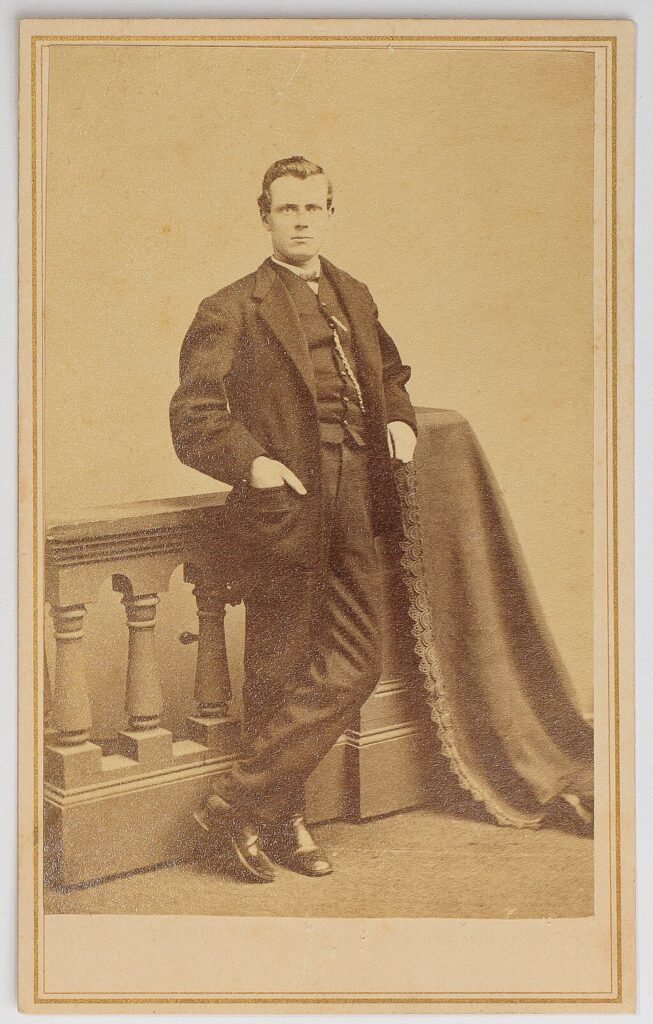
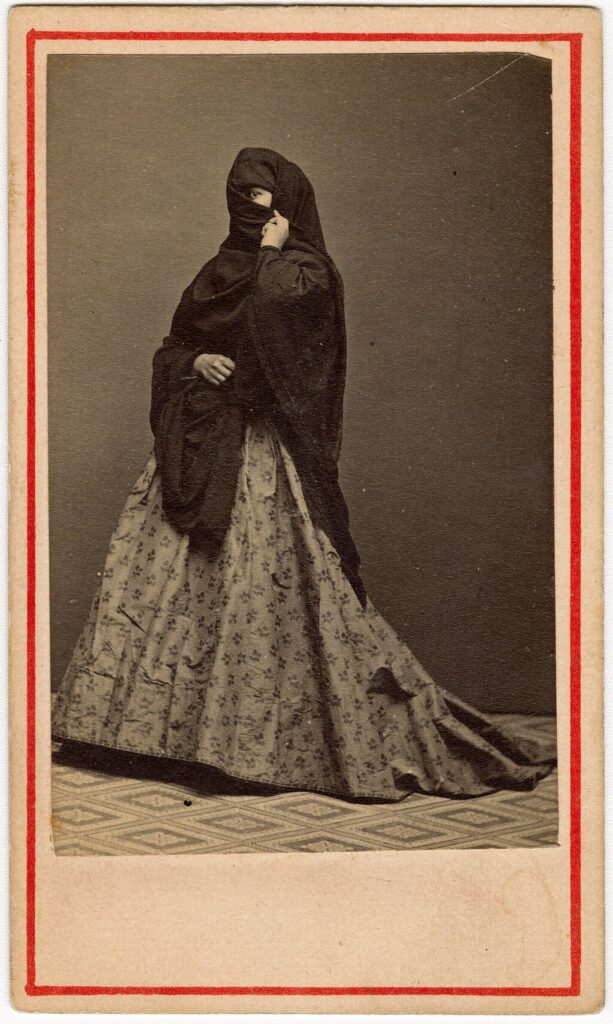
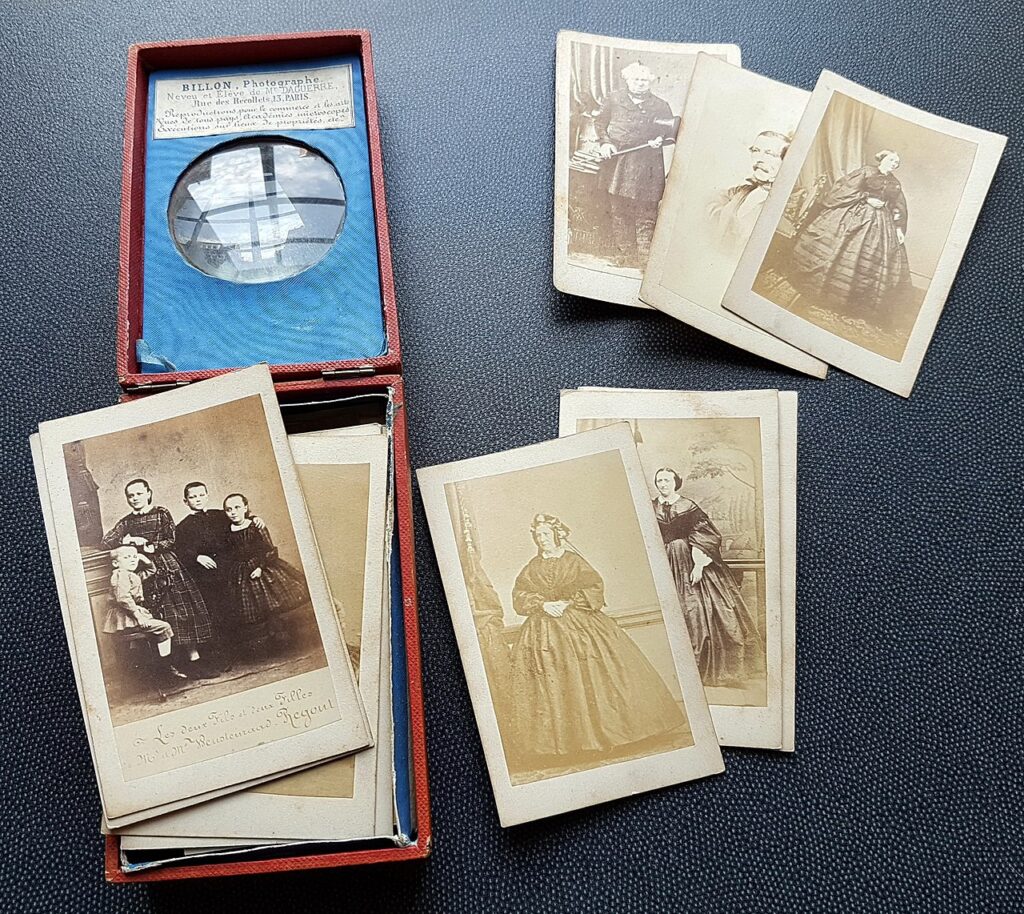
Cartes de visite belonged to ordinary visual life. Their repetition, portability and usefulness were the point, not defects that later historians needed to redeem.
Calling the carte de visite an early Instagram is tempting and mostly unhelpful. Both circulate self-images, but they belong to different technologies, markets, ideas of privacy and rhythms of public life. The stronger connection lies elsewhere: institutional value can arrive after everyday use has ended, recasting a once-practical image as cultural evidence.
A family snapshot can later enter an archive. A press photograph can leave the newspaper and acquire a frame. A commercial portrait can become evidence of dress, aspiration or a social world the original studio never intended to document.
Materially, the object may barely change. Its relations do. Owner becomes collector; album becomes archive; keepsake becomes evidence; evidence becomes art.
Archives can save photographs from disappearance. Museums can also clean them of the conditions that produced them. A police photograph admired for its austerity remains part of surveillance. A colonial survey praised for composition still carries the authority of its commission. A press photograph retains a relation to the caption, publication and event that made it public, even when the museum removes all three.
Admission into art changes what an image can mean. It does not absolve the image of where it has been.
VII. The Argument Moves On
Today, the old dispute sits inside a phone, a surveillance system, an editing program and a generative model. The apparatus has become less visible while its decisions have multiplied.
A photographer chooses a position and a moment. A subject may pose, ignore the camera, collaborate or refuse. Software processes the file. An editor selects and captions it. A platform crops, ranks and circulates it. A viewer arrives with memories and expectations that none of the earlier participants can control.
None of these participants holds equal power. Naming them does not dissolve responsibility; it makes authorship a relation to examine rather than a title automatically bestowed on the person holding the device.
Daguerre’s boulevard already contained that problem. He chose the view. The chemistry favoured whatever remained still. The bootblack and customer supplied the pause. Later historians decided why their faint presence mattered. No participant controlled the image’s entire meaning.
Photography entered art when institutions learned how to read intention around the camera and built places where selected prints could be judged as singular works. Institutional recognition enlarged art, but it also narrowed photography, pushing ordinary, anonymous and instrumental images towards the edge of the story.
Back at the lower left of the plate, the two figures remain. We do not know whether they noticed Daguerre’s camera, why they stopped or what either of them made of the encounter. Their stillness helped produce one of photography’s founding images. No account of authorship can fully bring them inside it.
Works Cited & Further Reading
Sources supporting the essay’s account of photographic authorship, legal and critical recognition, Pictorialism, modernism, museum canon formation and vernacular circulation.
- Eastlake, Elizabeth. “Photography” (opens in a new tab). The Quarterly Review 101, 1857: 442–468.
- Metropolitan Museum of Art. “Daguerre (1787–1851) and the Invention of Photography” (opens in a new tab).
- Metropolitan Museum of Art. “International Pictorialism” (opens in a new tab).
- Metropolitan Museum of Art. Edward Steichen, The Flatiron (opens in a new tab), 1904.
- Metropolitan Museum of Art. “Ephemera in the Jefferson R. Burdick Collection” (opens in a new tab).
- Meister, Sarah. “Now Is the Time to Read Photography Books” (opens in a new tab). Museum of Modern Art, 2020.
- Museum of Modern Art. “Announcement of the Department of Photography” (opens in a new tab). December 24, 1940.
- Museum of Modern Art. “Paul Strand” (opens in a new tab). Object:Photo.
- Teanby, Rose. “A Blueprint for the Future: Cyanotypes by Anna Atkins” (opens in a new tab). Victoria and Albert Museum.
- United States Supreme Court. Burrow-Giles Lithographic Company v. Sarony, 111 U.S. 53 (opens in a new tab). 1884.