Following a Tupac Photograph Back to Walton Avenue
Two photographs of a teenage Tupac Shakur led me to a block in the Bronx. Finding where they were made revealed not how completely the past survives, but how photographs measure the distance between what remains and what has changed.
On Walton Avenue, I kept looking from my phone to the buildings and back again. Somewhere along this block, a teenage Tupac Shakur had sat on a scooter while several children gathered around him. In another photograph, he stood in front of a Camaro holding a boombox. I was trying to find where the photographer had stood.
I had first seen the pictures five or six years earlier, probably on Reddit. Tupac was immediately recognizable, but what stayed with me was how much he looked like an ordinary kid. There was something wholesome about the scenes: a scooter, other children, a car parked along a residential street. I knew him through music, films and the photographs that accompanied his fame. Here was a teenager outside on a Bronx block, years before any of that.
On September 29, 2025, I went to look for that block. Finding it meant paying attention to parts of the photographs I had barely noticed before. Tupac had drawn me into the pictures. The buildings behind him would have to get me to the address. I could use the photographs as maps, then compare them with the present street to see what four decades had changed.
A teenager on the block
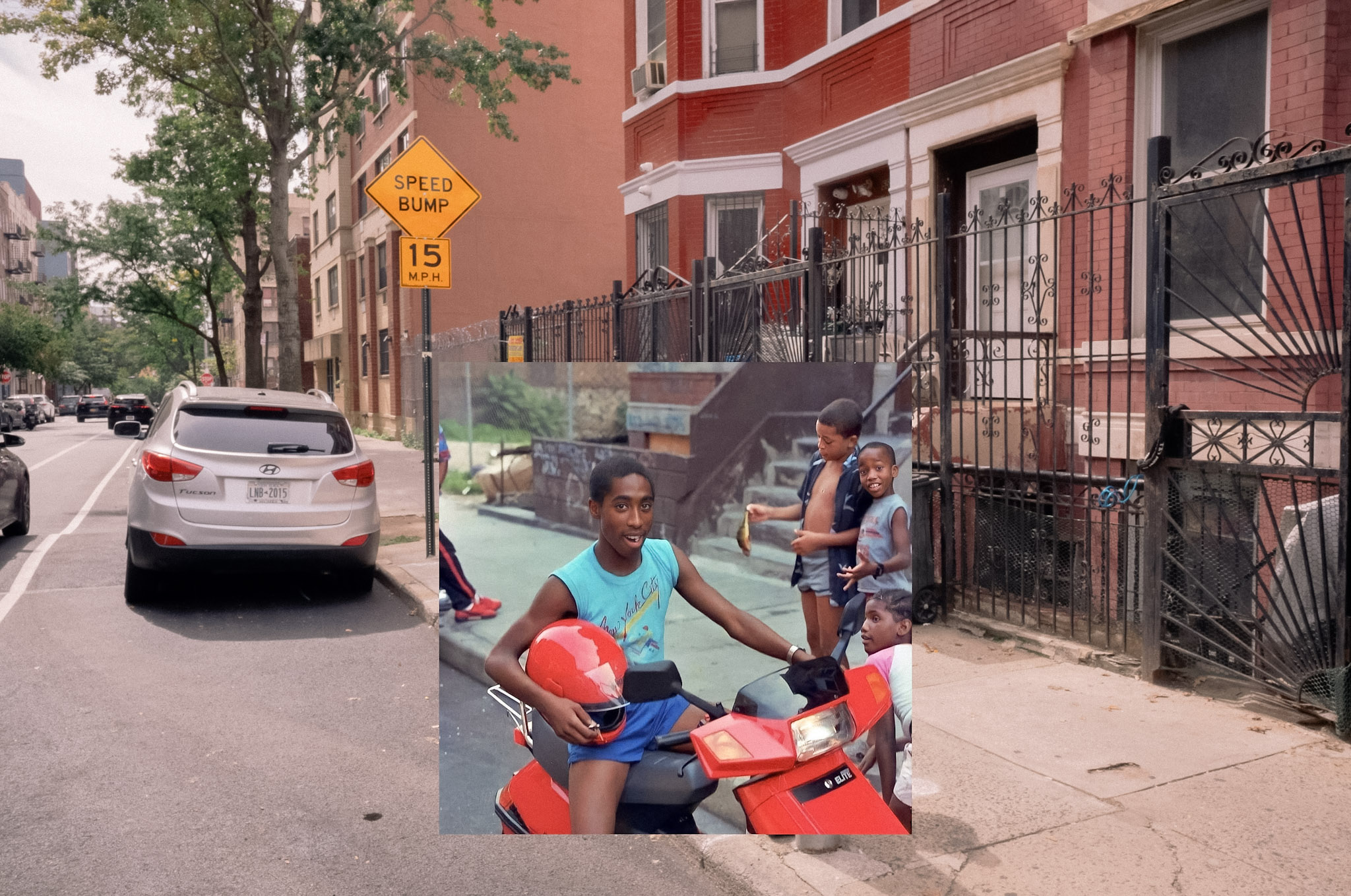
In the scooter photograph, Tupac holds a red helmet against his side. Behind him, a child looks down at what looks like a toy fish dangling from one hand, while another faces the camera. The children have their own part in the picture. In the other image, Tupac wears an open red shirt and matching shorts, with the boombox held in front of him against the blue Camaro. His face catches my attention, while the children, vehicles and buildings give me reasons to keep looking beyond it.
Knowing the adult makes it difficult to leave the teenager alone. I can look at the boombox and read a future music career into it, although a teenager holding a boombox hardly needs that explanation. His later fame gives the photograph another audience and changes what that audience notices. I would probably never have encountered these pictures if he had remained unknown. The same recognition that made me interested can make the ordinary parts seem like clues to a life already decided.
Yaasmyn Fula’s website identifies her as the photographer of the boombox portrait (opens in a new tab) and dates it to around 1986. The Camaro was her car (opens in a new tab). Knowing whose car it was pulls my attention back to the occasion of the photograph. Alongside Tupac, the picture records something of the person behind the camera. It has acquired a public history far beyond that occasion, but the car still belongs to the circumstances in which Fula made it.
Finding the camera’s position
A Reddit caption placed one of the photographs at 183rd and Creston (opens in a new tab). As I remember the walk, I came from Fordham Road via Grand Concourse and East 183rd Street. Creston did not look right. I explored Morris Avenue as well before reaching Walton, where I walked up and down with the photographs open on my phone.
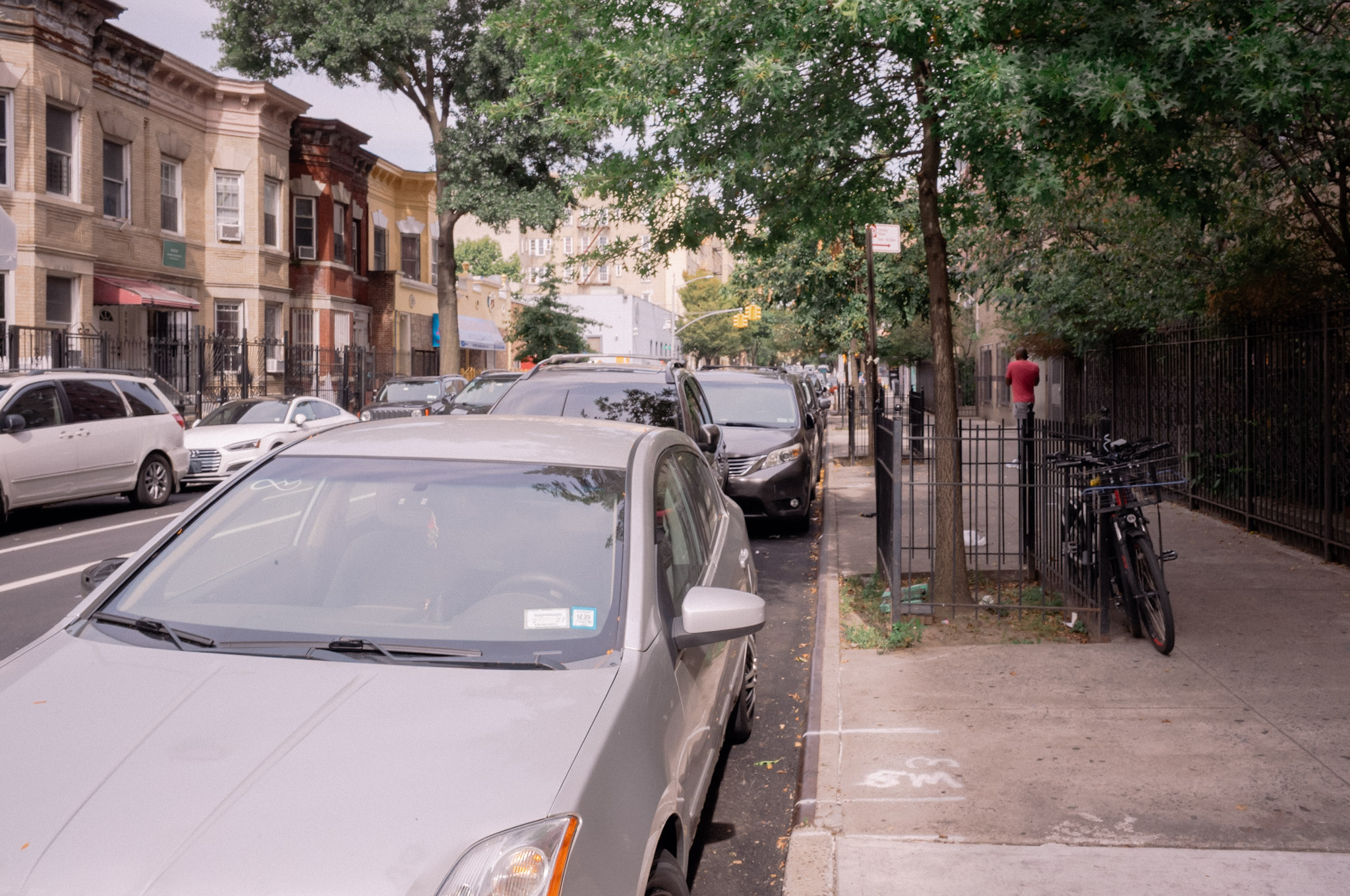
I was looking for a match among buildings that had changed. An altered façade could make a surviving building difficult to recognize. An apartment building now occupied a vacant lot visible in the older images. Small trees appeared in the earlier views, while a much larger canopy covered parts of the present street. A block could be the right one without offering the same view.
Usually, when I make street photographs, I leave room for something I haven’t anticipated. On this walk, I had brought the subject with me. The old frames set the task, and I moved around trying to understand the decisions that had produced them. I needed to look past the cars now parked along the curb and allow for the trees blocking parts of the view. Reaching the right street was only the beginning of finding the photograph.
Instead of expecting a whole scene to reappear, I compared the buildings with one another. Their arrangement mattered more than any single surface. I could work outward from a likely match, checking its position against the surrounding structures, then return to the photograph to see whether the comparison held. The background had become the most useful part of the image.
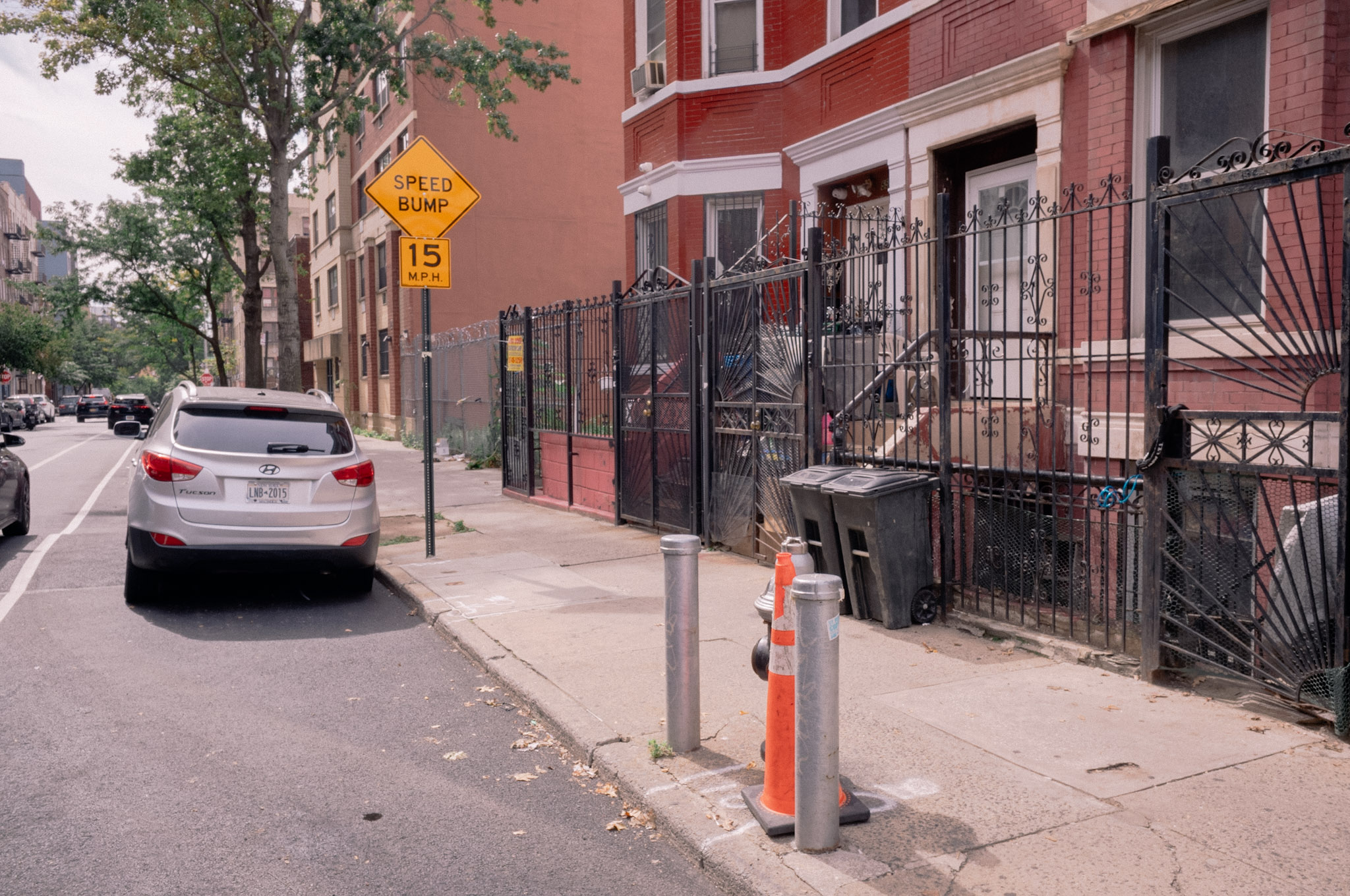
I found approximate positions outside 2257 Walton Avenue and across the street near 2260. Both photographs appeared to belong to this short stretch. After years of seeing them as images of a famous person, I could place them among a few neighbouring buildings. A picture I had first encountered online had retained enough information to bring me to a particular piece of New York pavement.
Living here has made those connections possible in a way they were not before. I like following the city’s history through films, photographs and music, particularly from the 1980s and 1990s. An image gives me a reason to explore somewhere I might otherwise pass without noticing. On Walton, the search also changed how I looked at the original pictures. The street explained details that a screen alone had left in the background.
Putting the pictures together
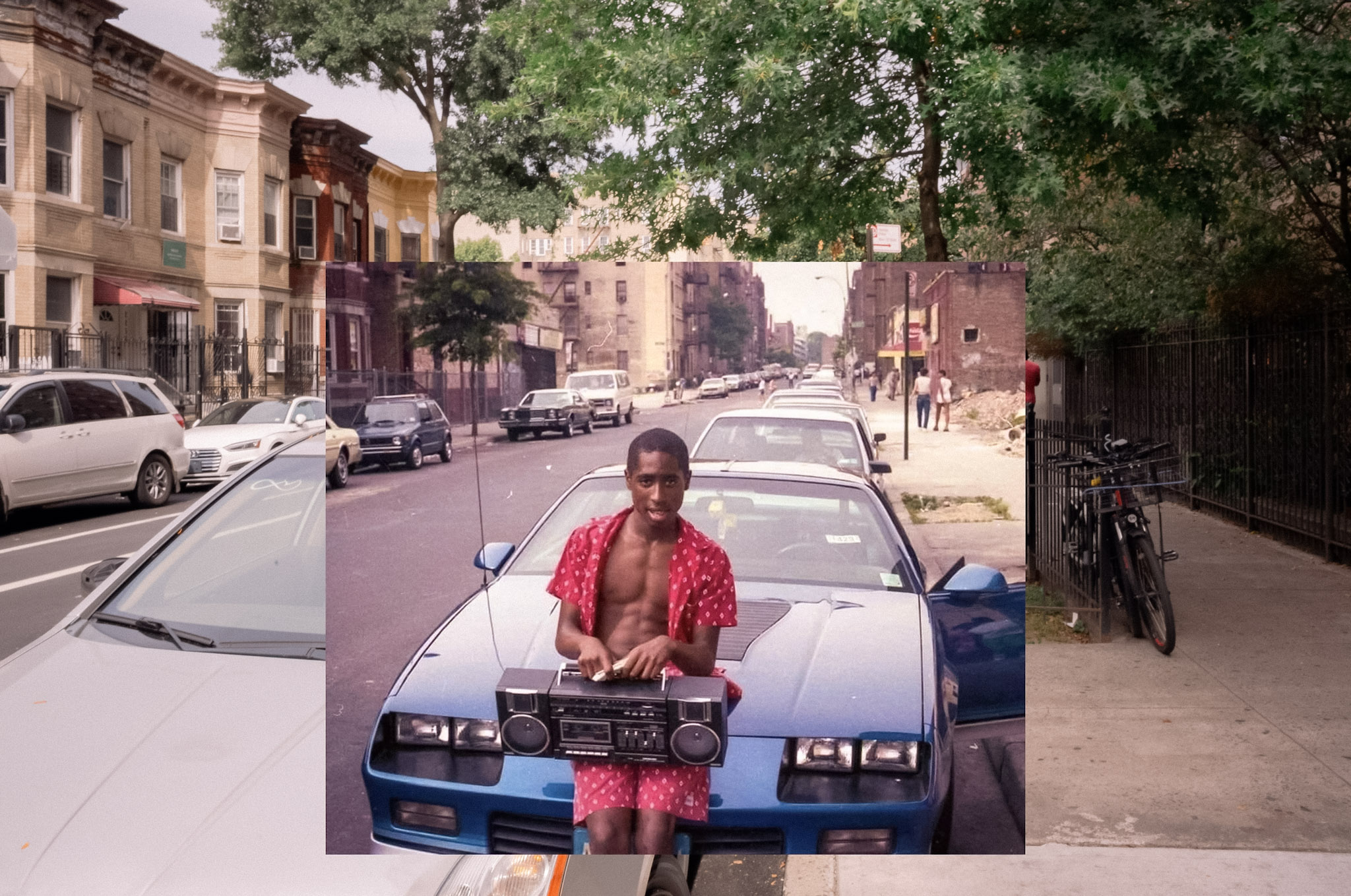
I photographed the two locations and made two composites, placing each older image over my view of the present street. They were a way to show that I had found the places. The buildings around the edges let someone else follow the comparison without having to repeat the walk.
Putting the photographs together also made the changes harder to overlook. The apartment building fills an opening in the earlier street. The canopy covers more of the view. Buildings that helped me establish the location continue beyond the inserted image, carrying the comparison from one period into the other. The overlays bring the two views close enough for their differences to become specific.
There is a temptation to describe that kind of composite as bringing someone back. Looking at these, I am more conscious of the separate exposures. Tupac remains inside the older photograph, with its children, vehicles and stretch of pavement. My photograph records the street on the day I visited. Joining them makes the earlier scene easier to locate, but the intervening years remain visible in the building and the trees.
I sent photographs of the locations and the originals to my sister Natalie and to my friend Bridget in Australia. They are Tupac fans too. I wanted them to see what I had found, and they would understand why I had gone looking. The discovery had somewhere to go beyond my own camera roll.
At high school in Australia, I knew plenty of people who listened to Tupac. His music belonged to our lives even though we lived far from the American places and circumstances it described. Music, films and photographs gave us points of connection with people we had never met and streets we had never walked. Years later, sharing pictures from Walton continued that connection through a different medium.
I did not need to have grown up in the Bronx for those photographs to matter to me. My interest in them grew out of listening to Tupac’s music. Living in New York added the possibility of going to the address, while my sister and Bridget could recognize the discovery from Australia. A familiar face held our attention across those distances. The street gave that familiarity somewhere concrete to land.
What continues to hold me in the originals is the teenager. Finding the block gave me more to look at around him: buildings I could recognize, a space since filled, trees against which to measure the years. Those details make his presence more ordinary and more particular. He was here, among other children and parked vehicles, in a moment whose later significance I keep bringing to the picture. On my phone, he is still the kid who made me want to find the street.
Works Cited & Further Reading
- Yaasmyn Fula, Spirit of an Outlaw. “Young Tupac Poster.” Photographer’s attribution and date: Bronx, 1986. (opens in a new tab)
- Yaasmyn Fula, Spirit of an Outlaw. “Pac in the Bronx Metal Print.” Further context for the boombox portrait and car, dated circa 1986. (opens in a new tab)
- Reddit, r/OldSchoolCool. “A young Tupac 183rd & Creston, the Bronx, New York 1980s.” Location caption discussed above. (opens in a new tab)