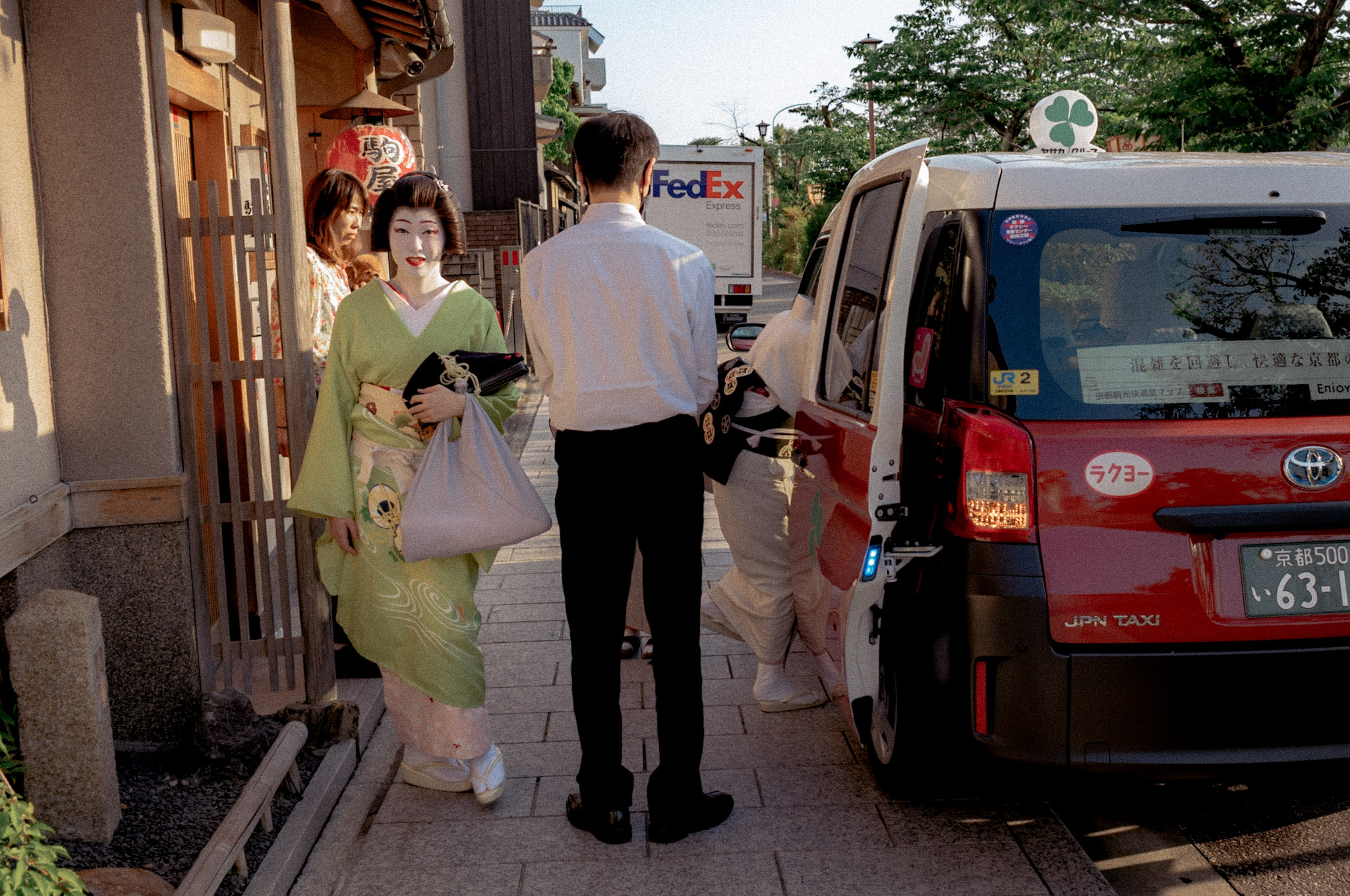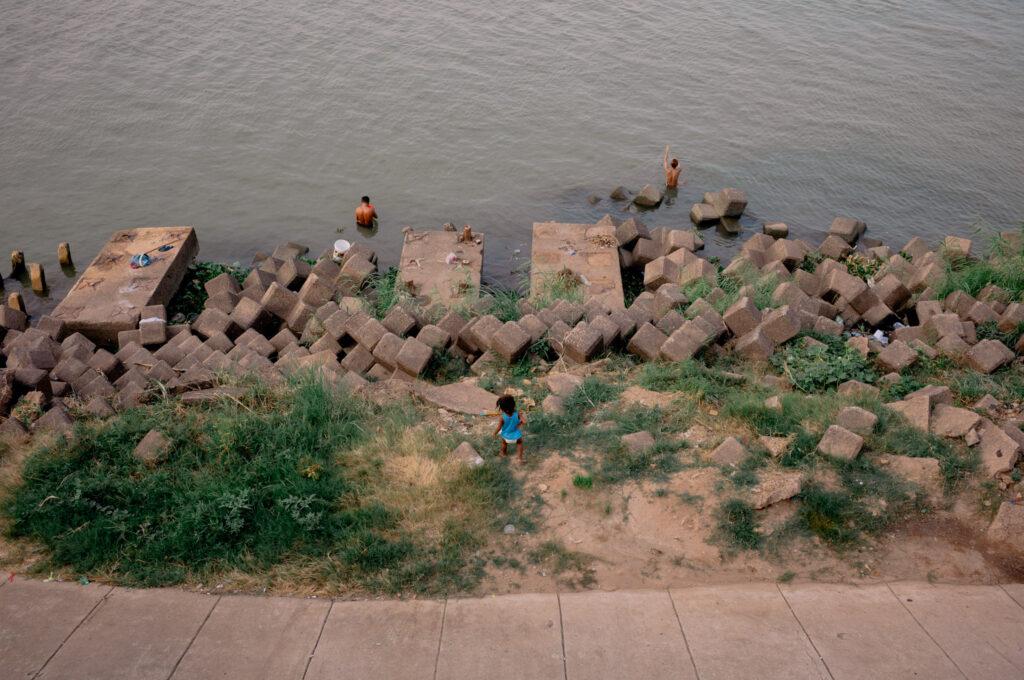
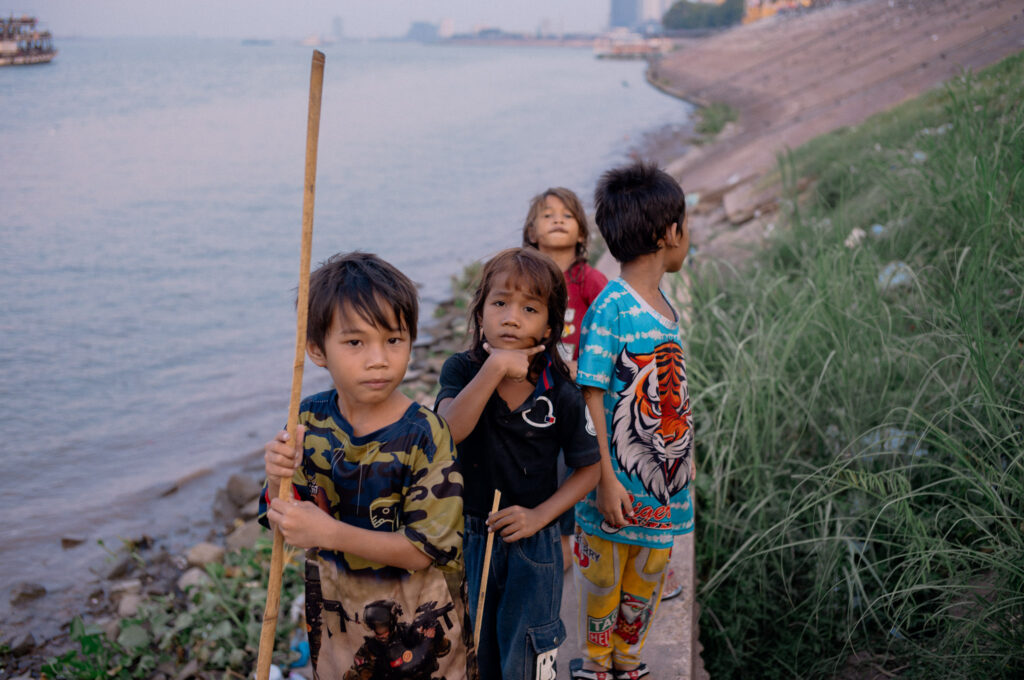
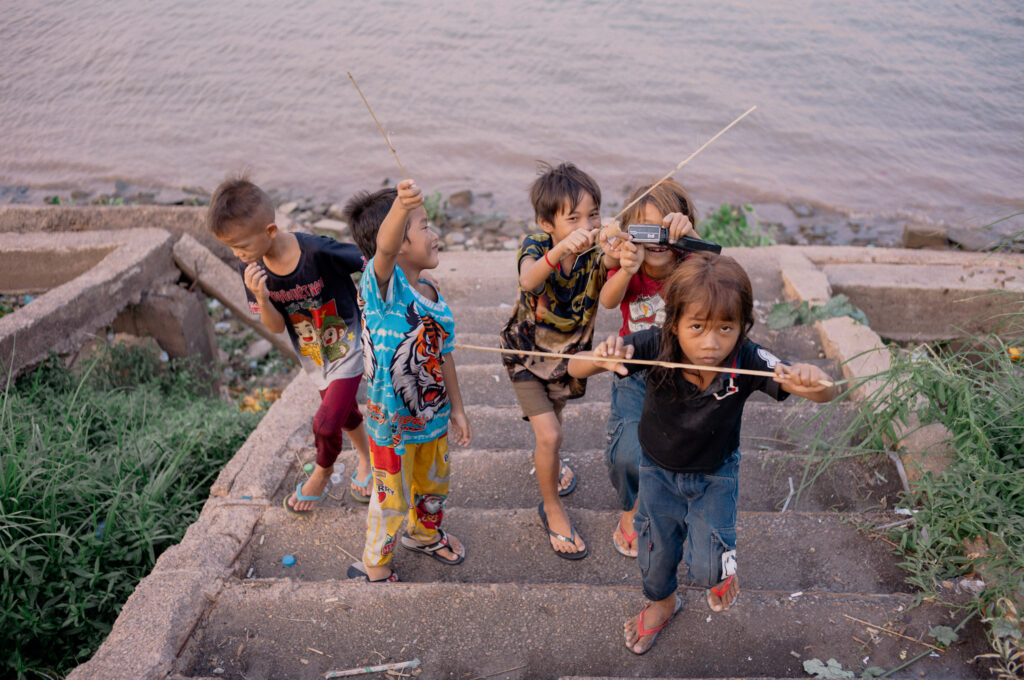
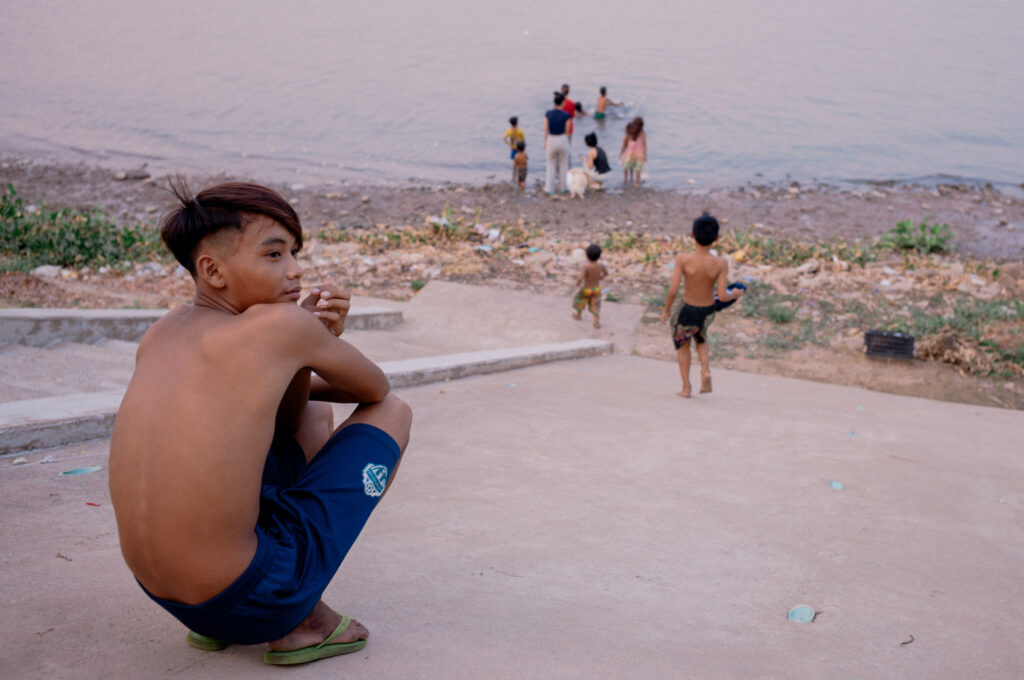
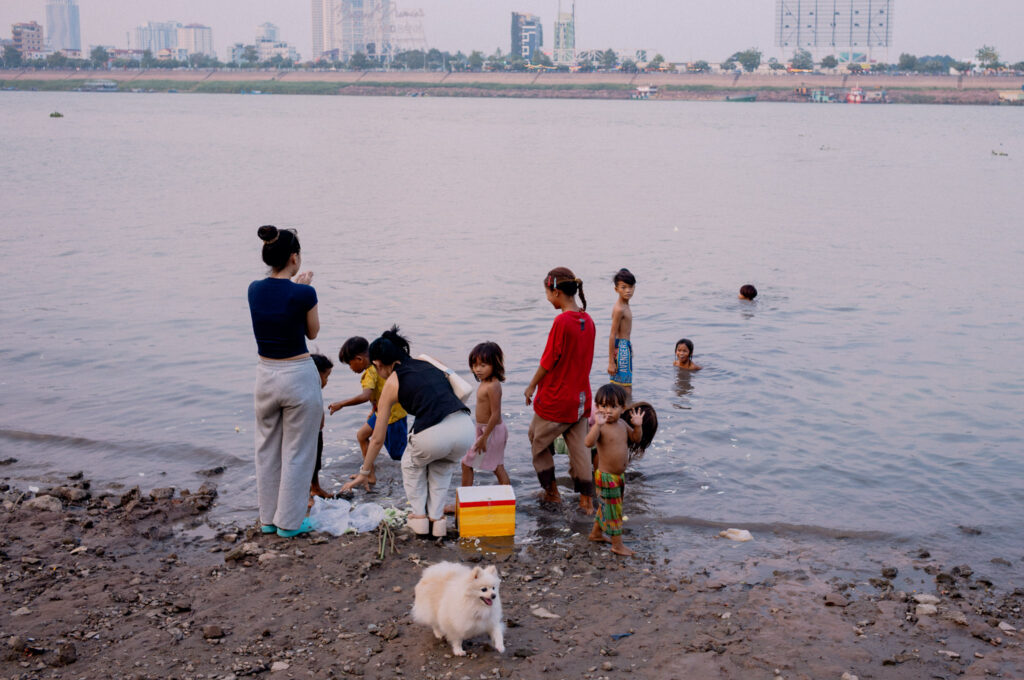
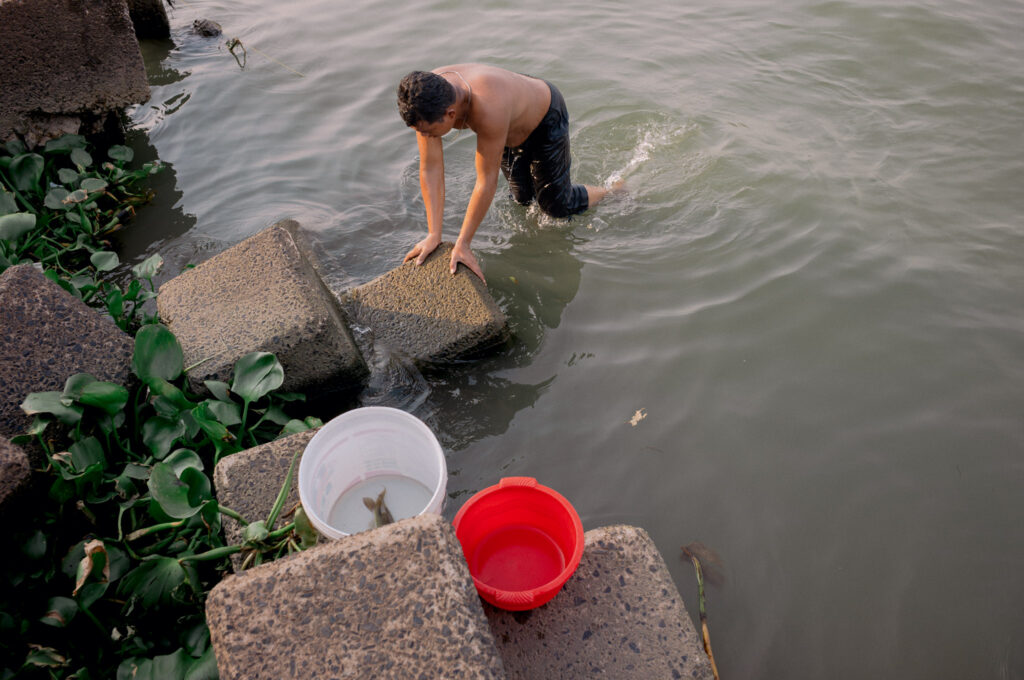
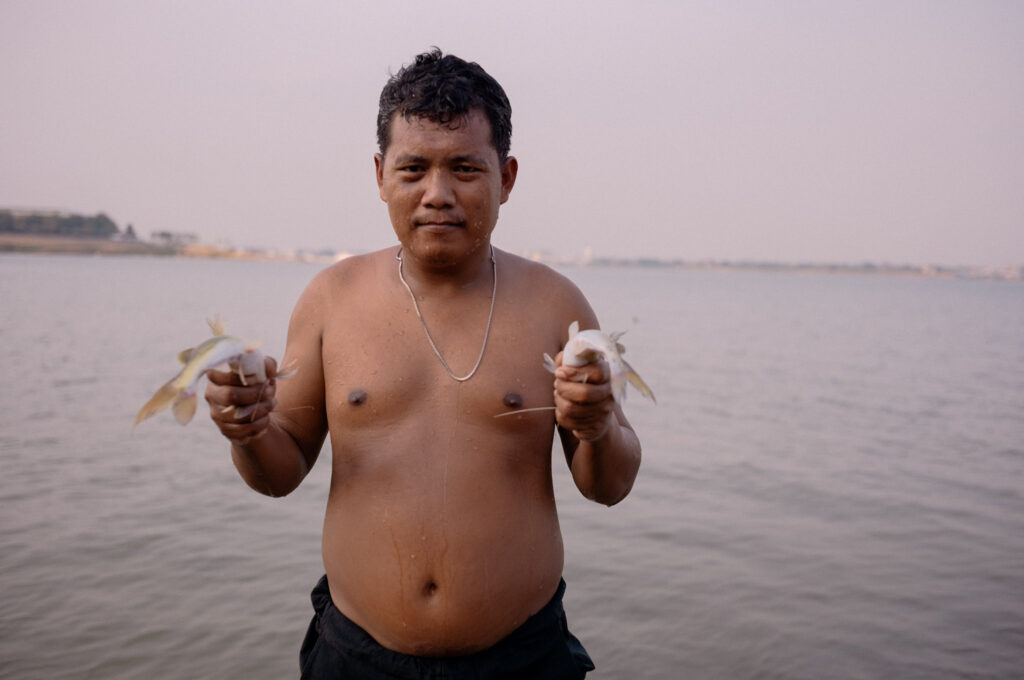
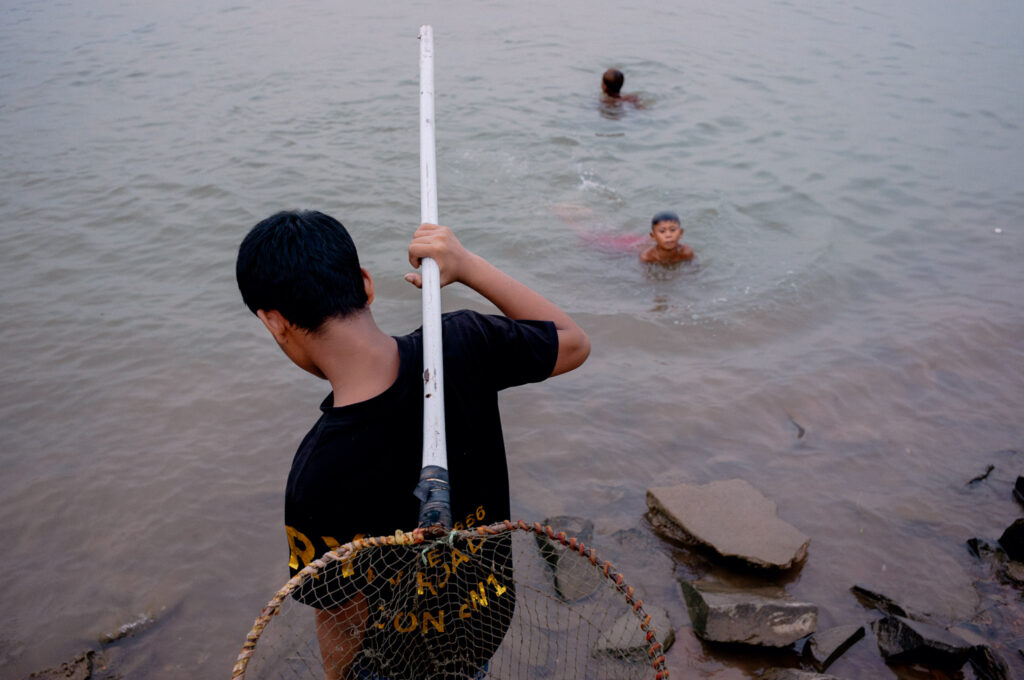
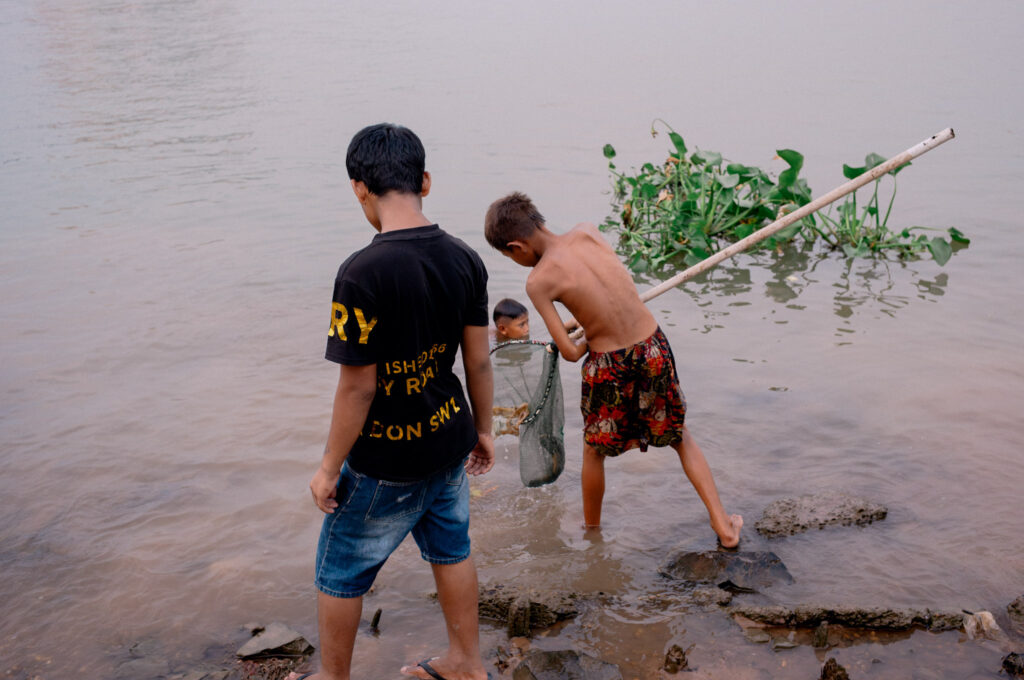
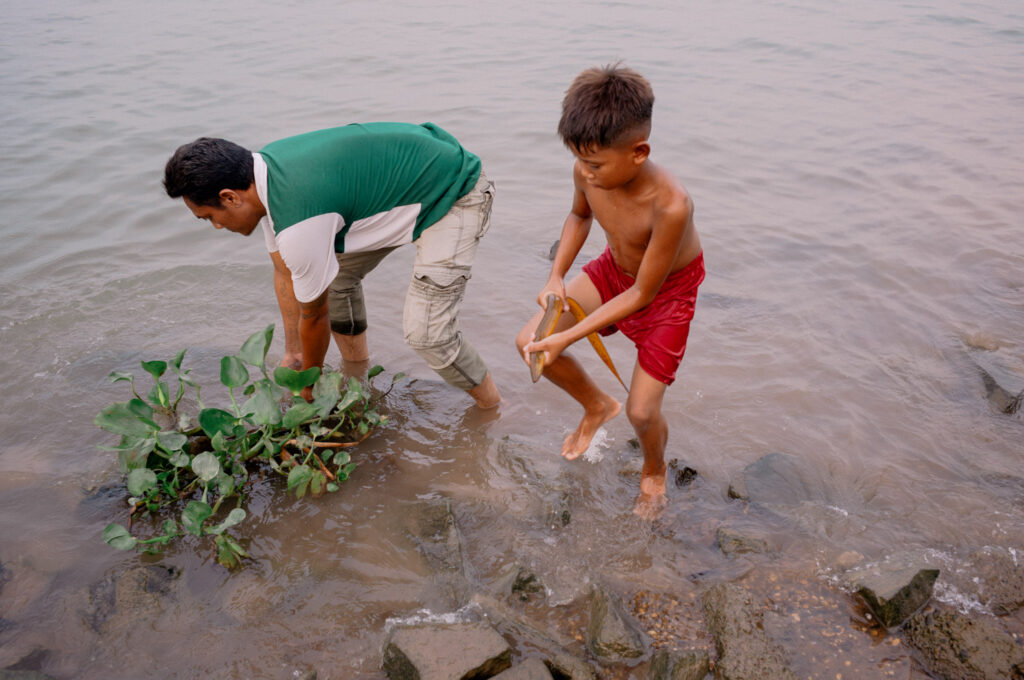
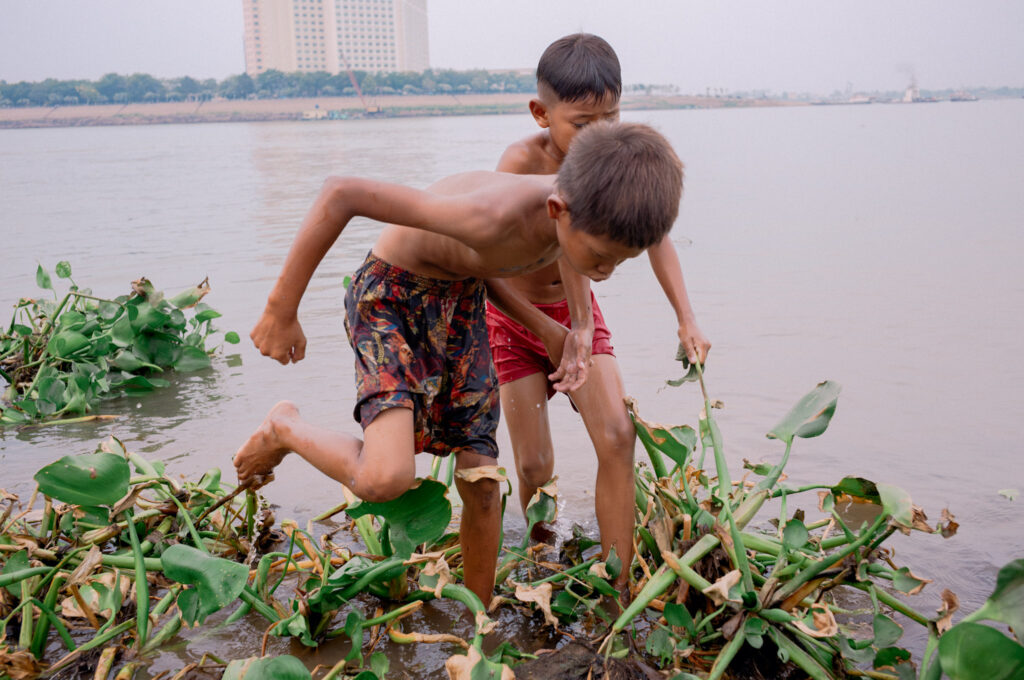
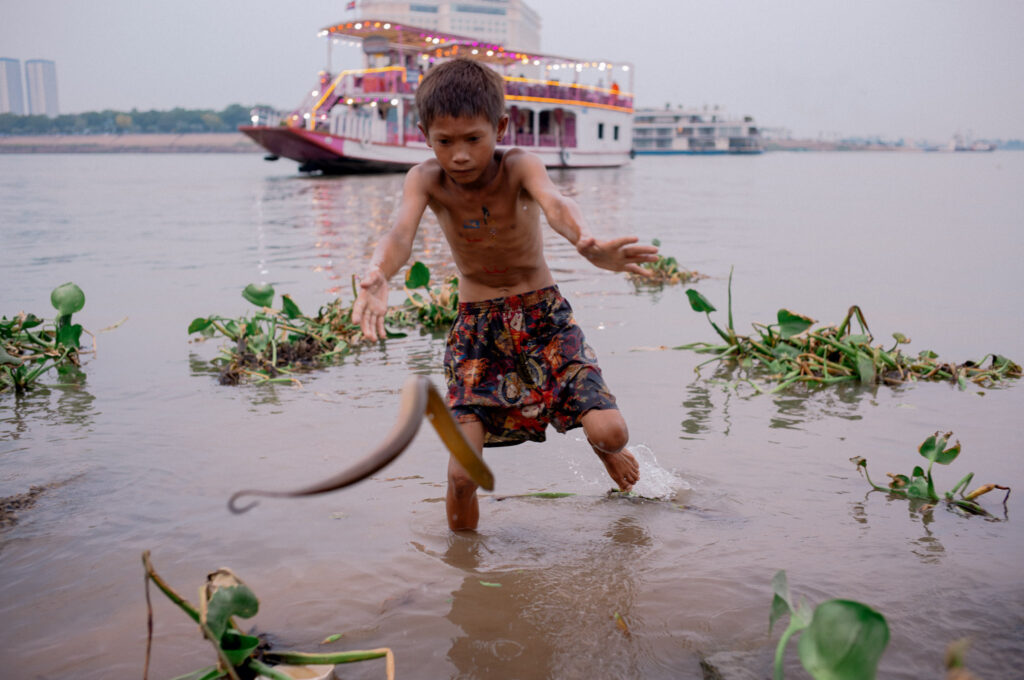
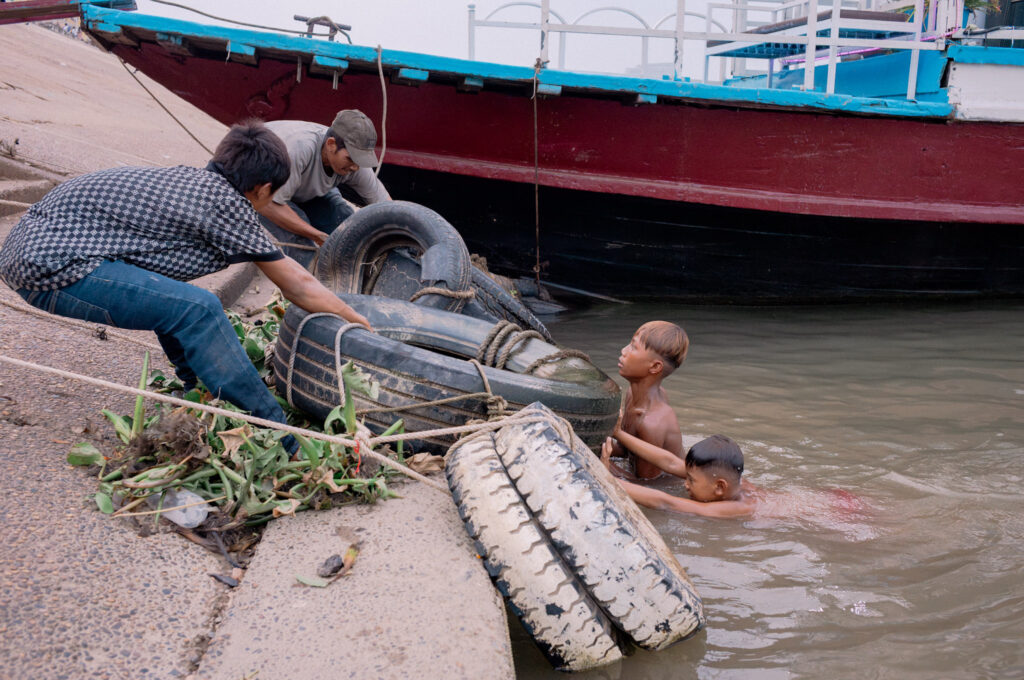
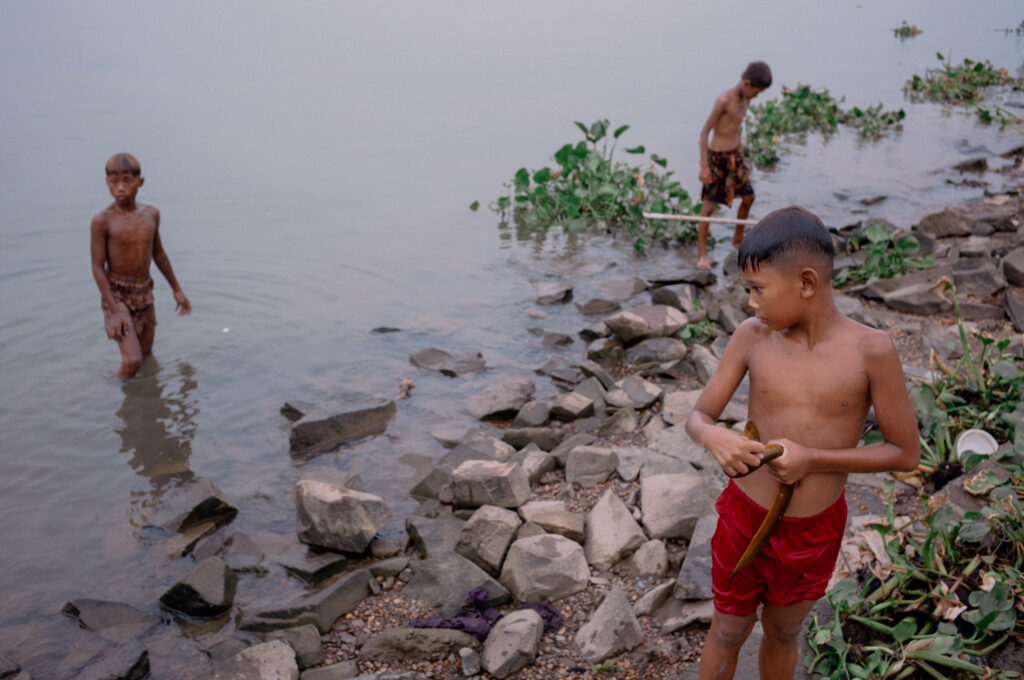
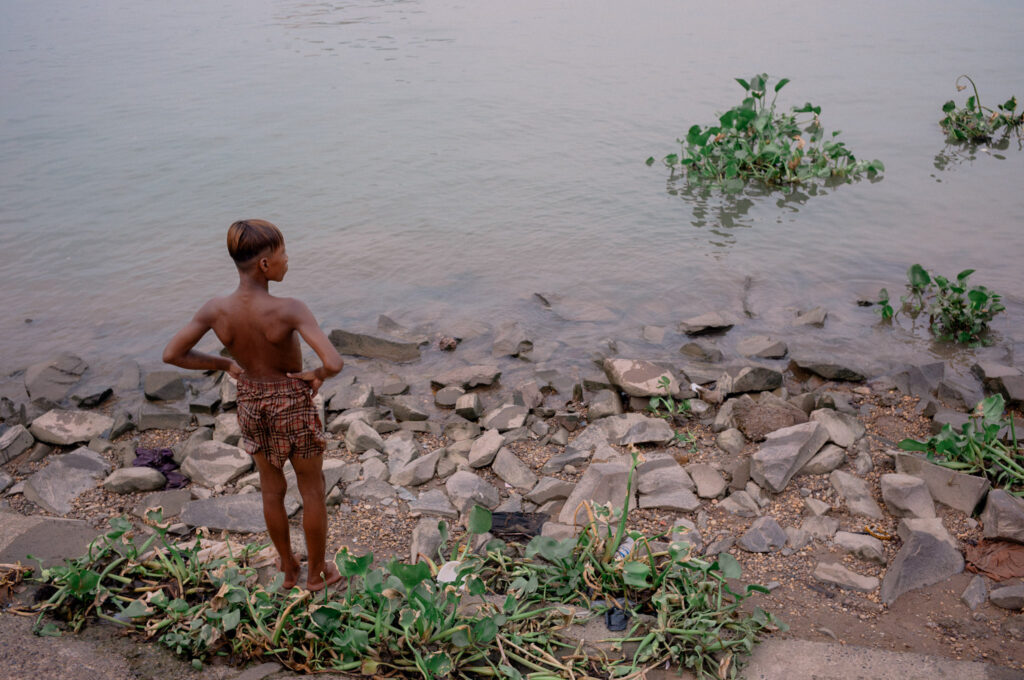
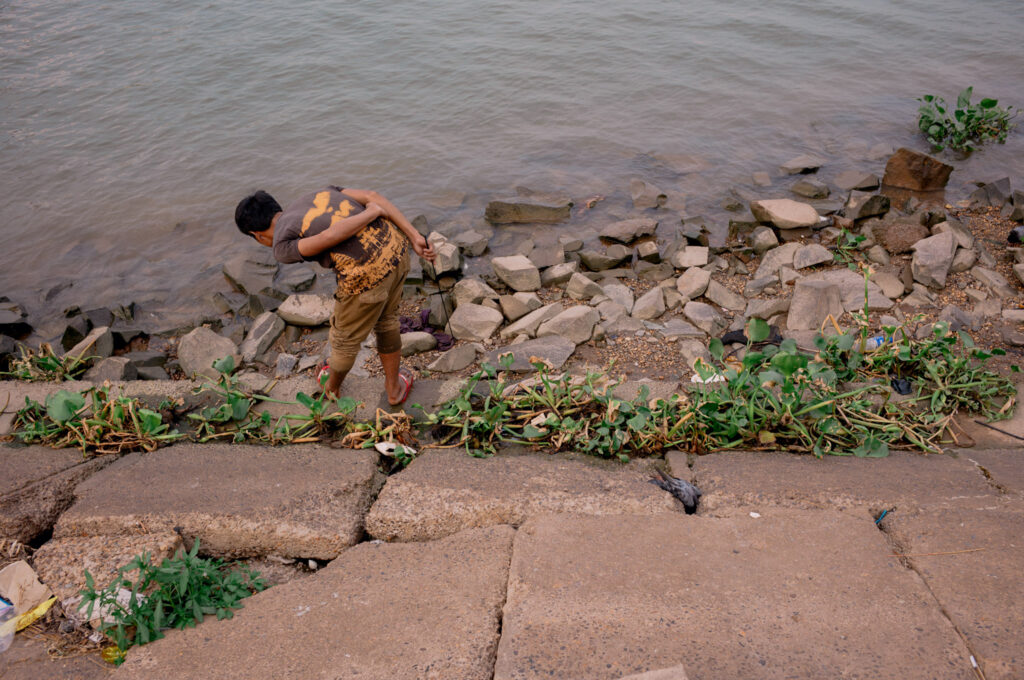
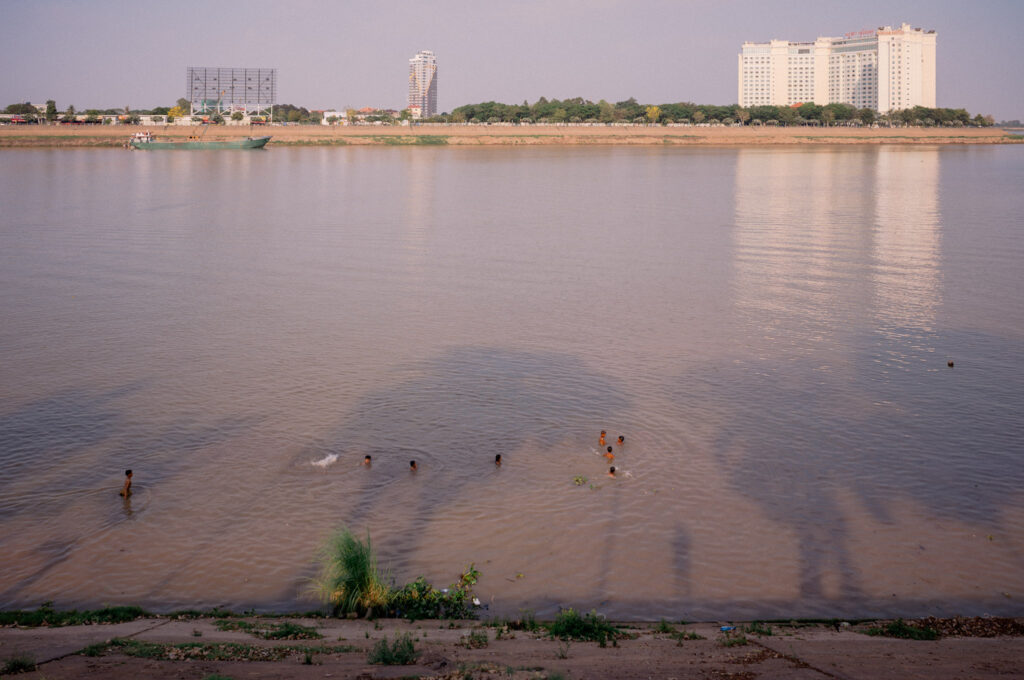
Below Phnom Penh’s riverfront promenade, paving breaks into concrete, rock, vegetation and water. I returned to this narrow strip along the Tonle Sap over several weeks, photographing swimmers, fishers and children moving between the bank and the river. The shift is abrupt enough to make the waterline feel like a threshold inside the riverfront itself, connected to the promenade above but governed by different uses.
At this lower edge, the river becomes part of what people do. Adults fish from the rocks or climb from the water with buckets. Children swim, carry poles and nets, and move through the water hyacinth. On one afternoon I stayed with a group of boys searching the rocks and vegetation for rice eels. That encounter became the longest sequence in the study, and its intensity made visible a pattern I had already begun to notice on earlier visits.
The boundary keeps shifting as people pass between the promenade, the bank and the water. The designed riverfront remains close at hand, sometimes visible only a few metres above, while the lower edge accumulates boats, tires, rubble, plants and whatever the river leaves behind. The photographs stay with that overlap, where the city’s formal frontage remains pressed against a rougher, more improvised use of the river.