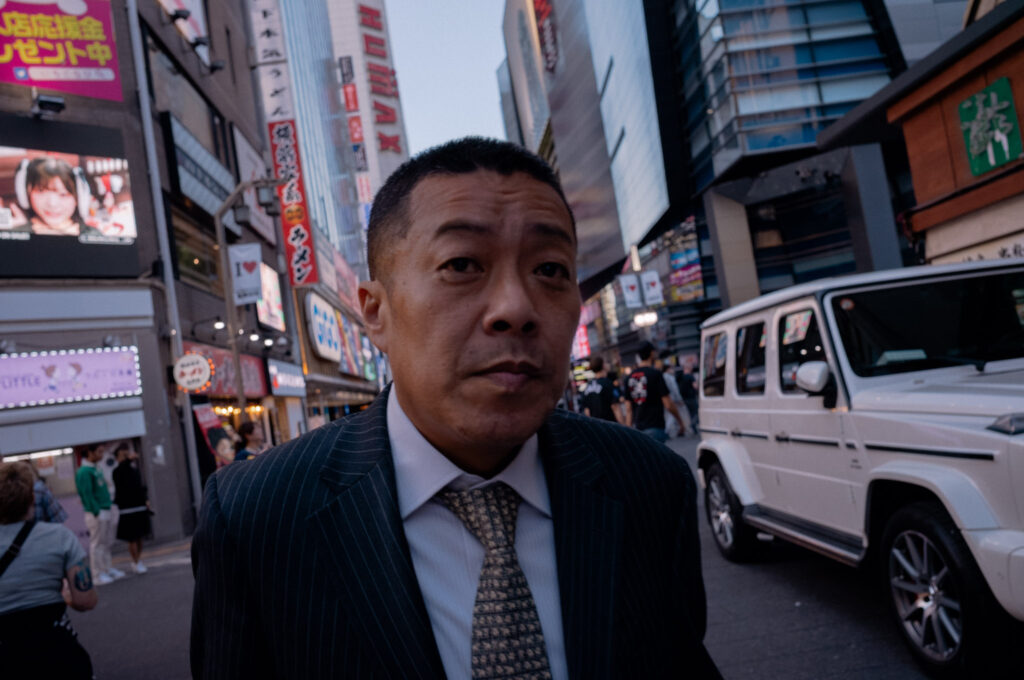
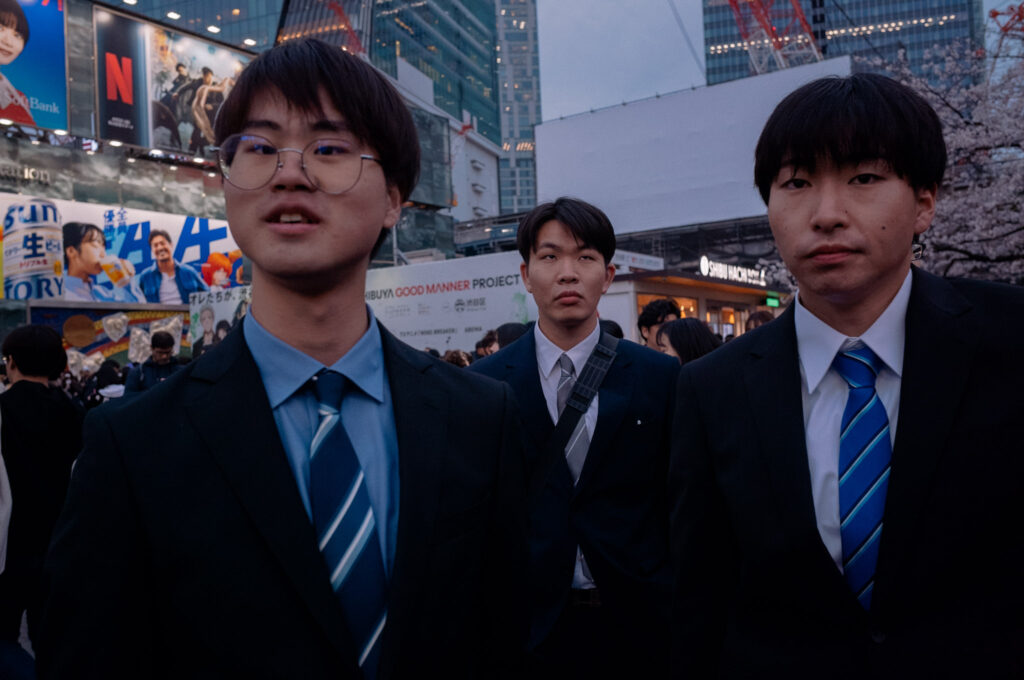
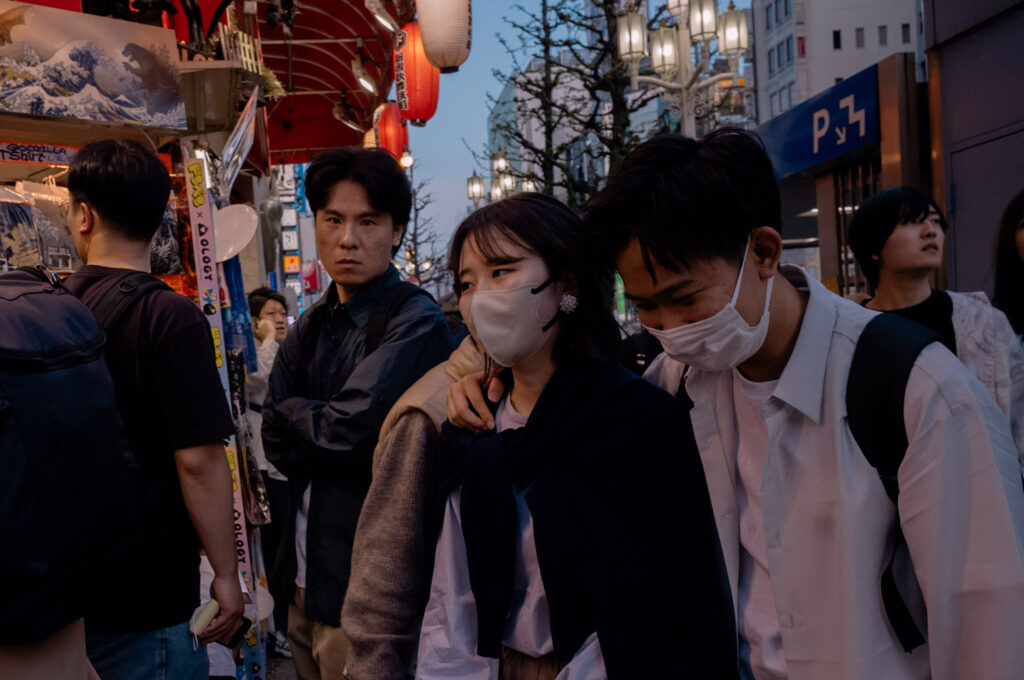
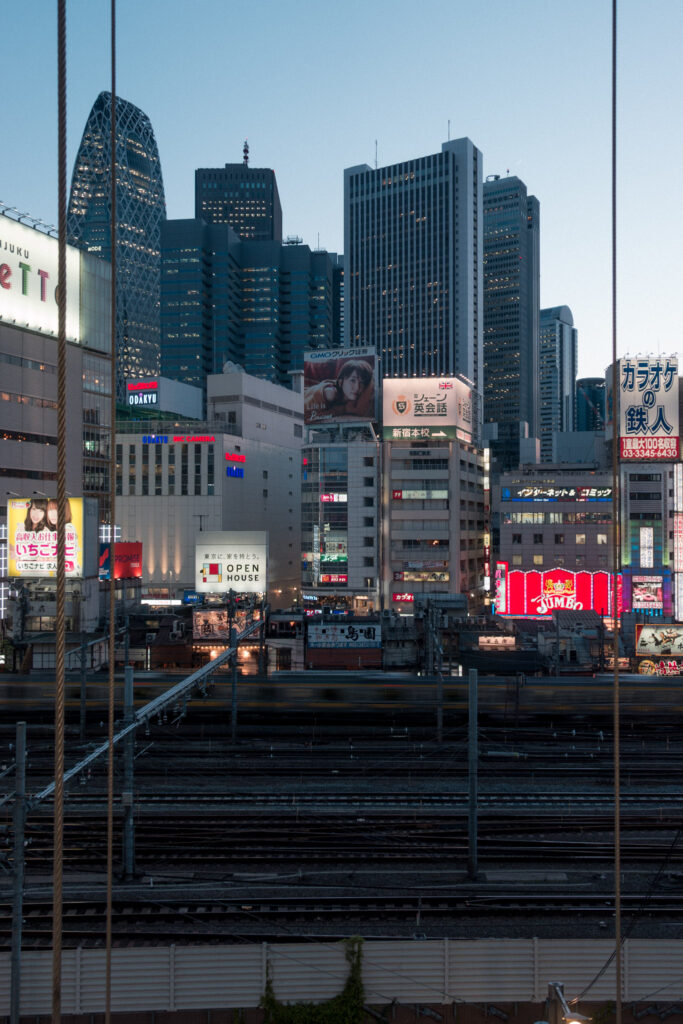
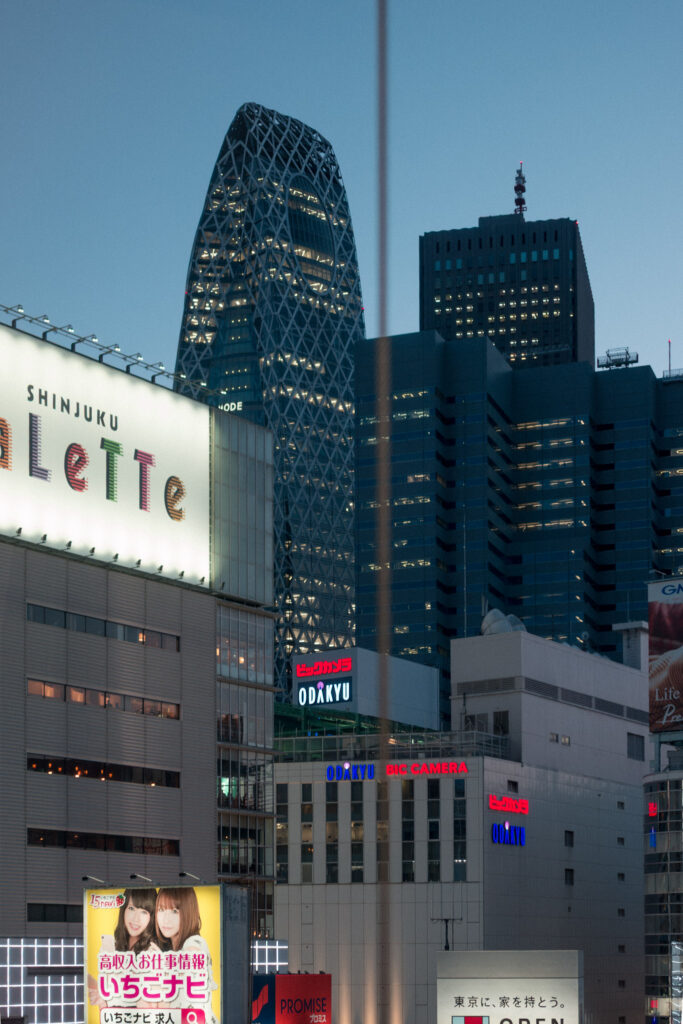
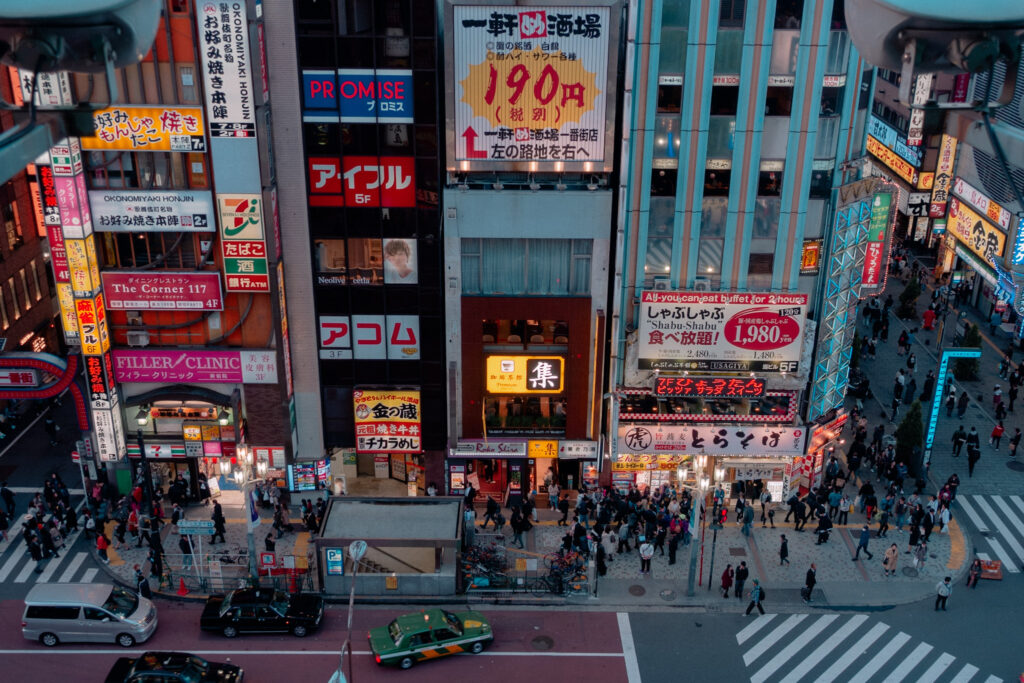
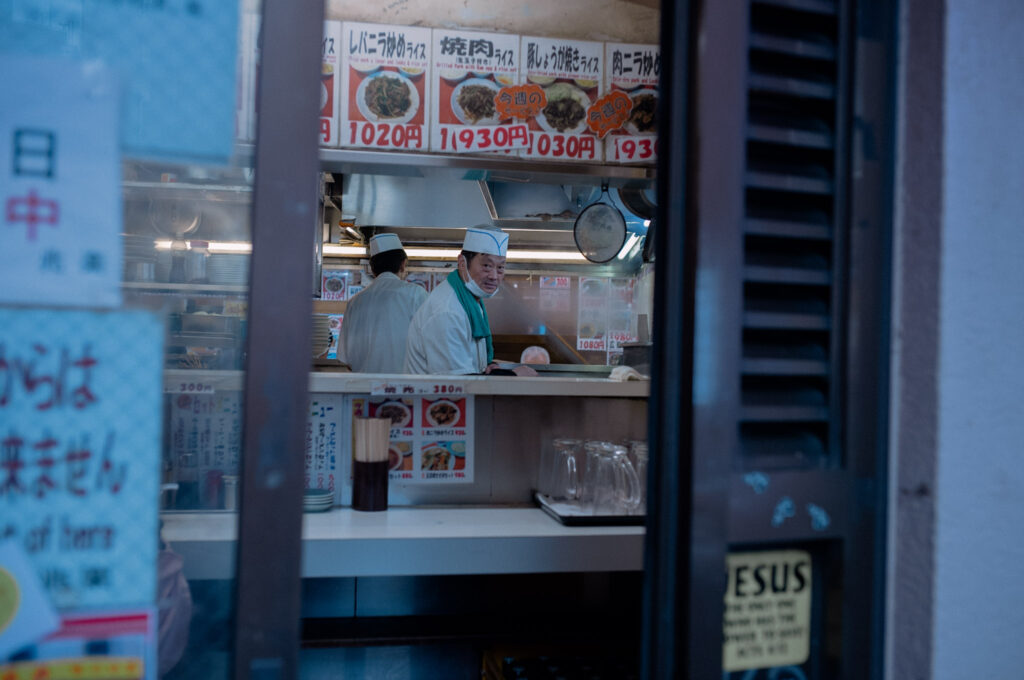
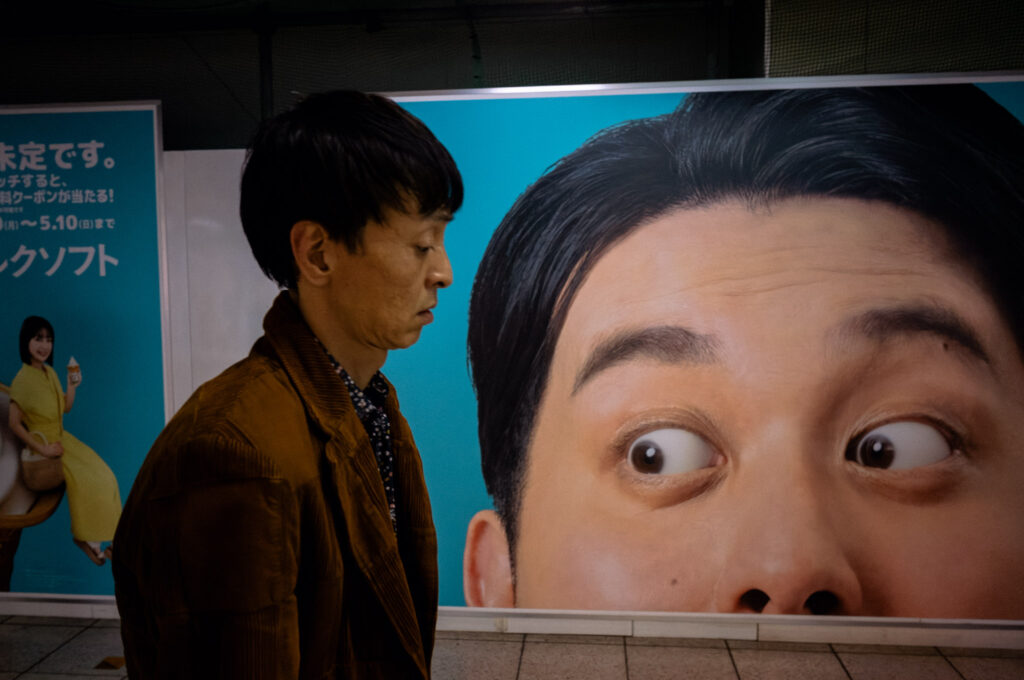
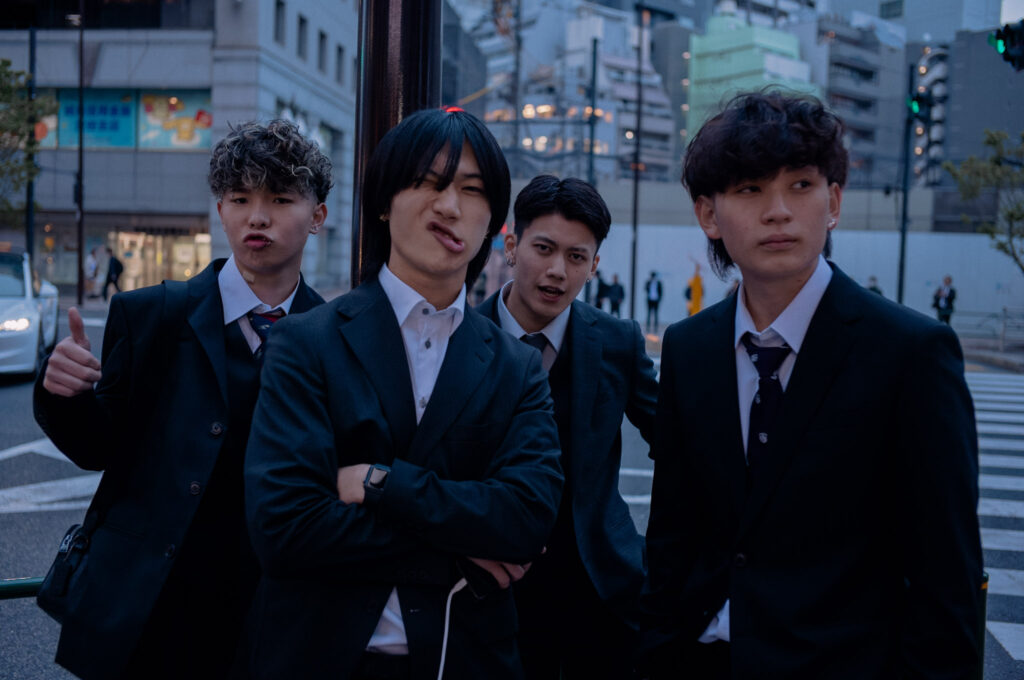
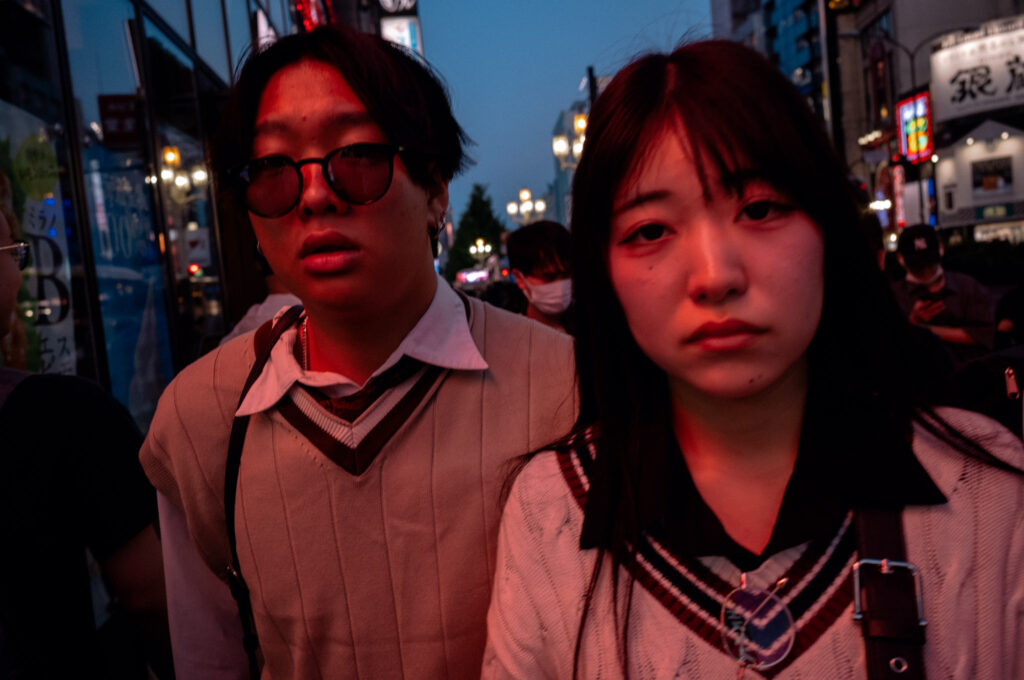
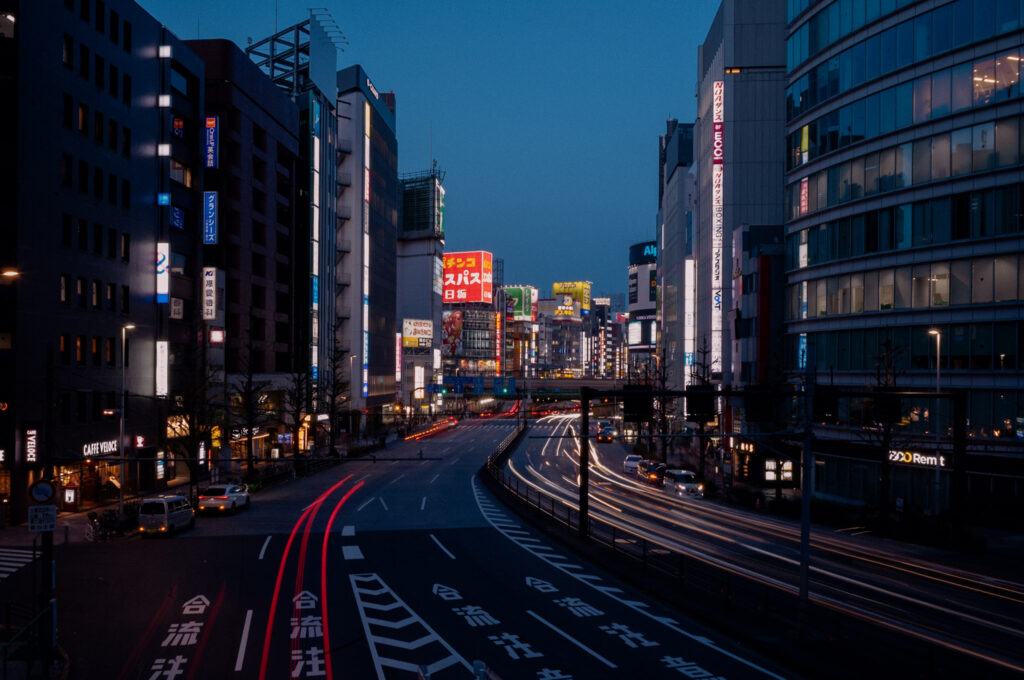
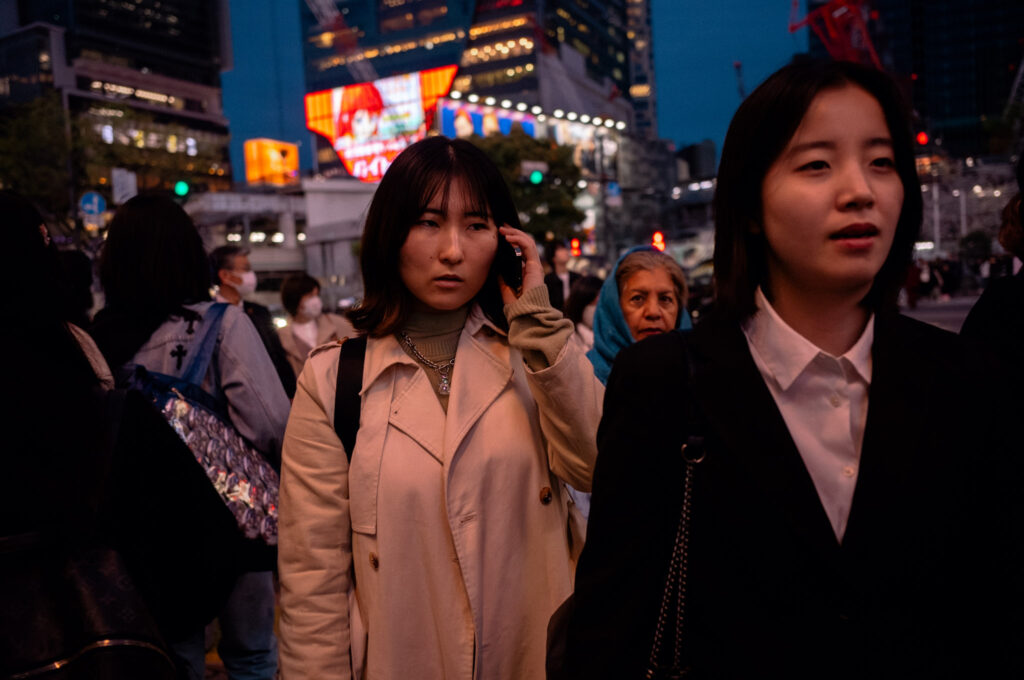
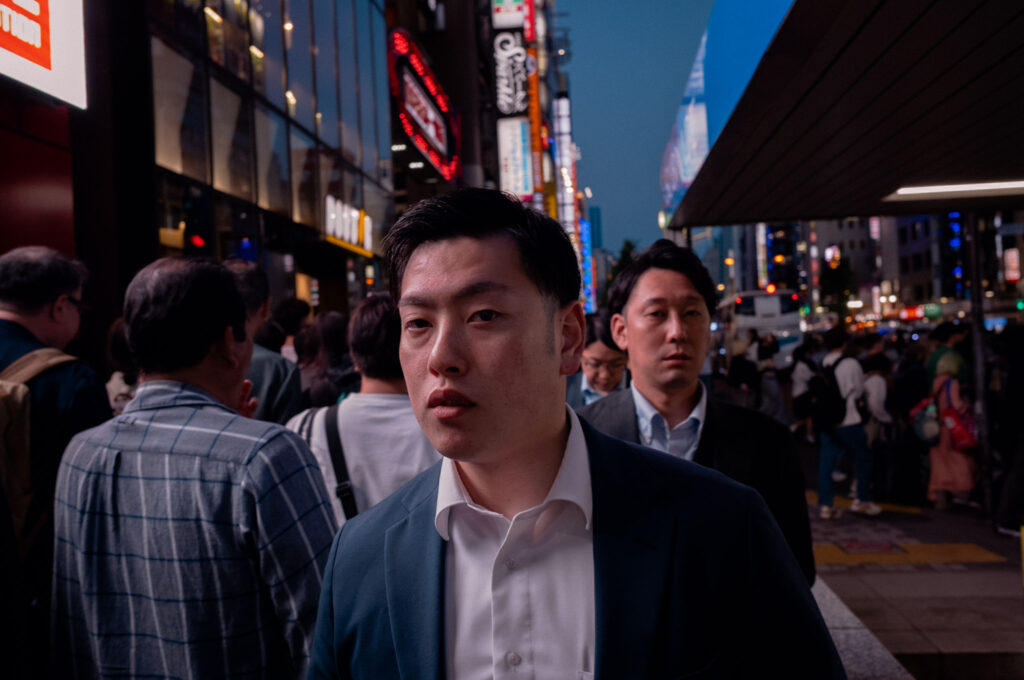
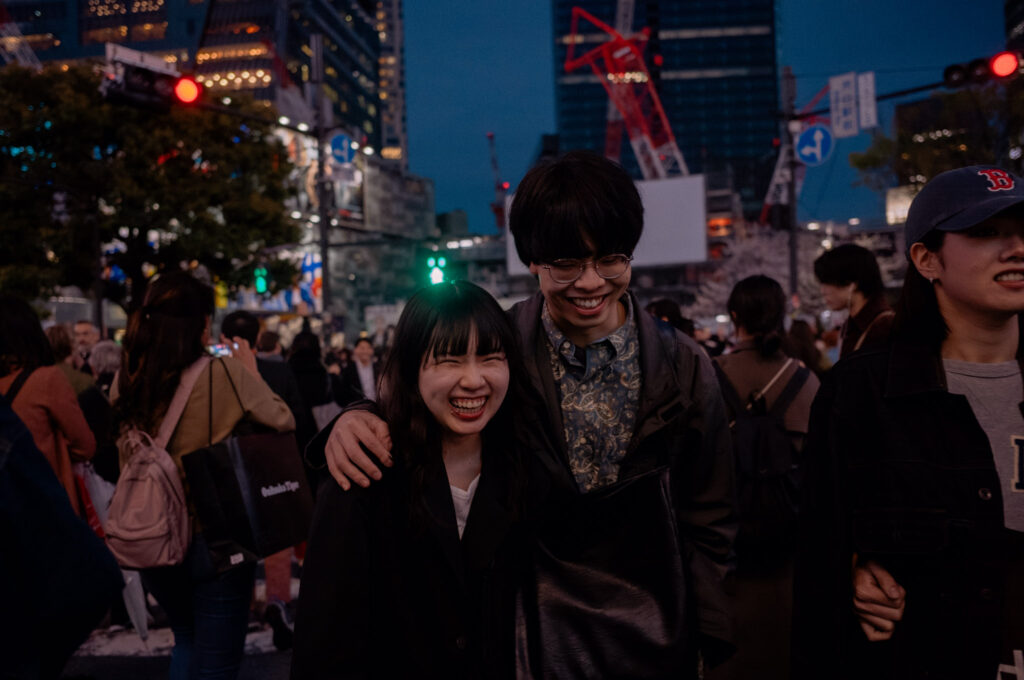
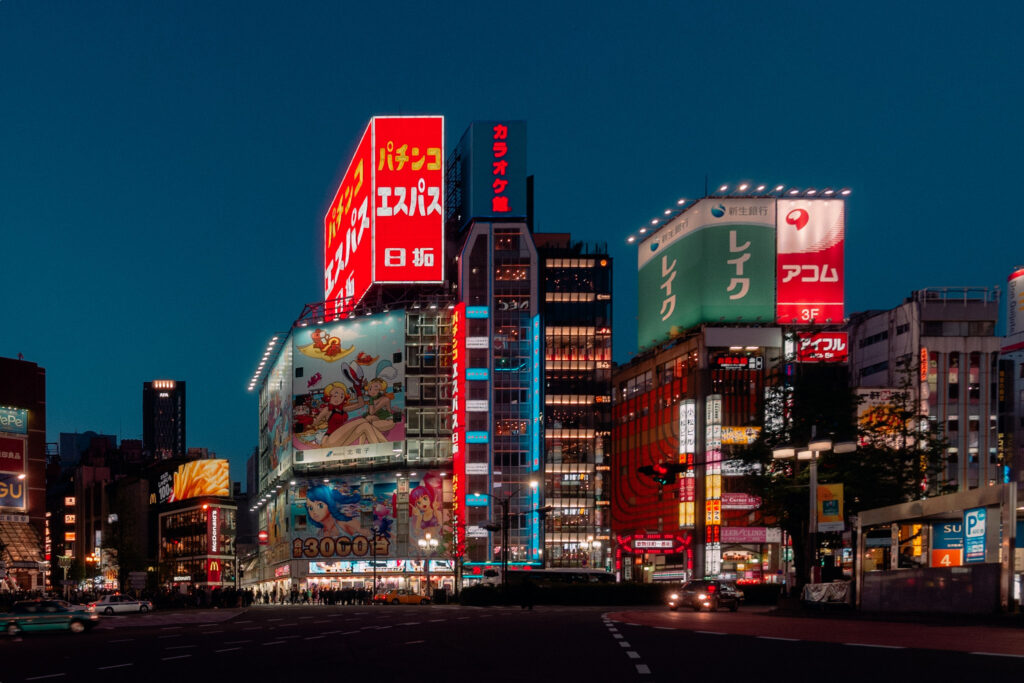
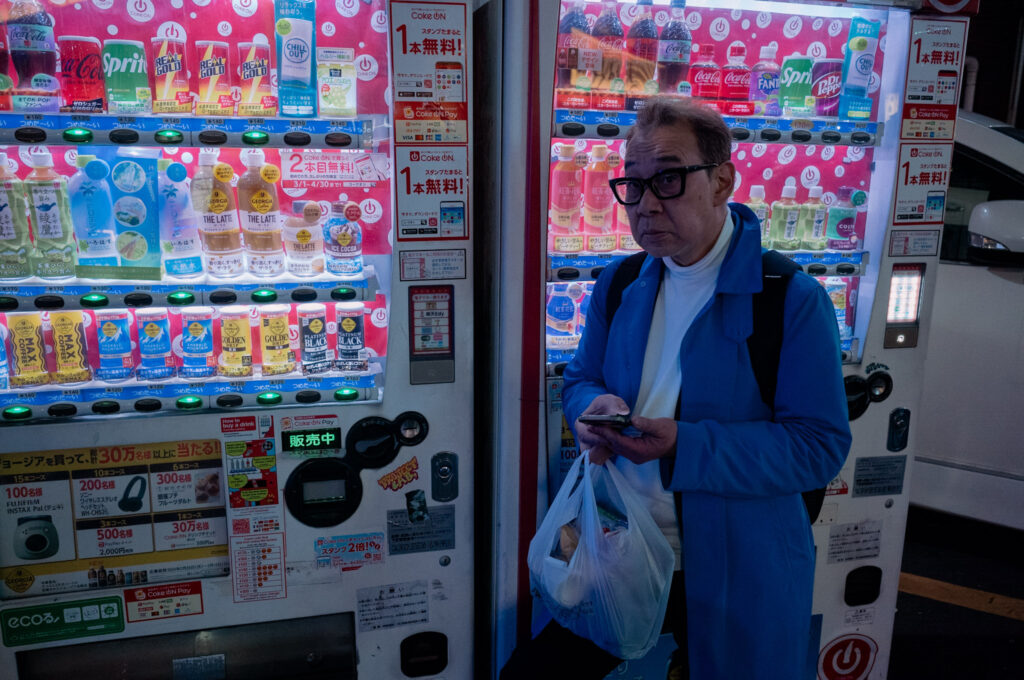
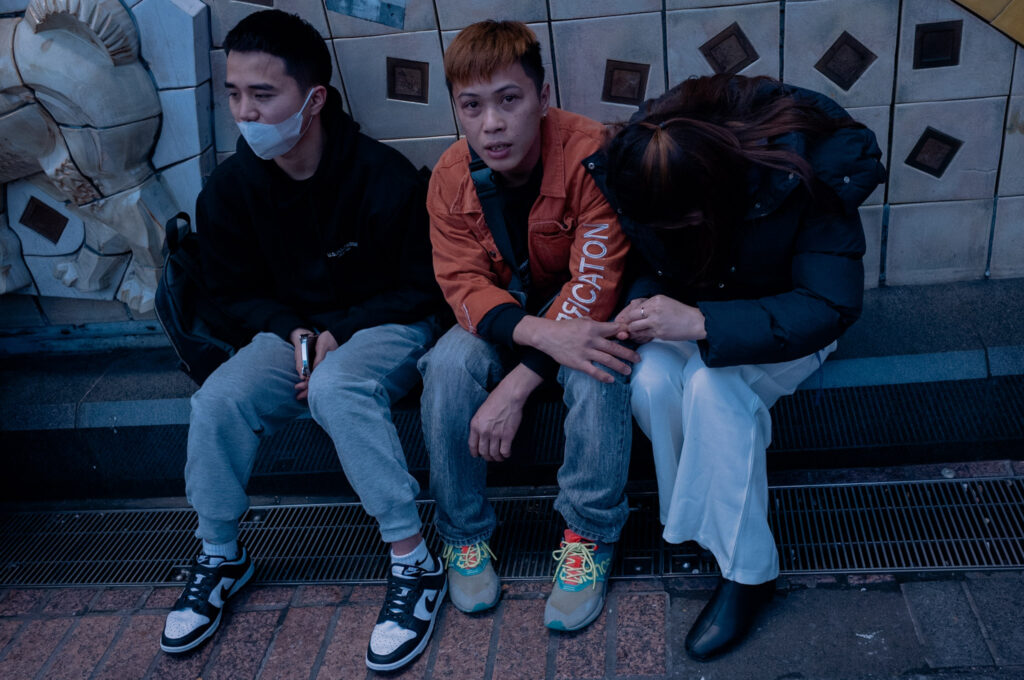
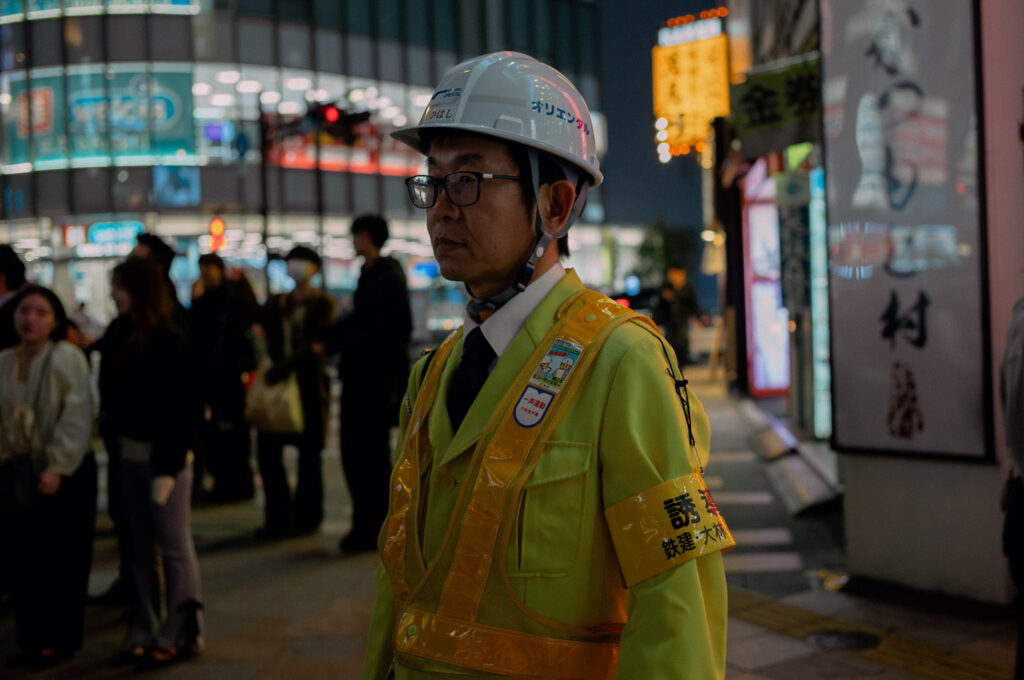
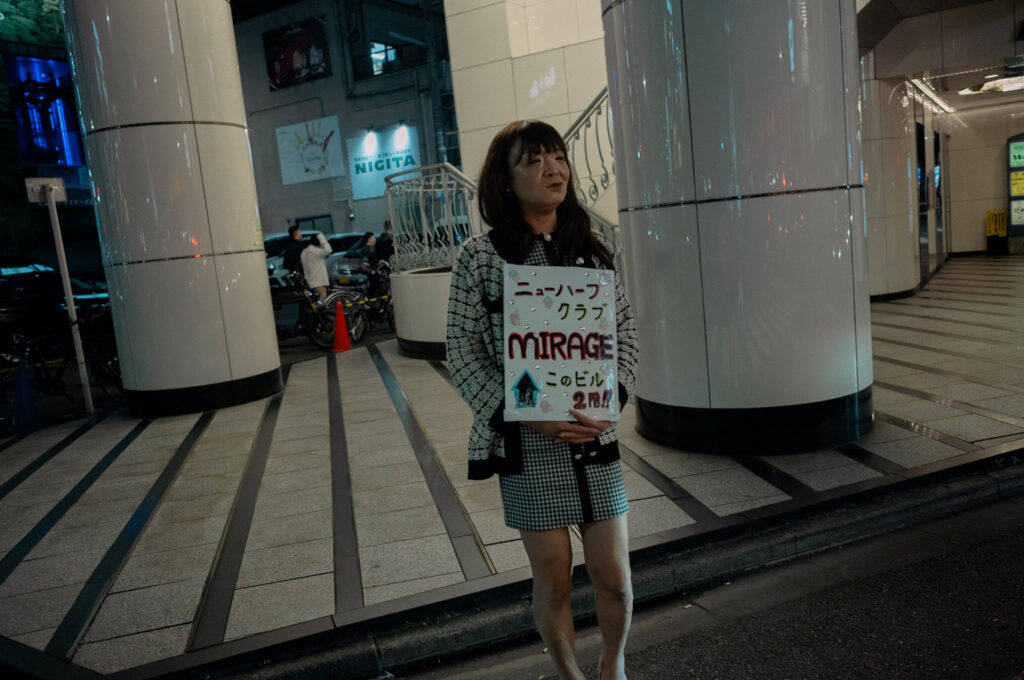
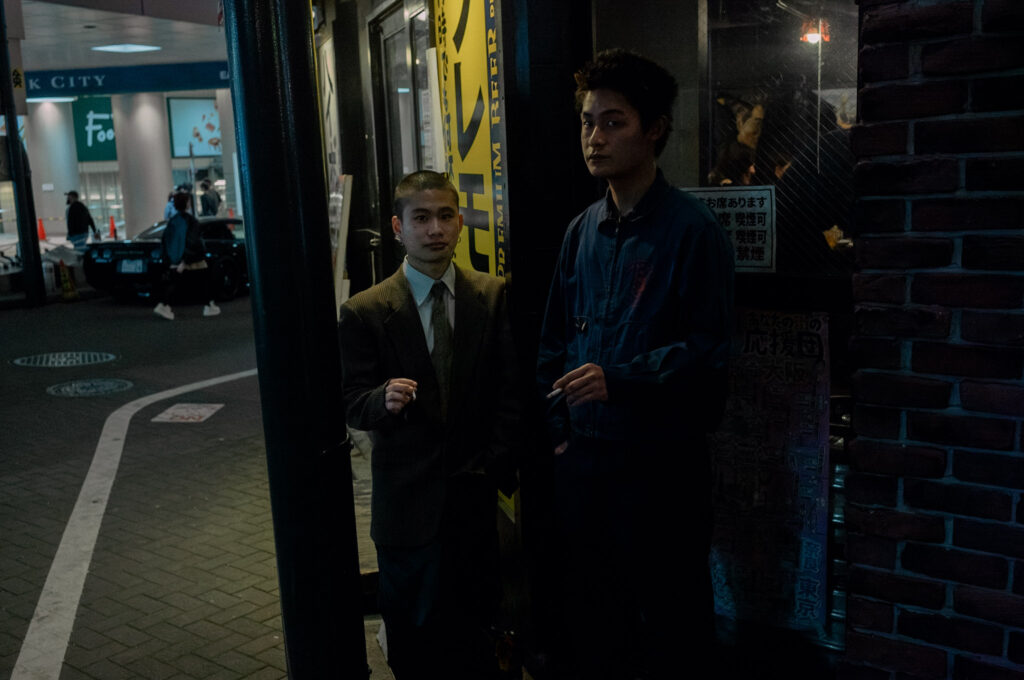
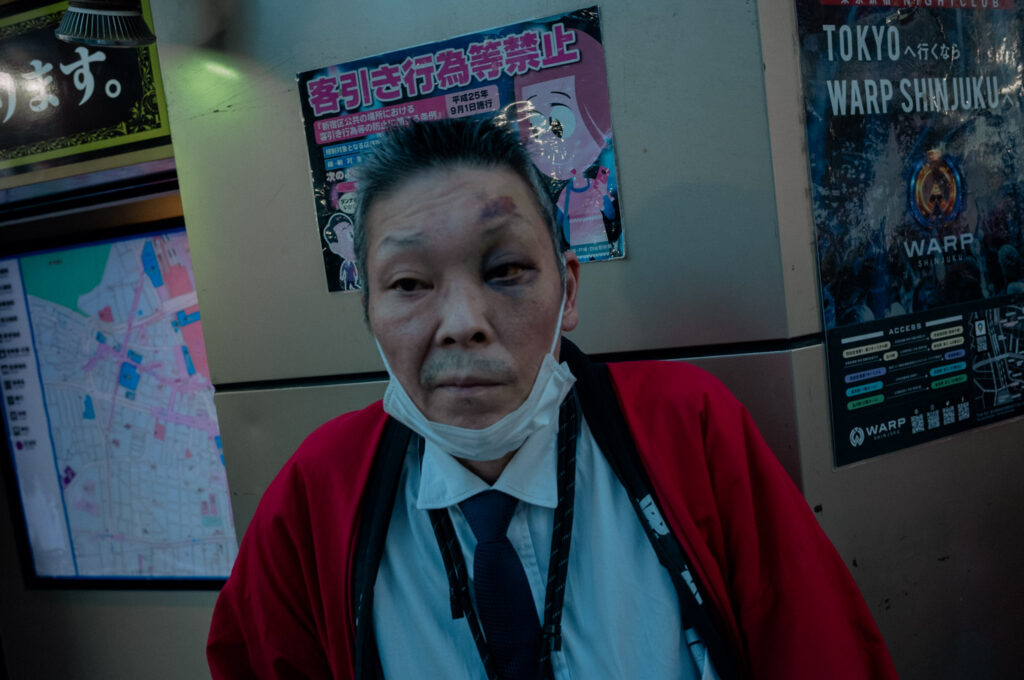
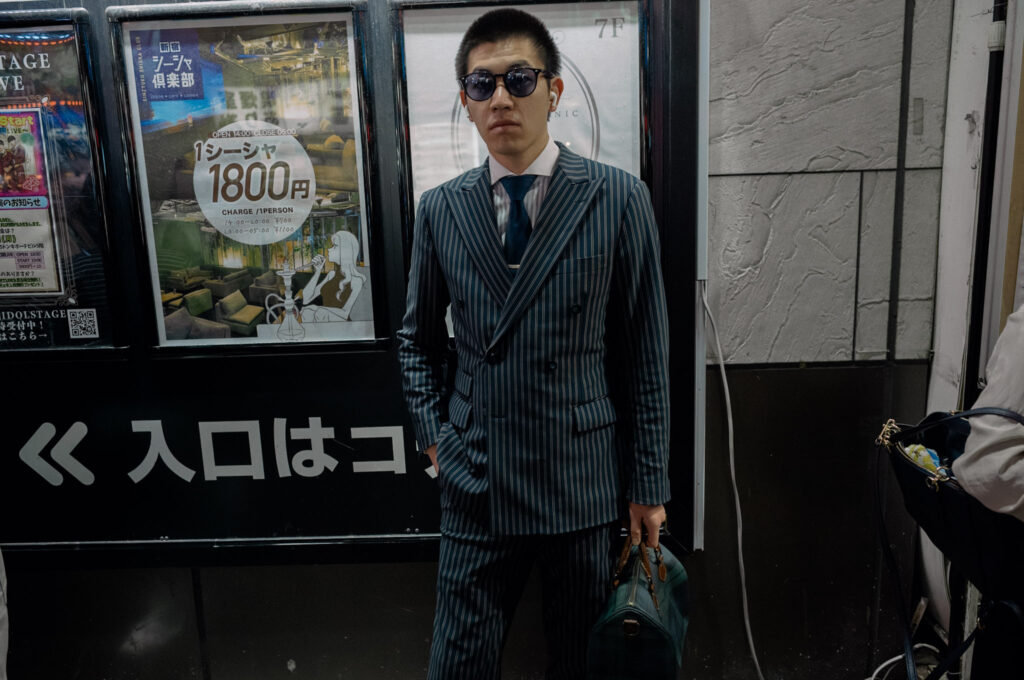
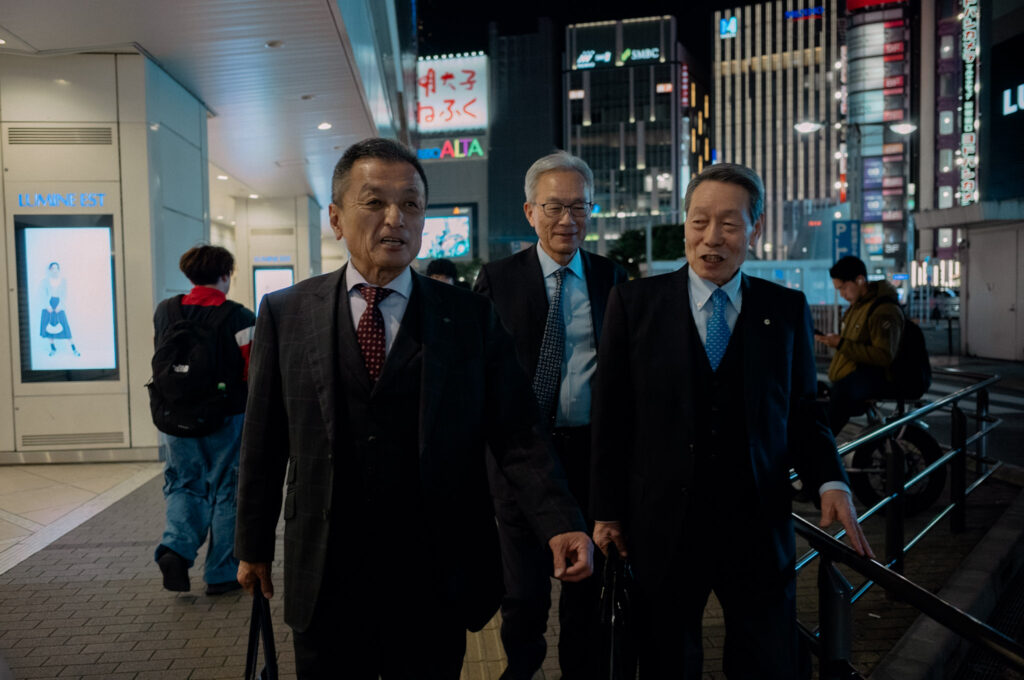
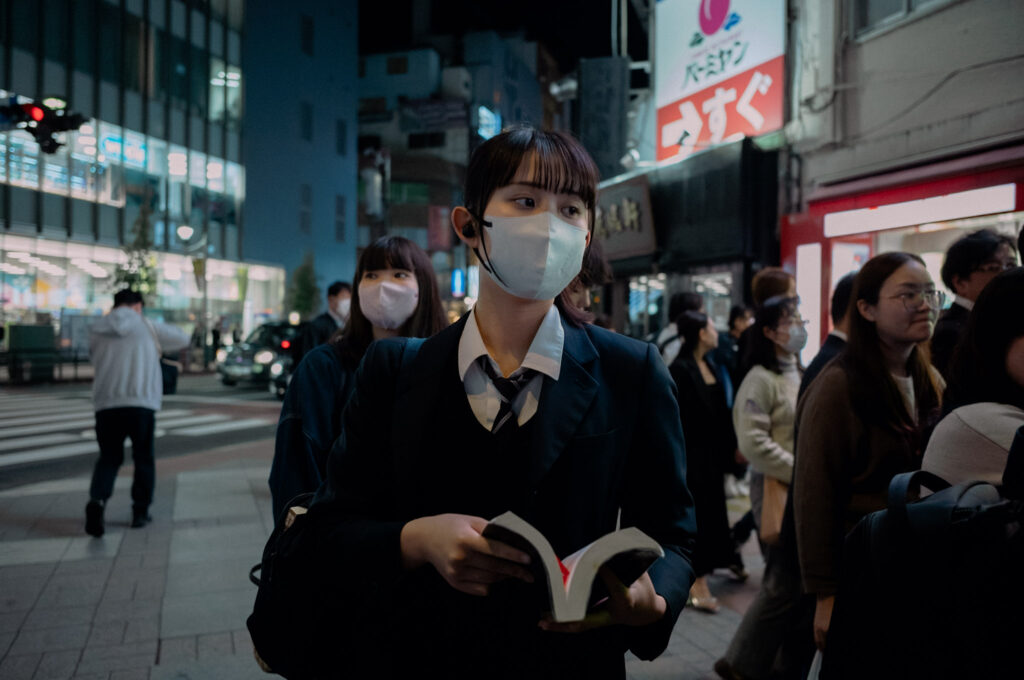
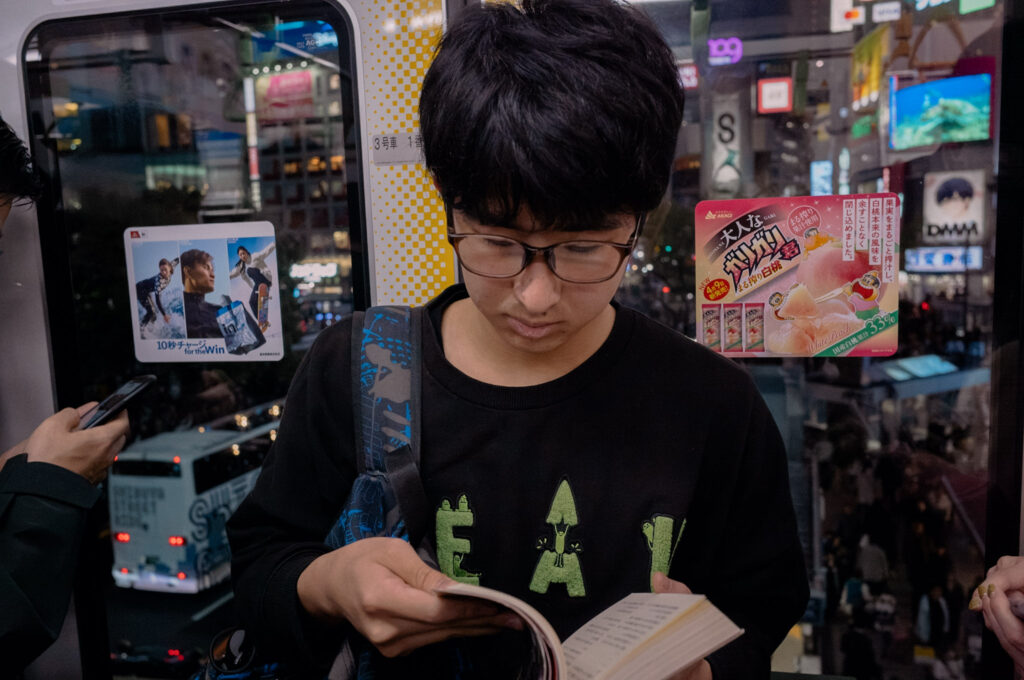
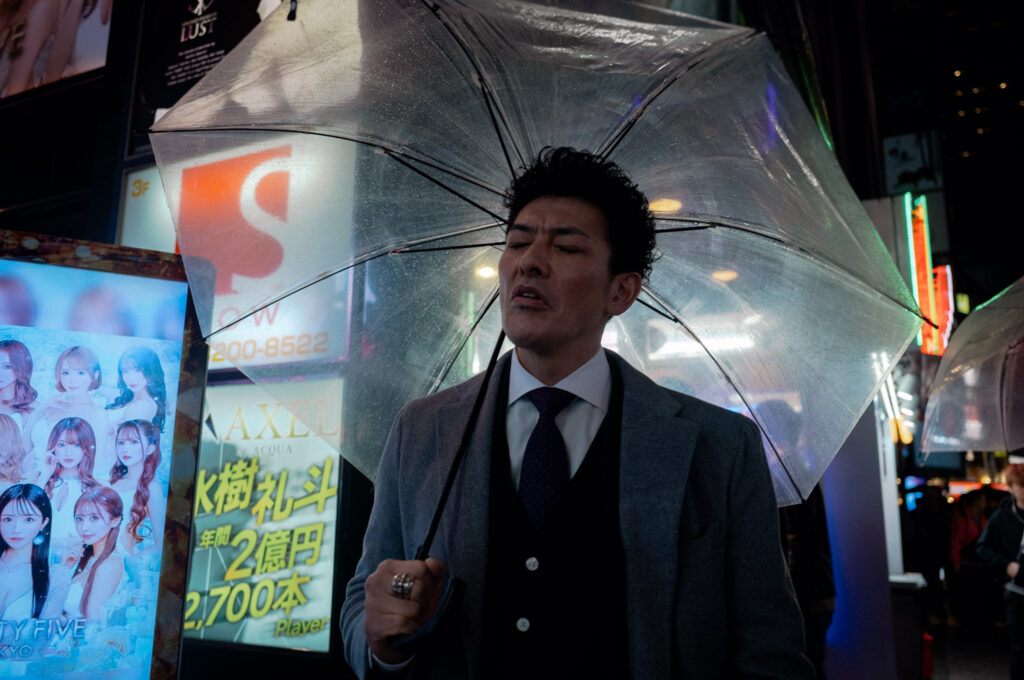
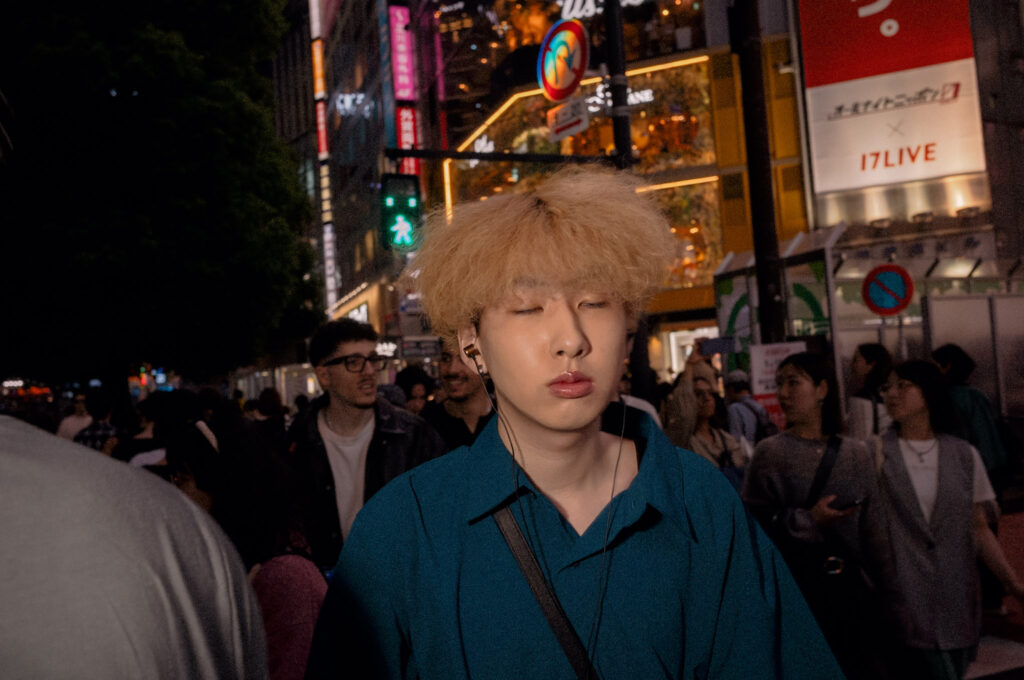
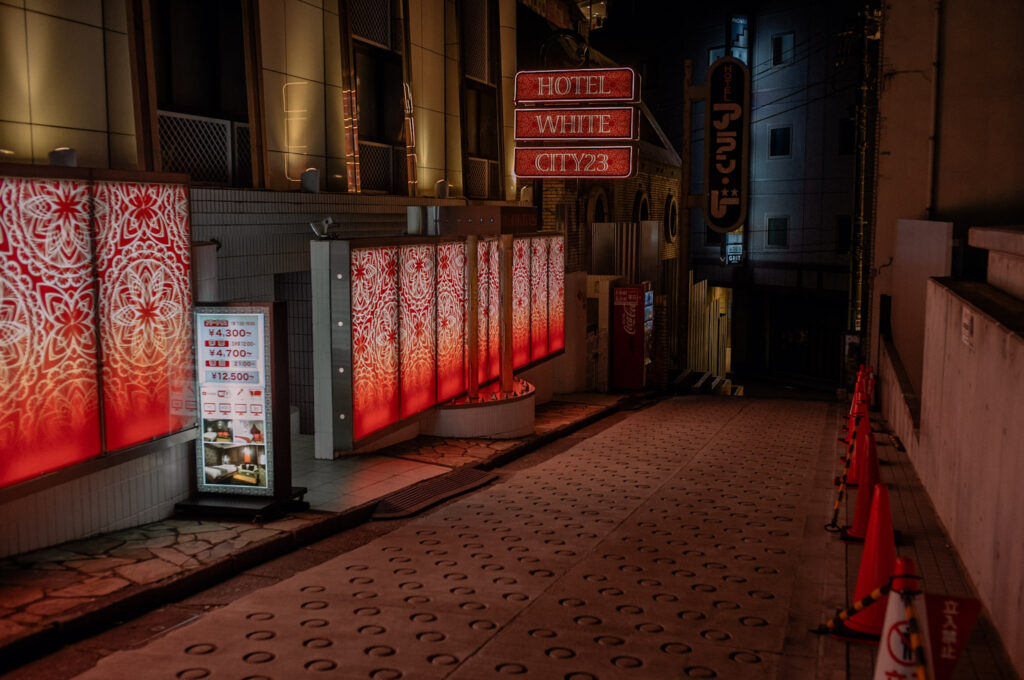
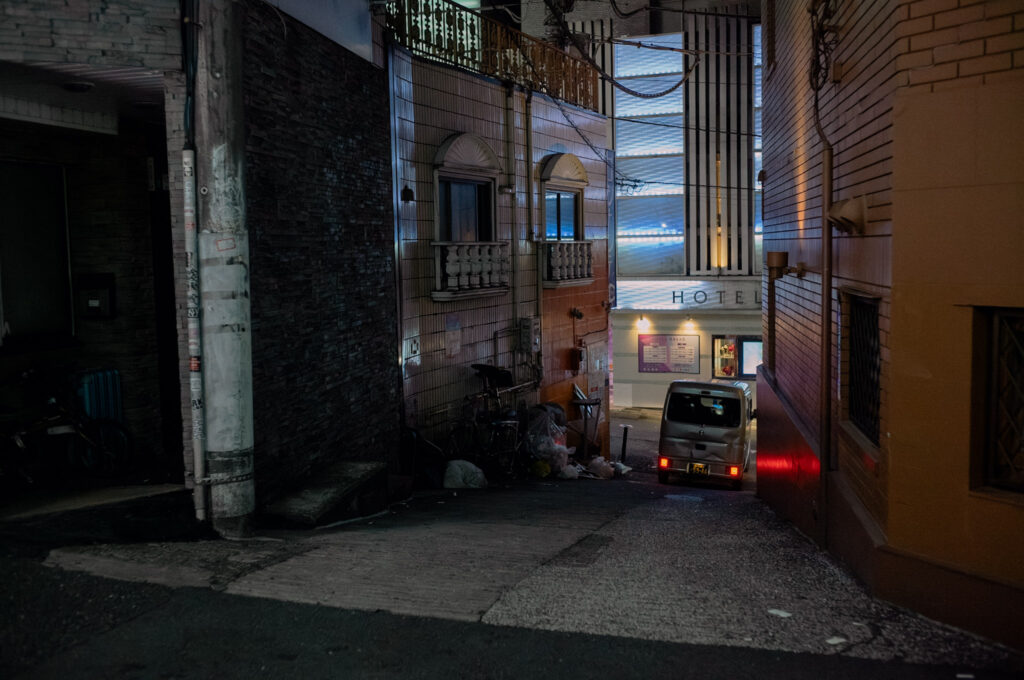
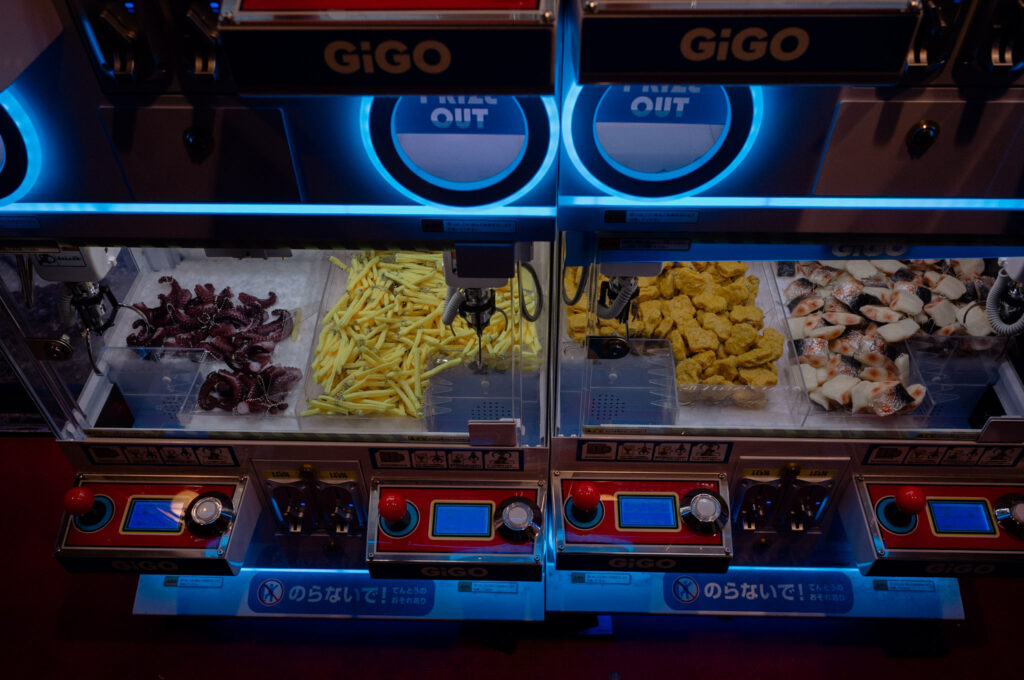
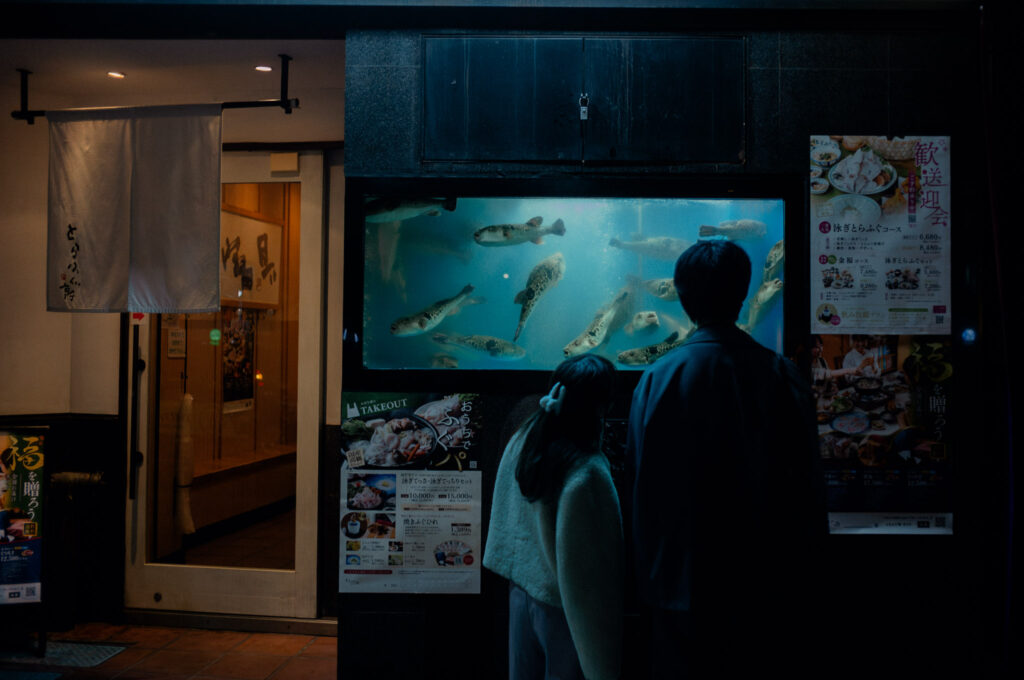
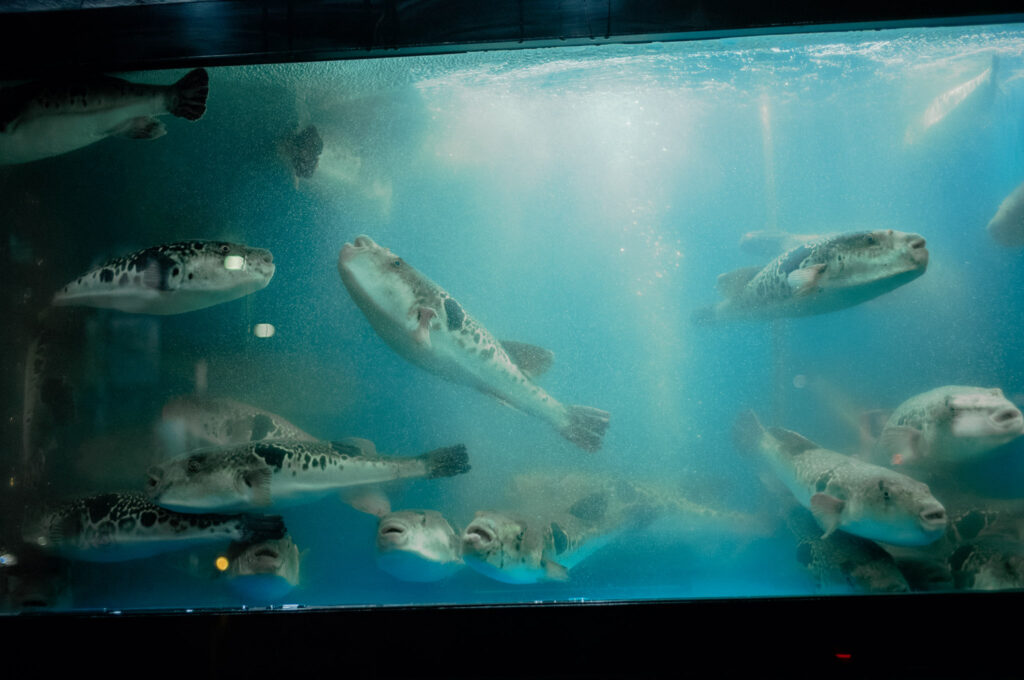
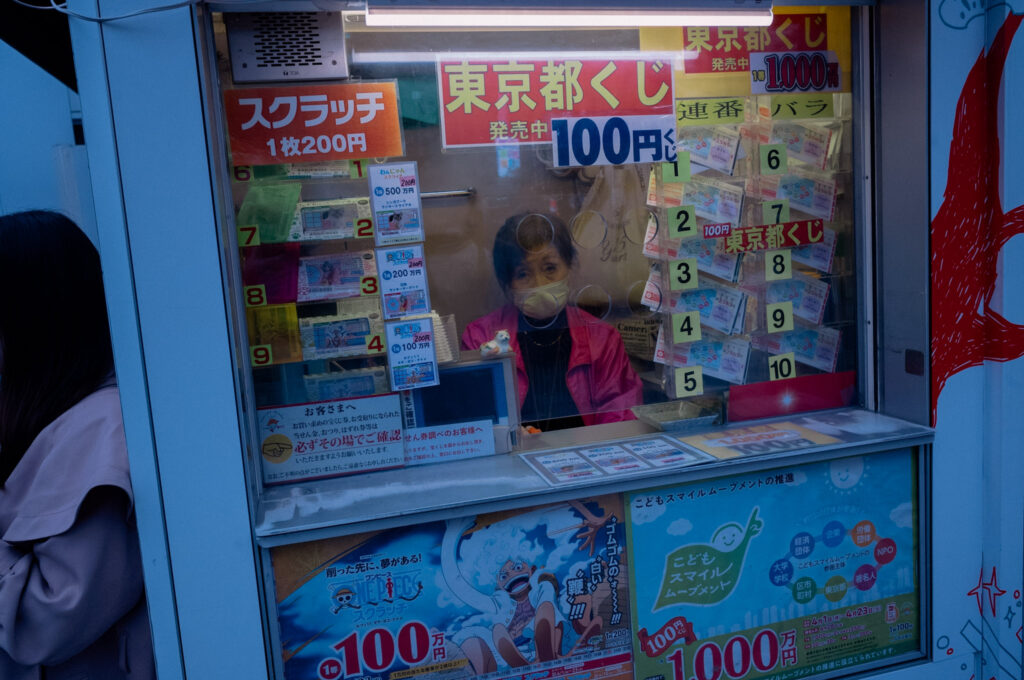
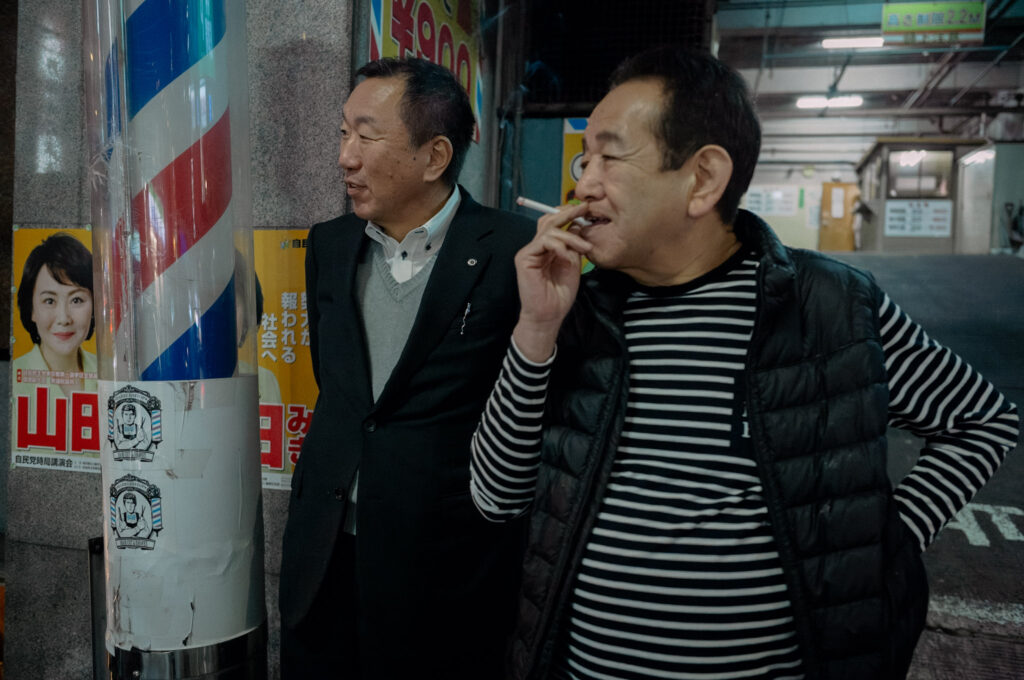
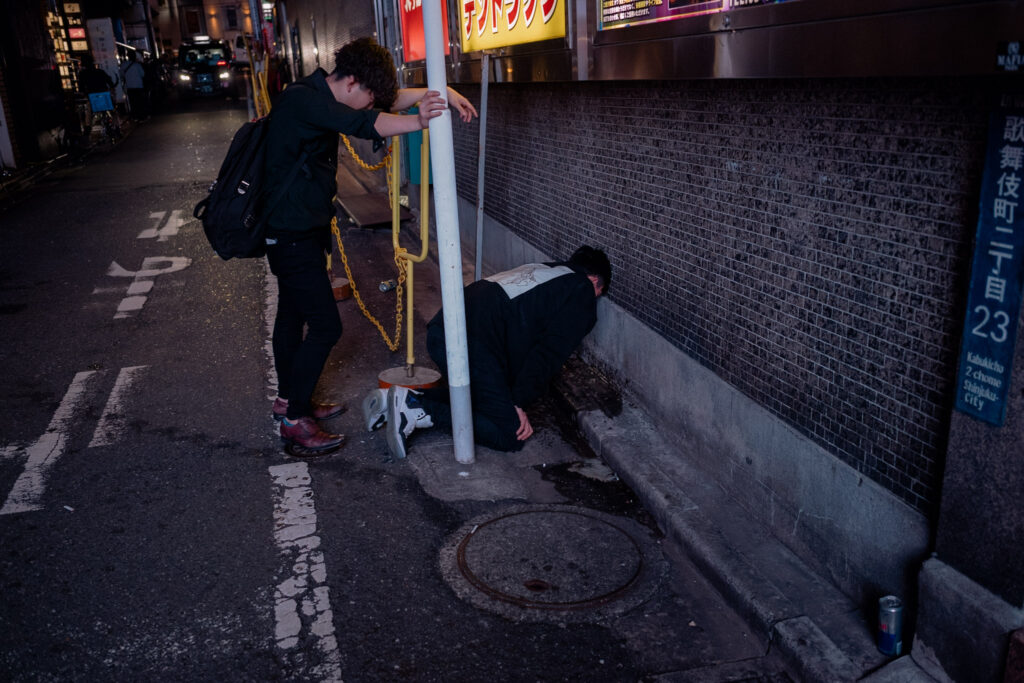
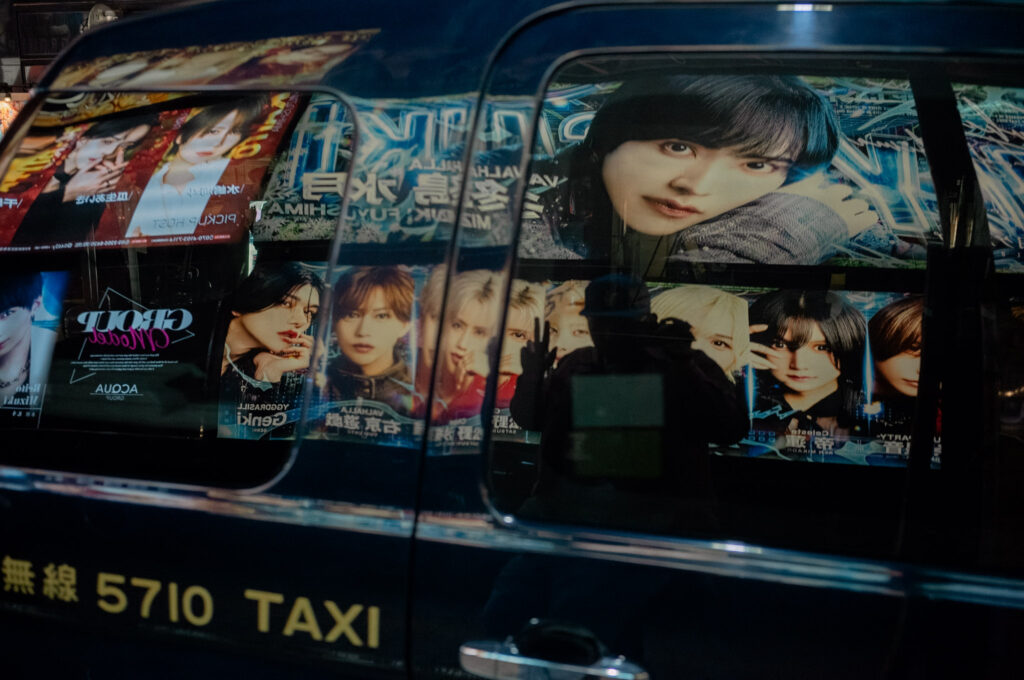
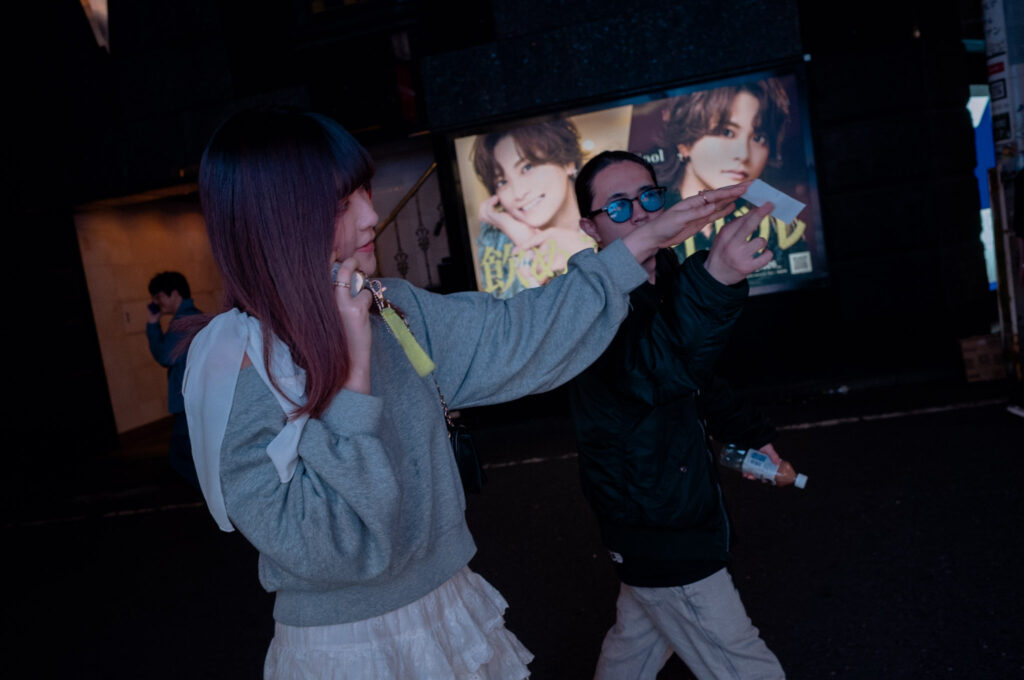
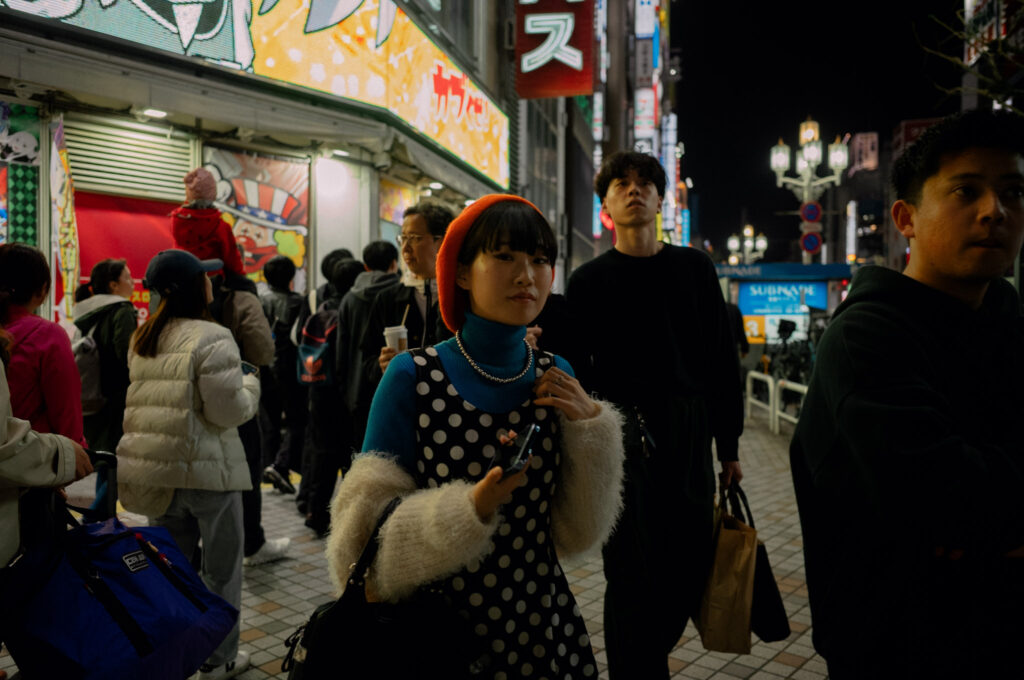
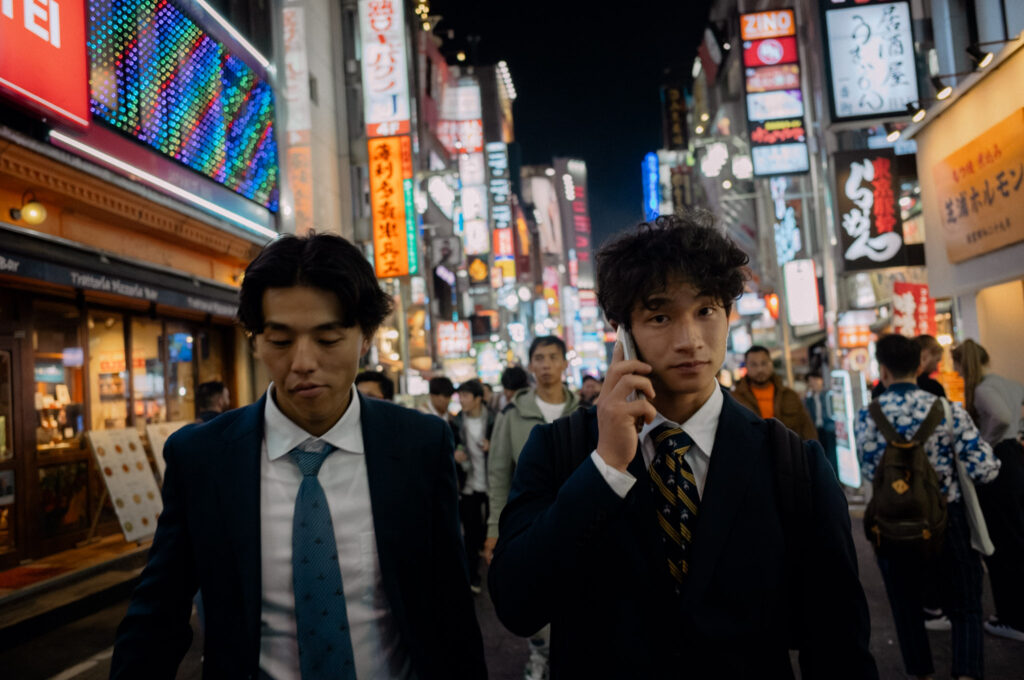
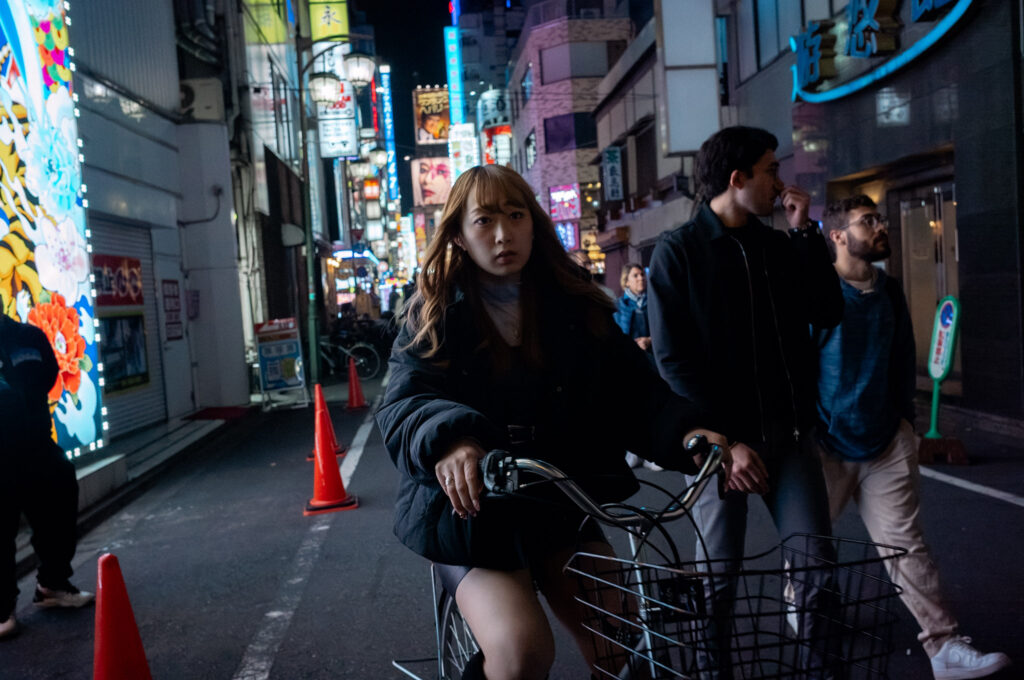
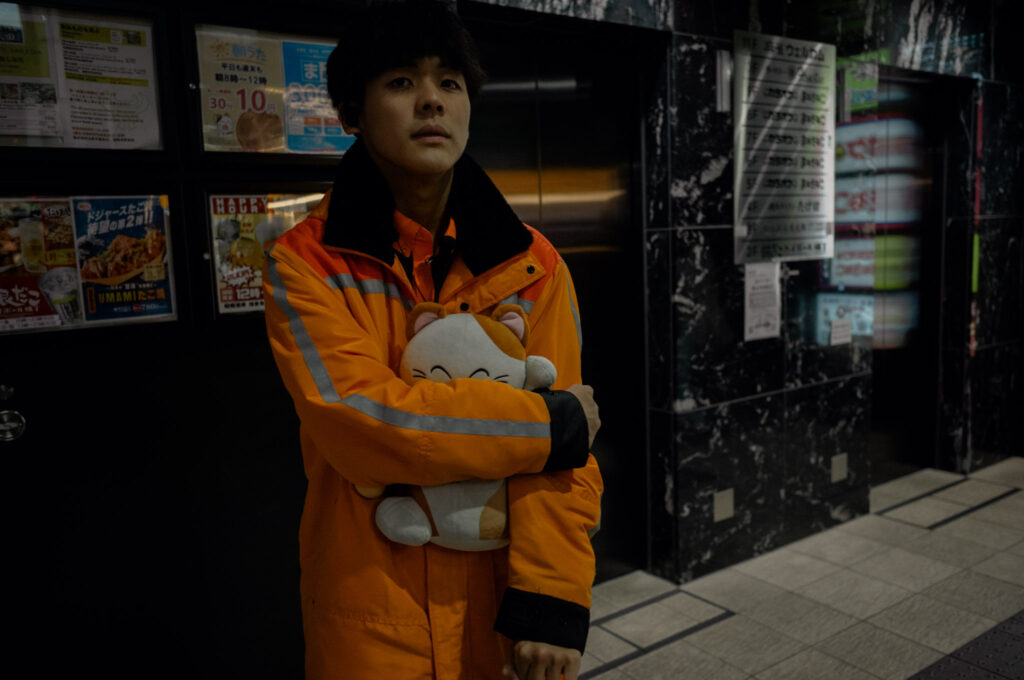
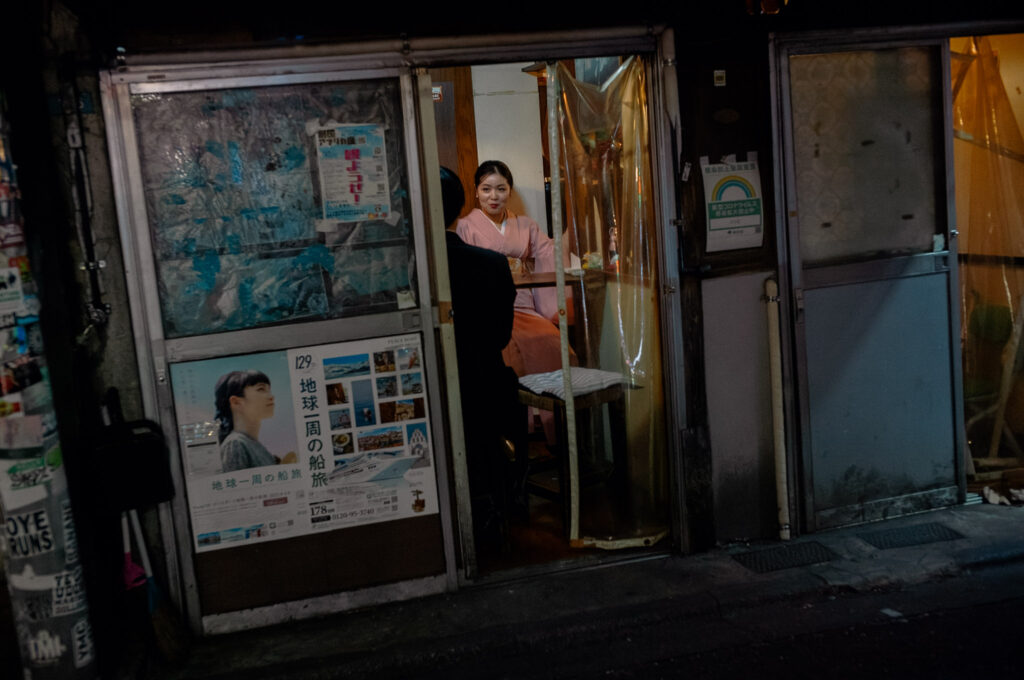
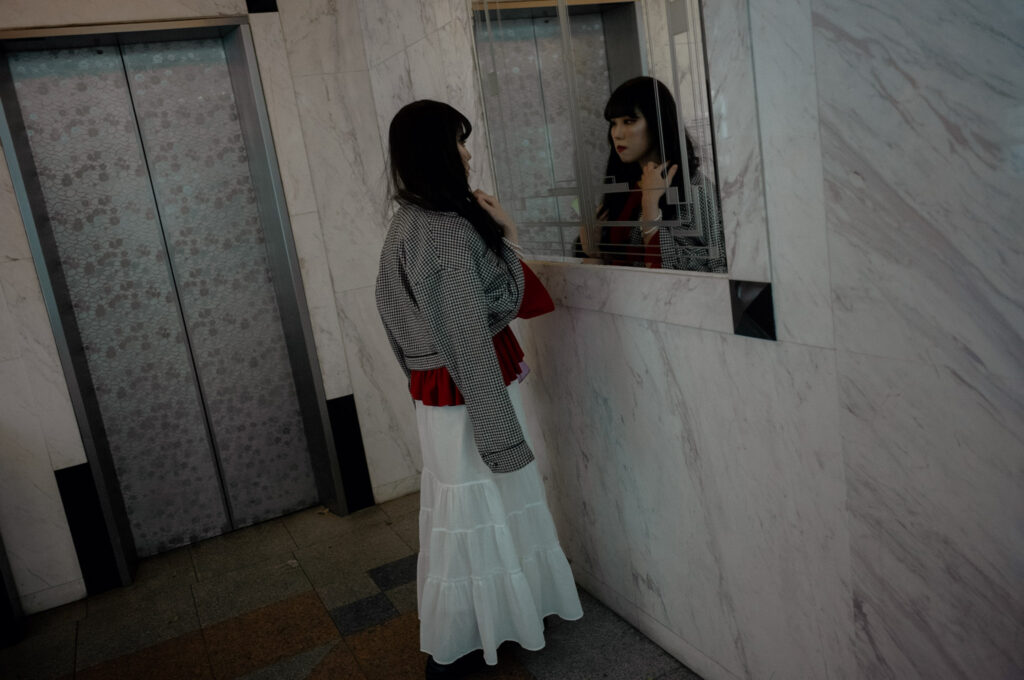
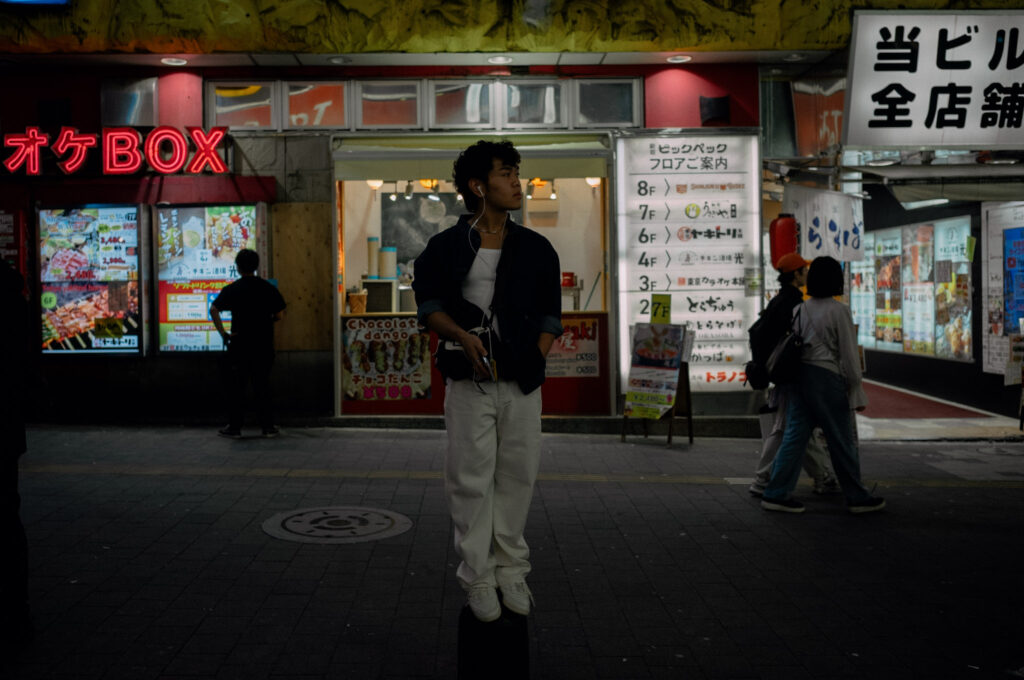
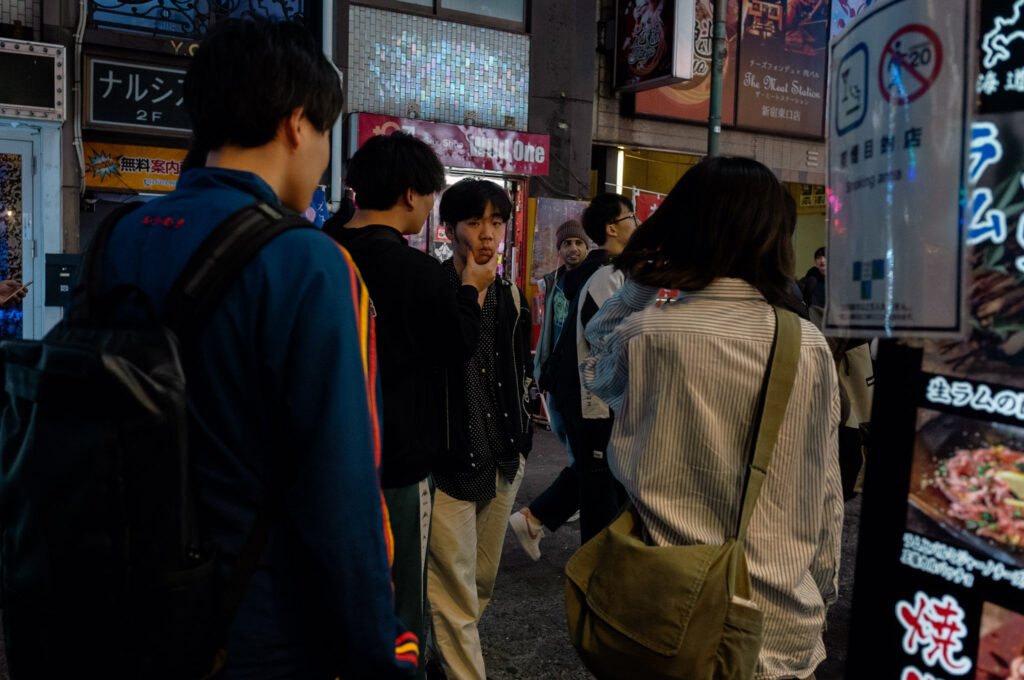
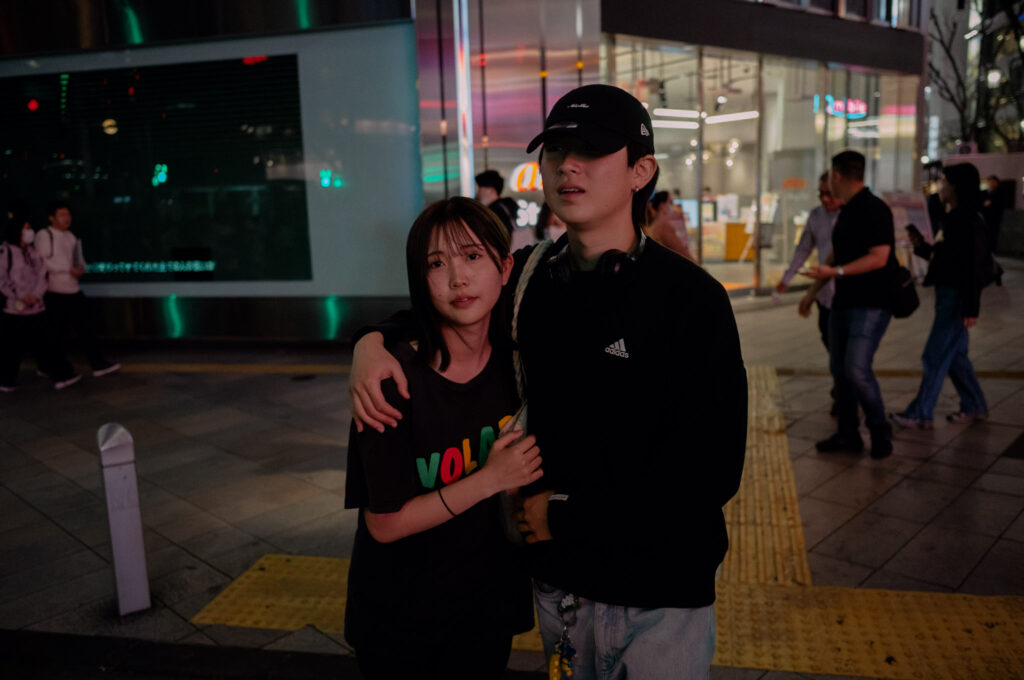
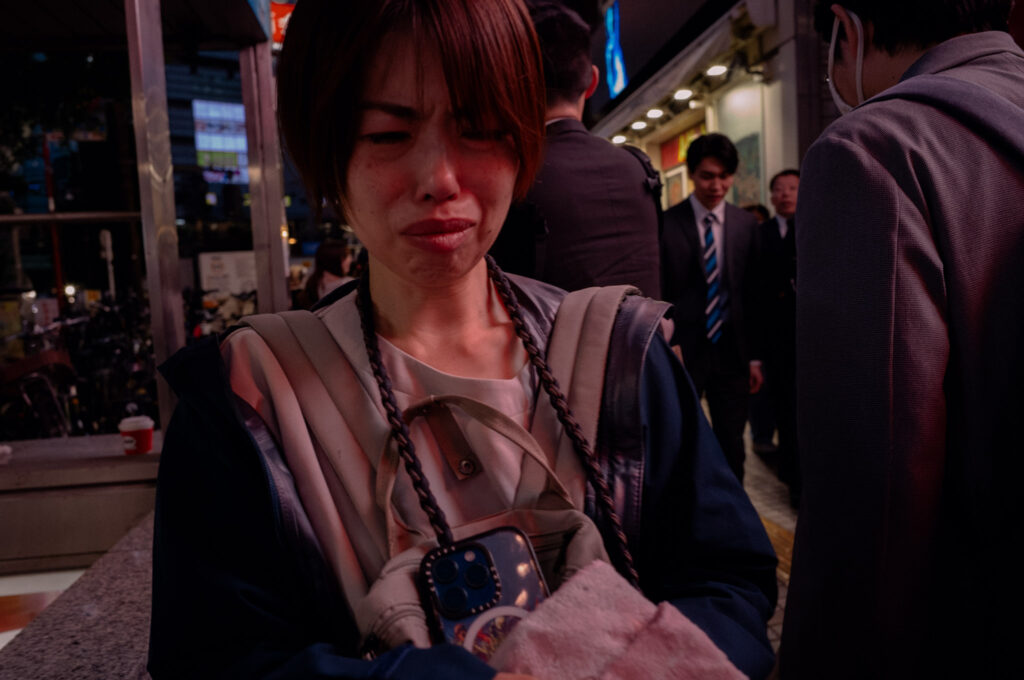
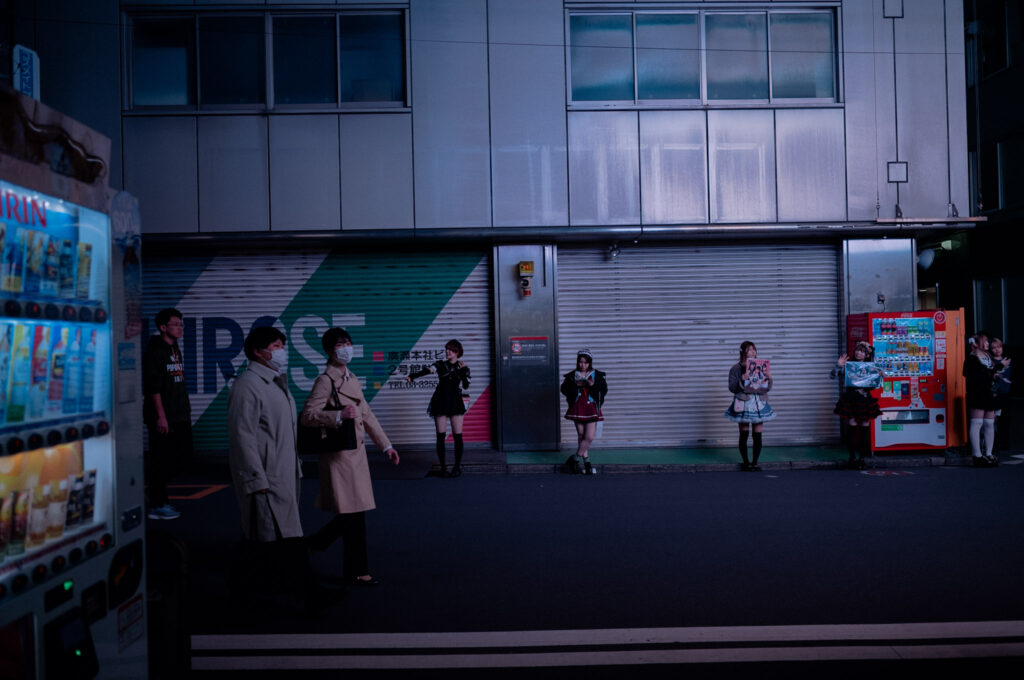
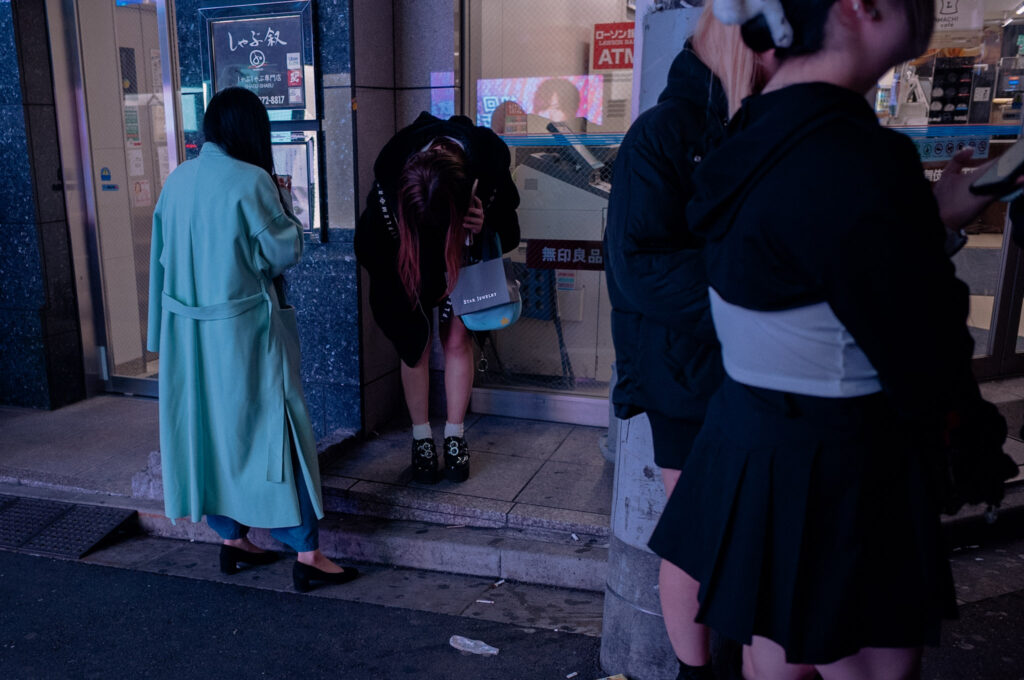
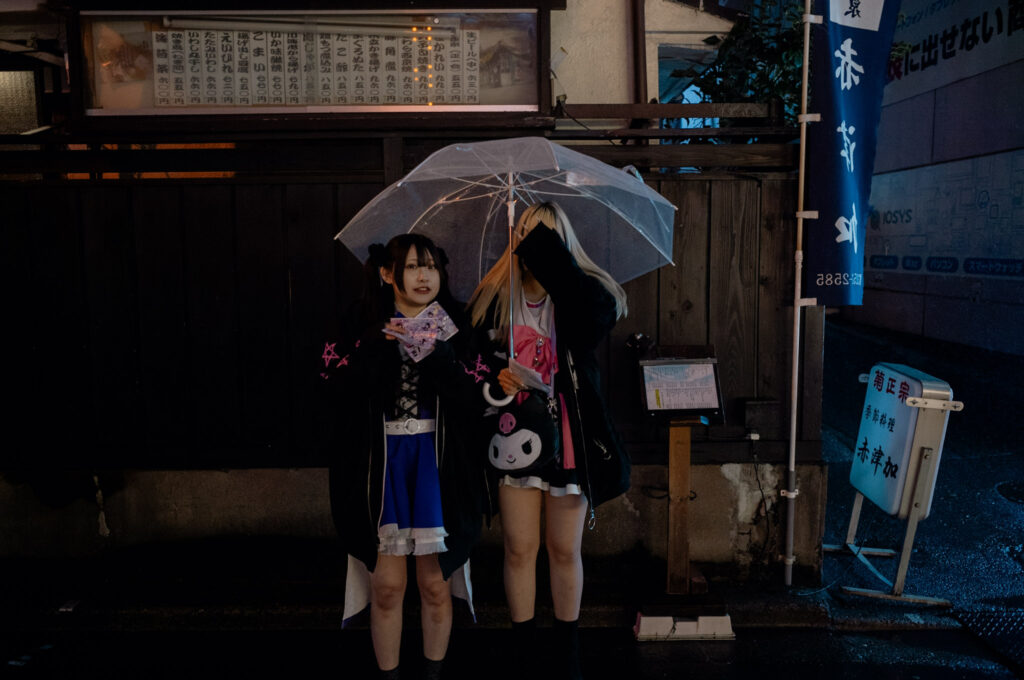
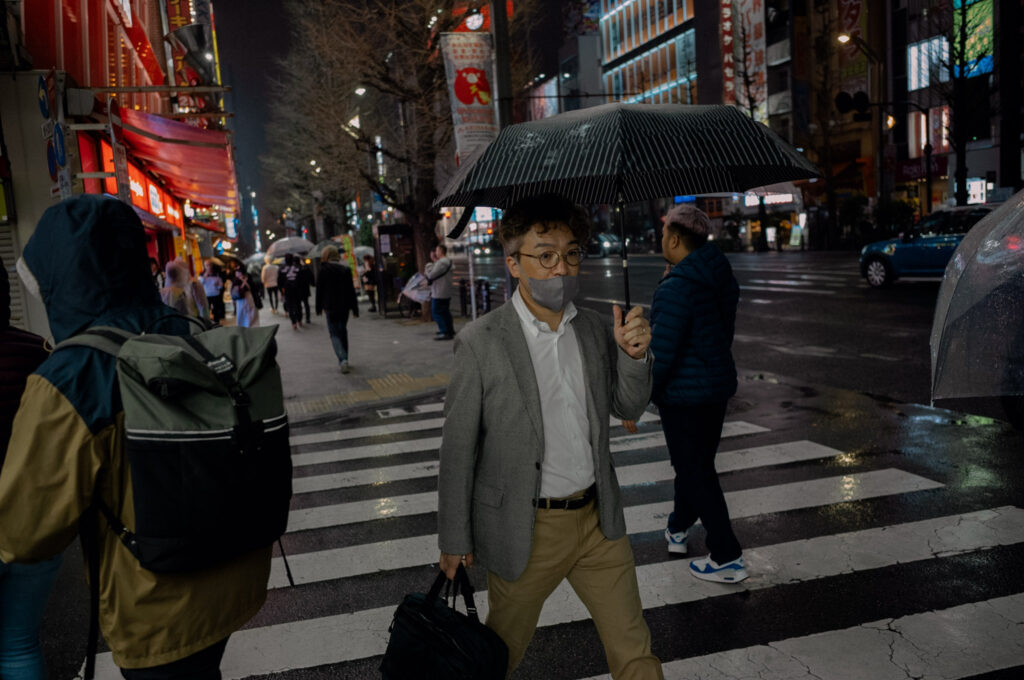
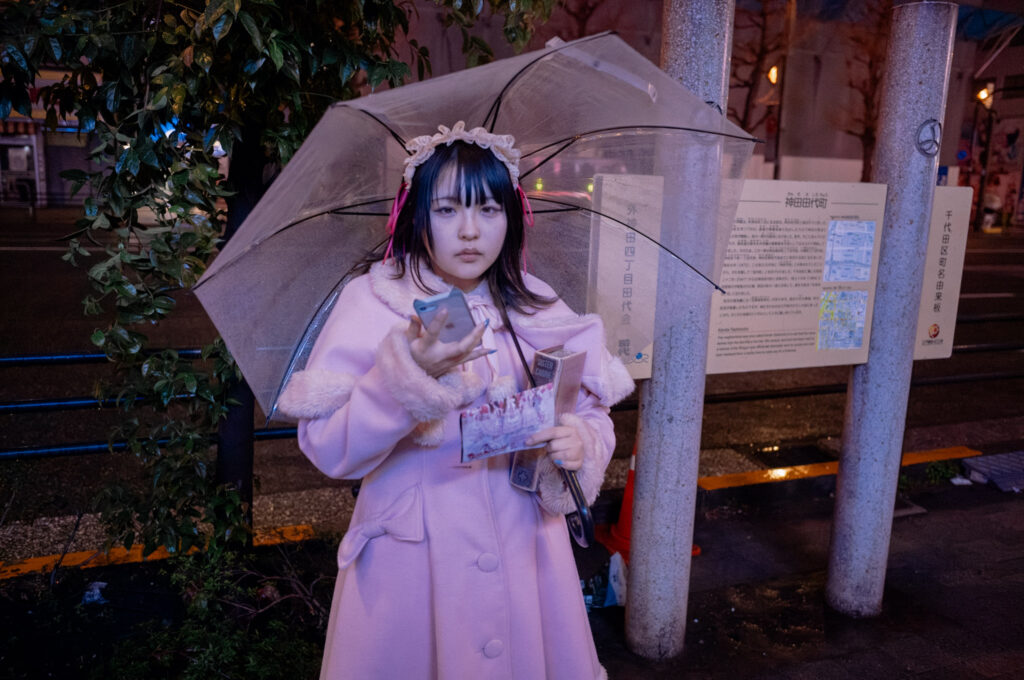
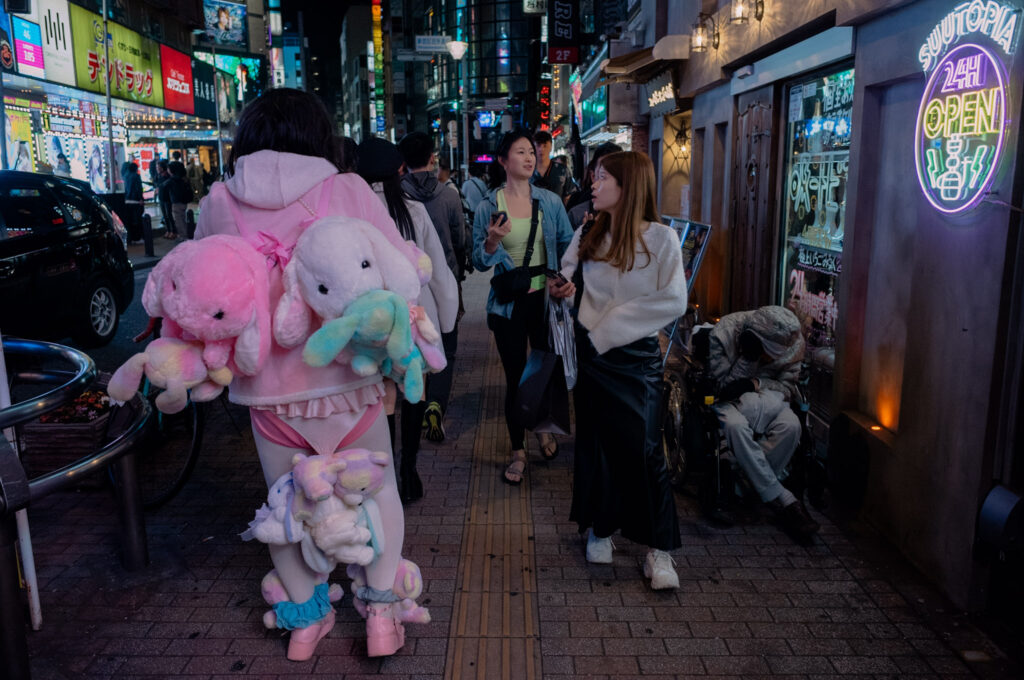
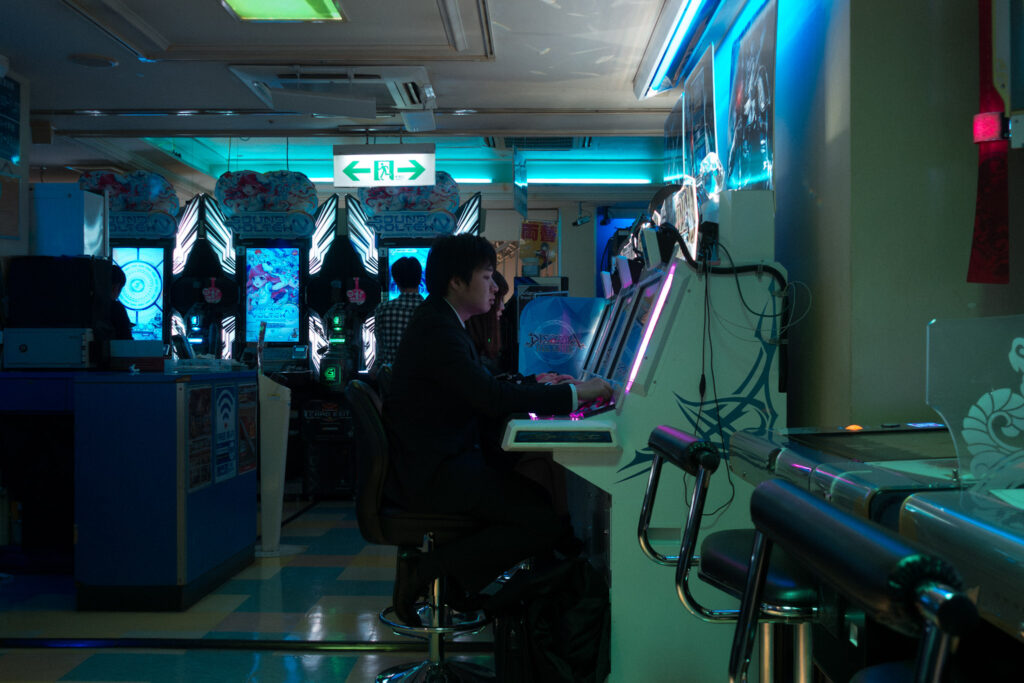
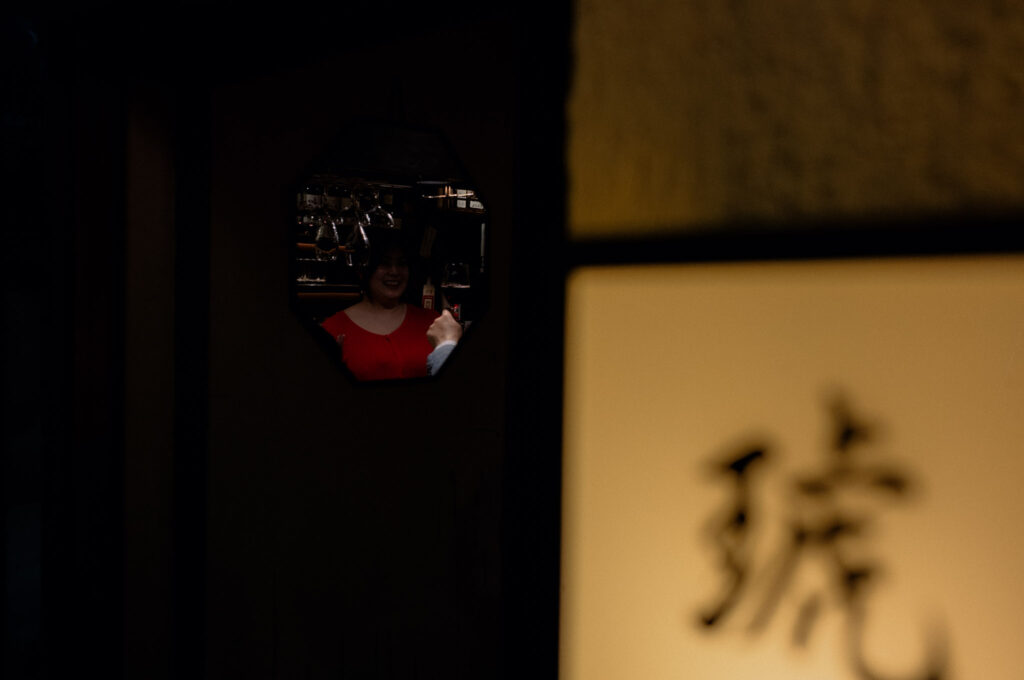
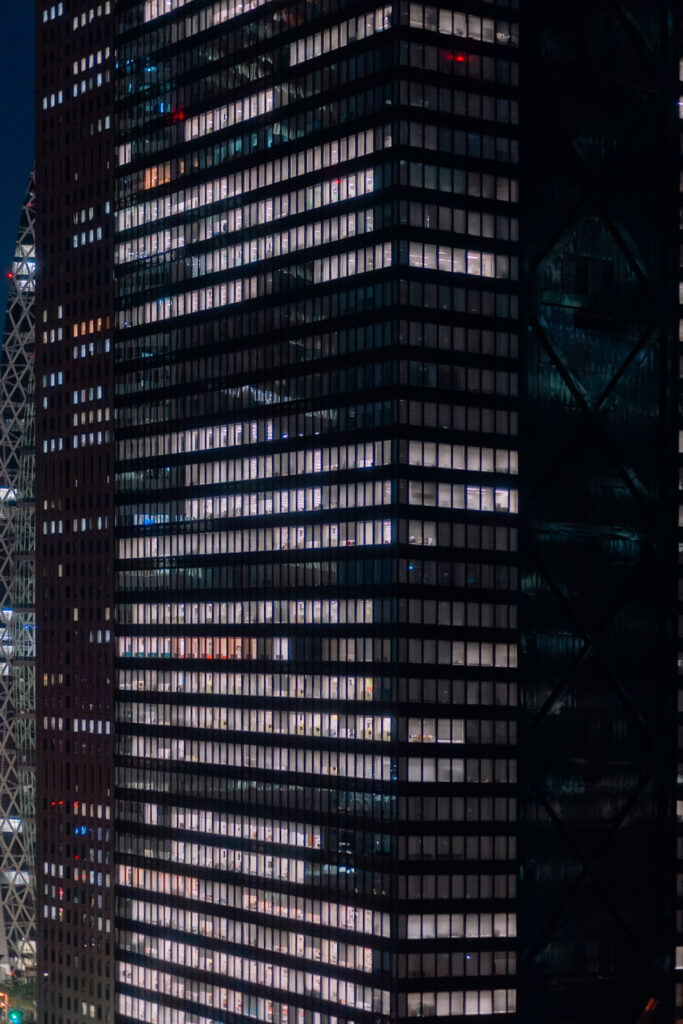
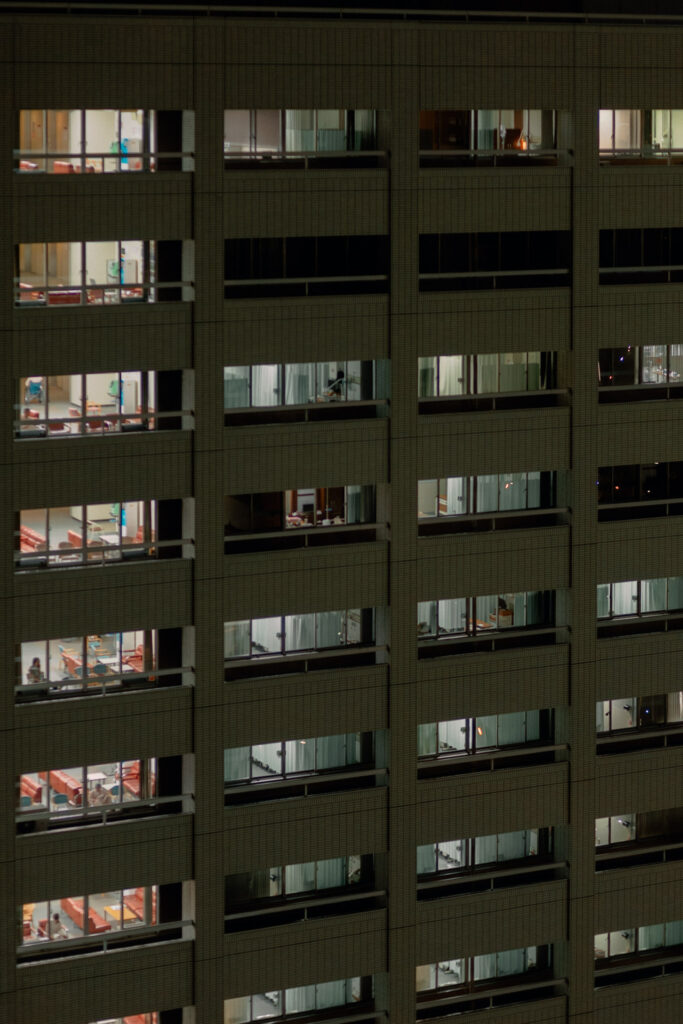
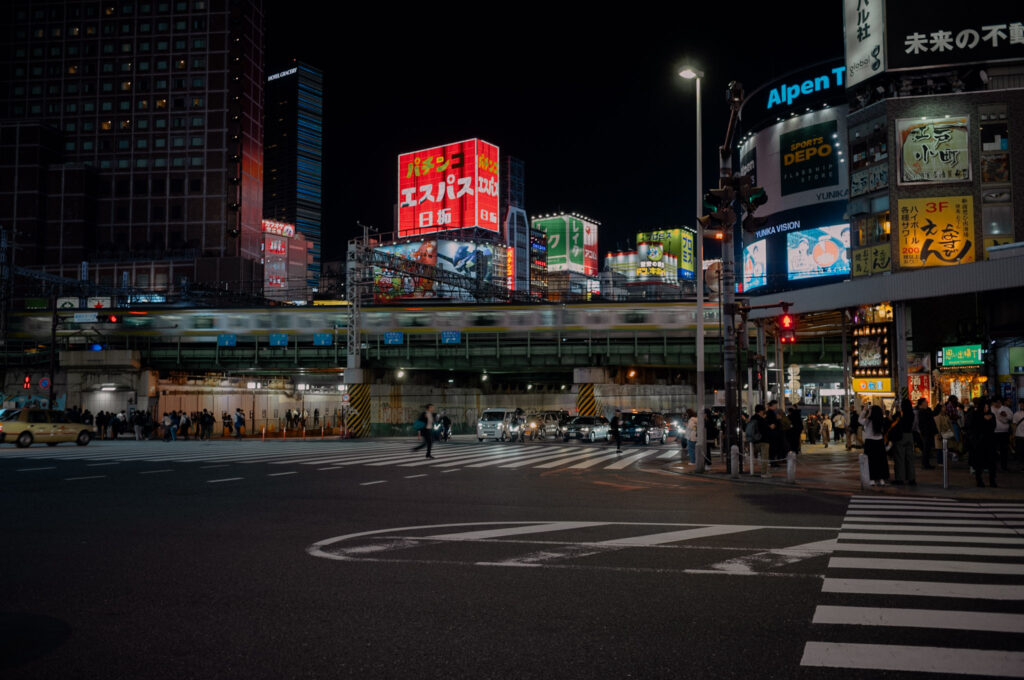
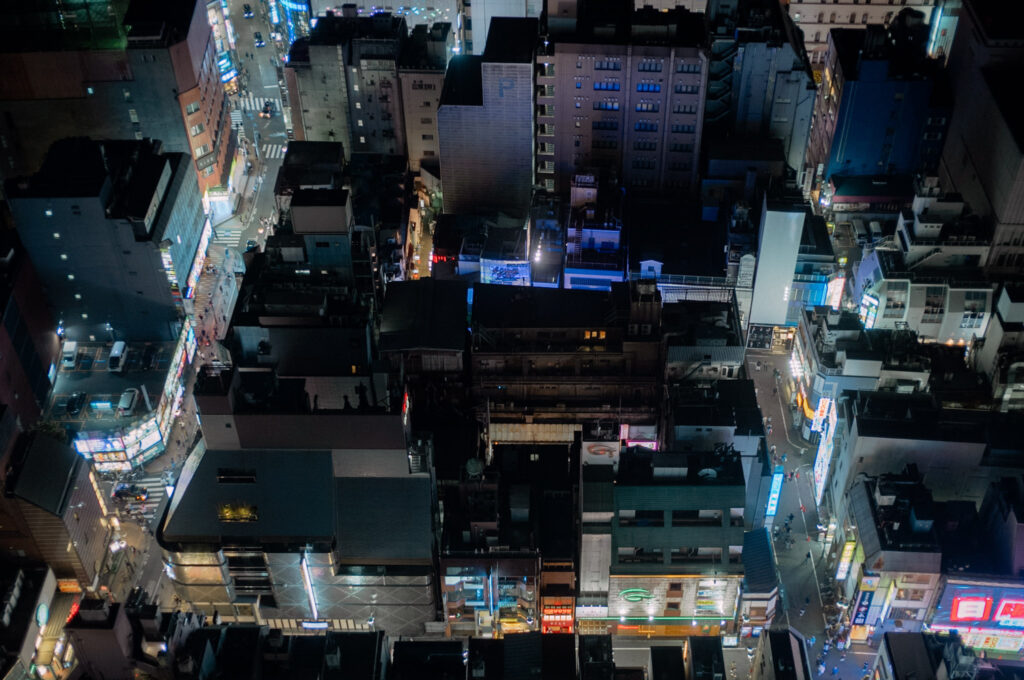
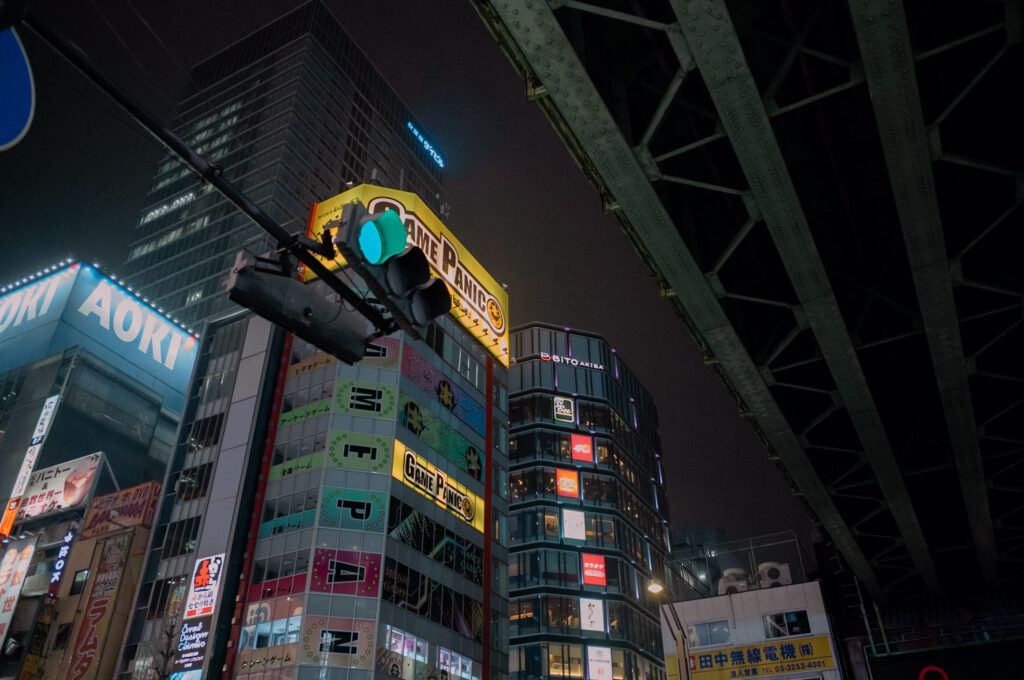
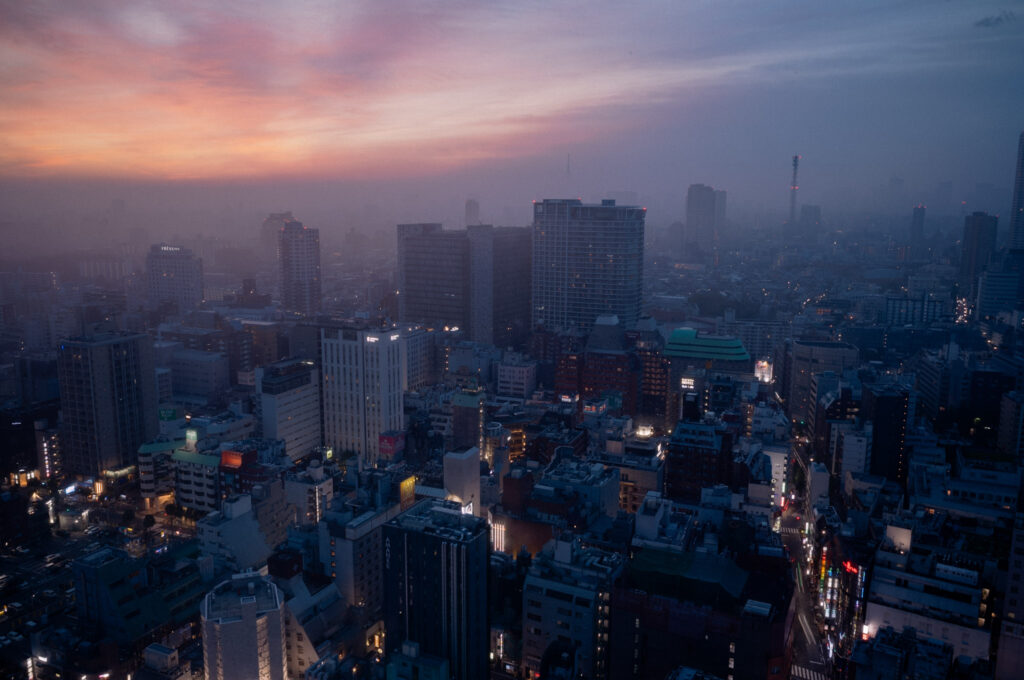
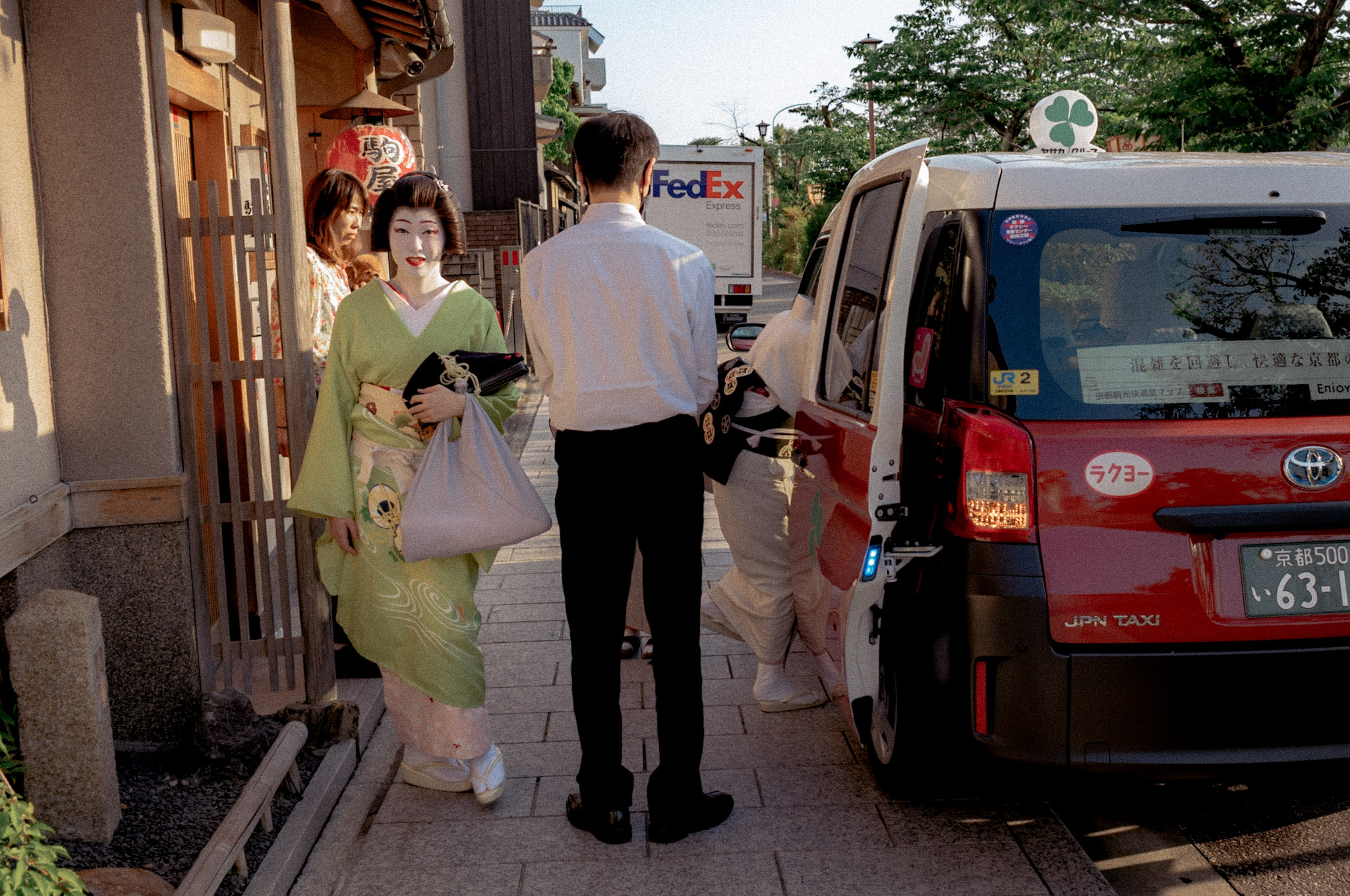
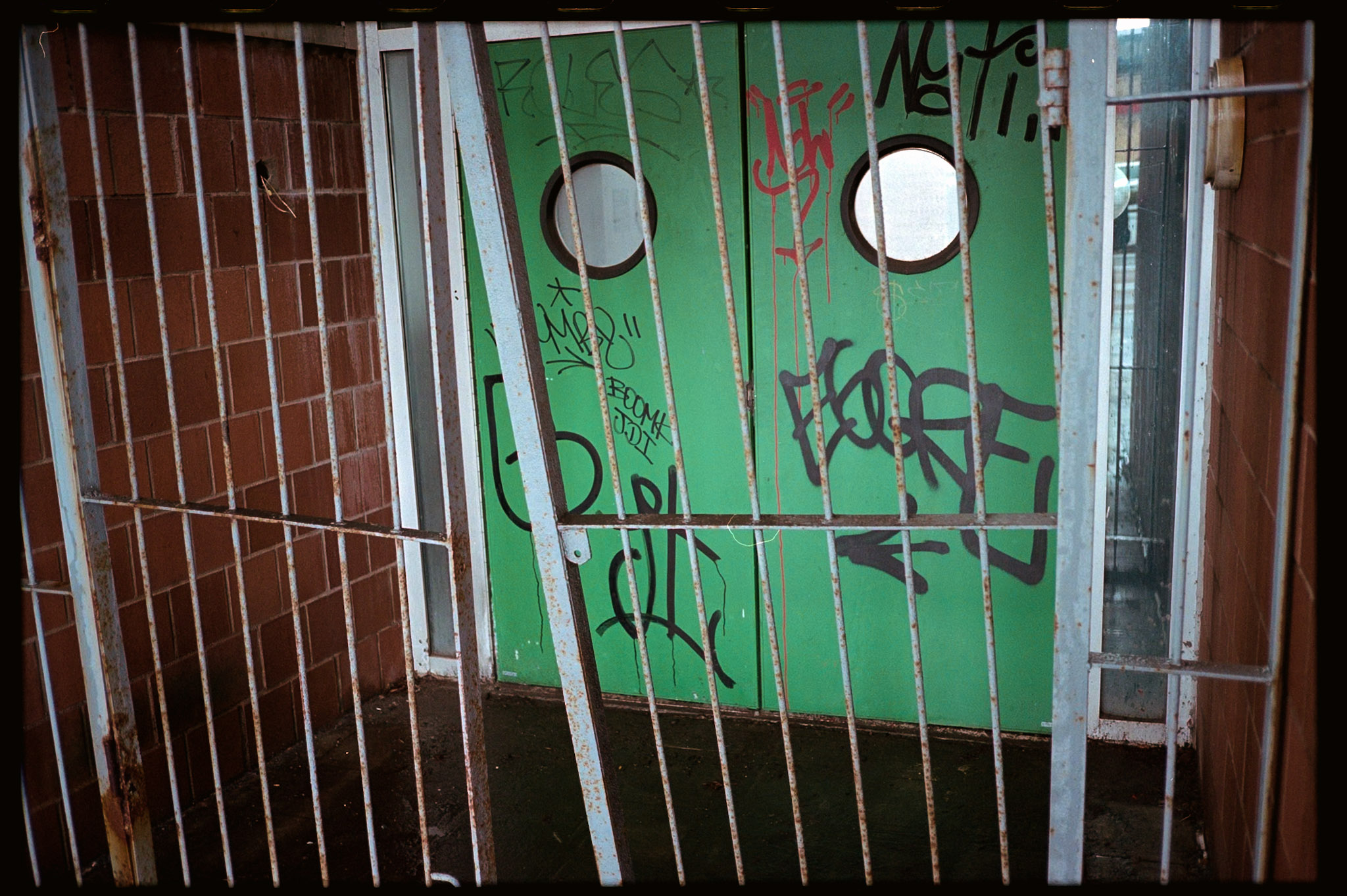
Neon, screens, doorways and crowds divide Tokyo’s night into shifting fields of attention. Across Love Hotel Hill, Golden Gai, Ni-chōme, Kabukichō, Akihabara, Shibuya and Shinjuku, Tokyo After Dark follows how intimacy, commerce, labor and performance enter public view. Light makes some bodies legible or theatrical. Darkness gives others a temporary form of privacy or anonymity.
The photographs trace how nocturnal spaces bring exposure and privacy, desire and transaction, candidness and performance into contact. Haruki Murakami’s After Dark provides a point of departure for this movement through the city. The sequence builds its own account from observed encounters.
Each image holds a provisional relation between people, places and the conditions that make them visible. The sequence keeps those relations open, allowing contact to appear as affectionate, transactional, tentative or unresolved.
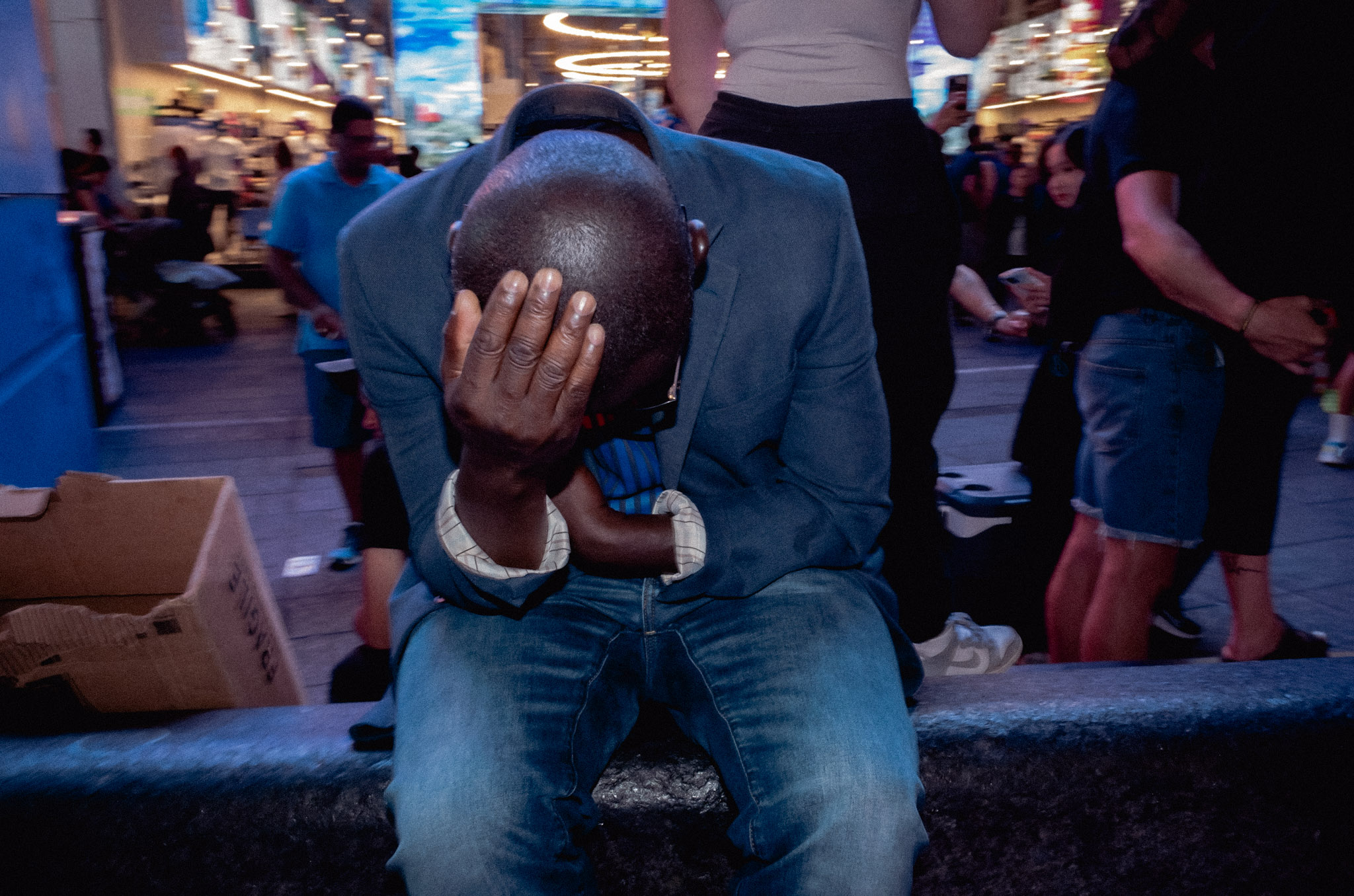
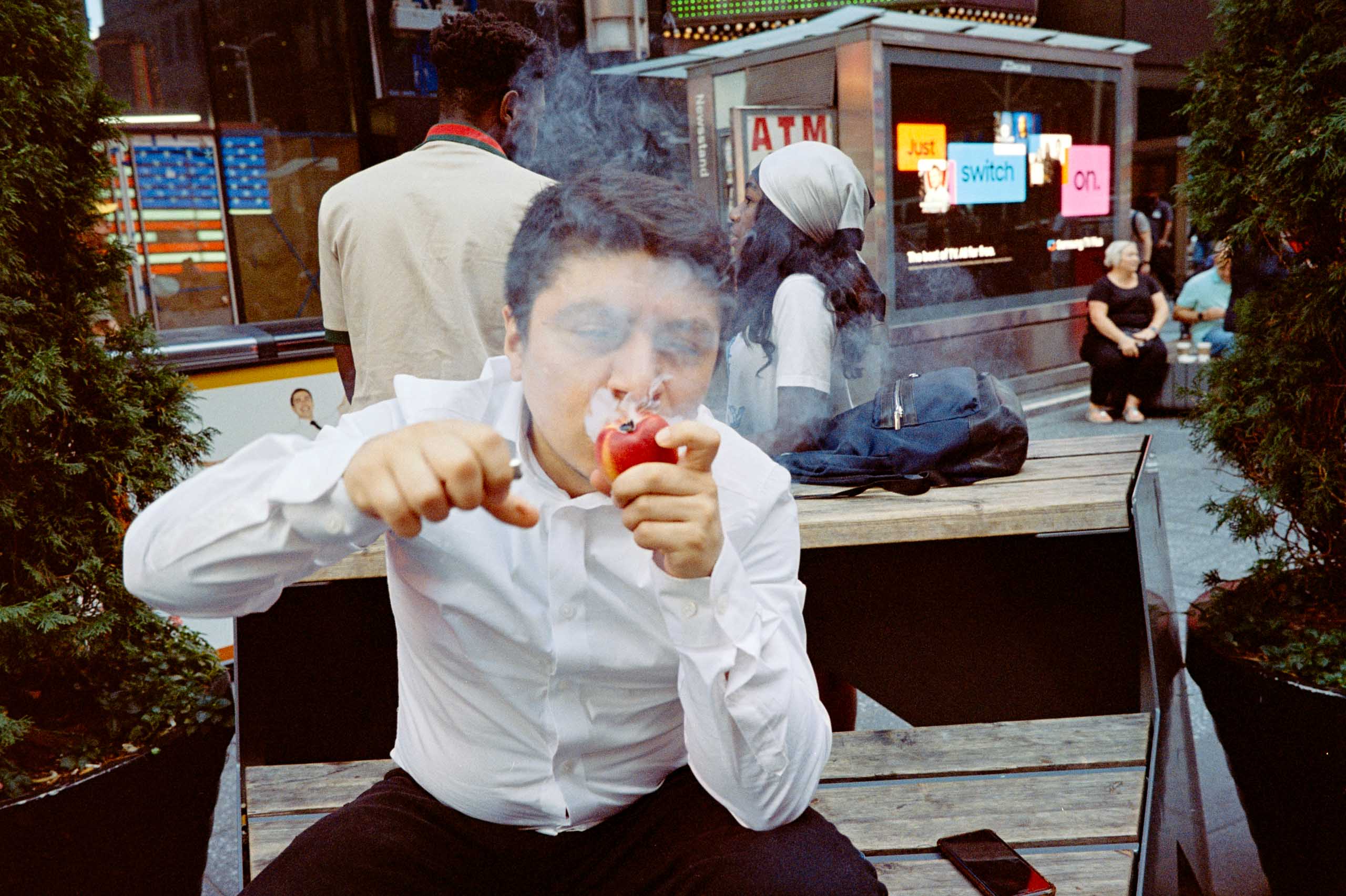
A long-term street study of Times Square as an American dream factory, where global spectacle collides with labor, historical erasure and street-level desperation.
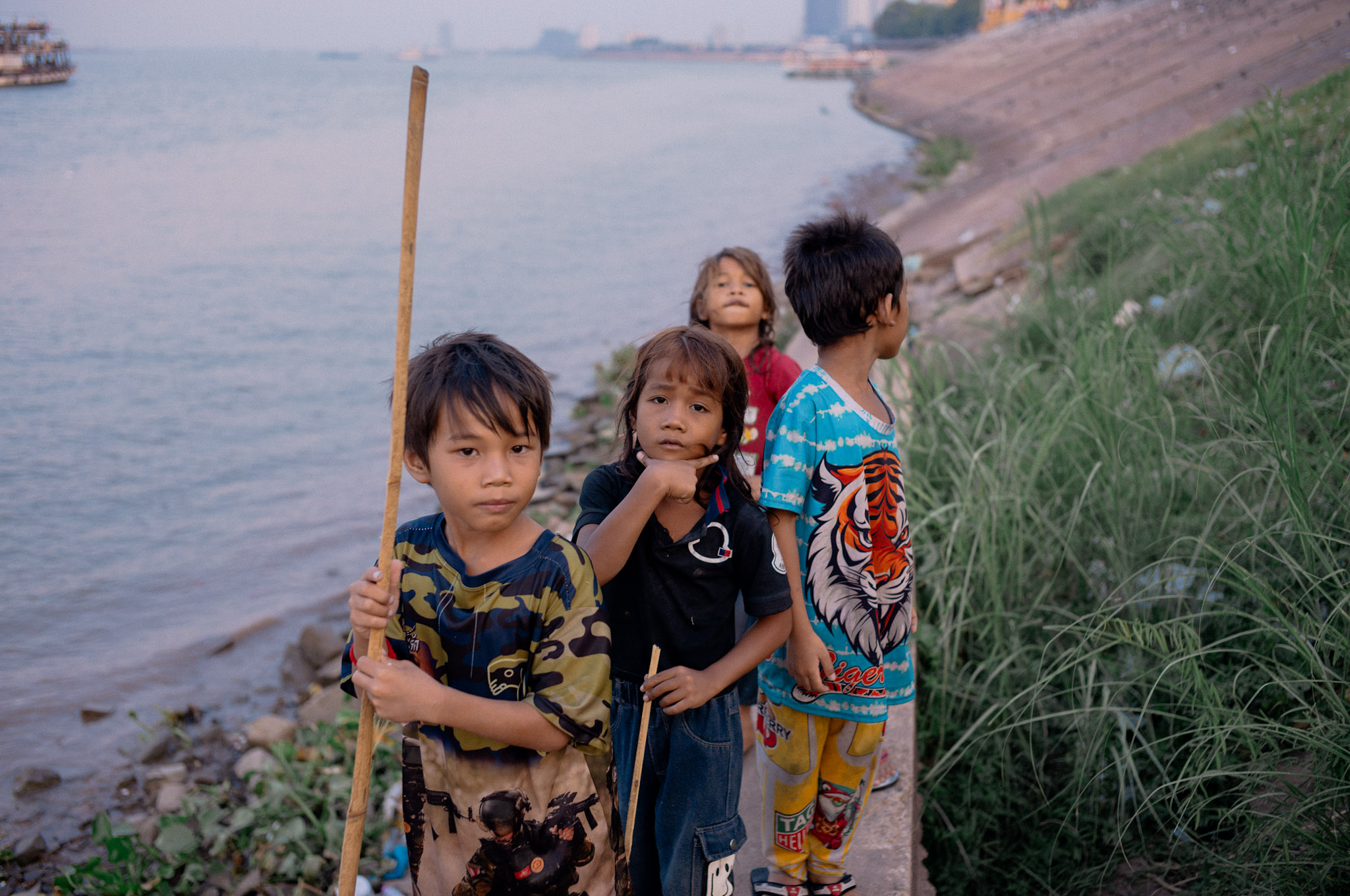
Hauntology explores unrealized futures, capturing how crumbling utopias and suppressed possibilities manifest in human presence and eroded environments.