
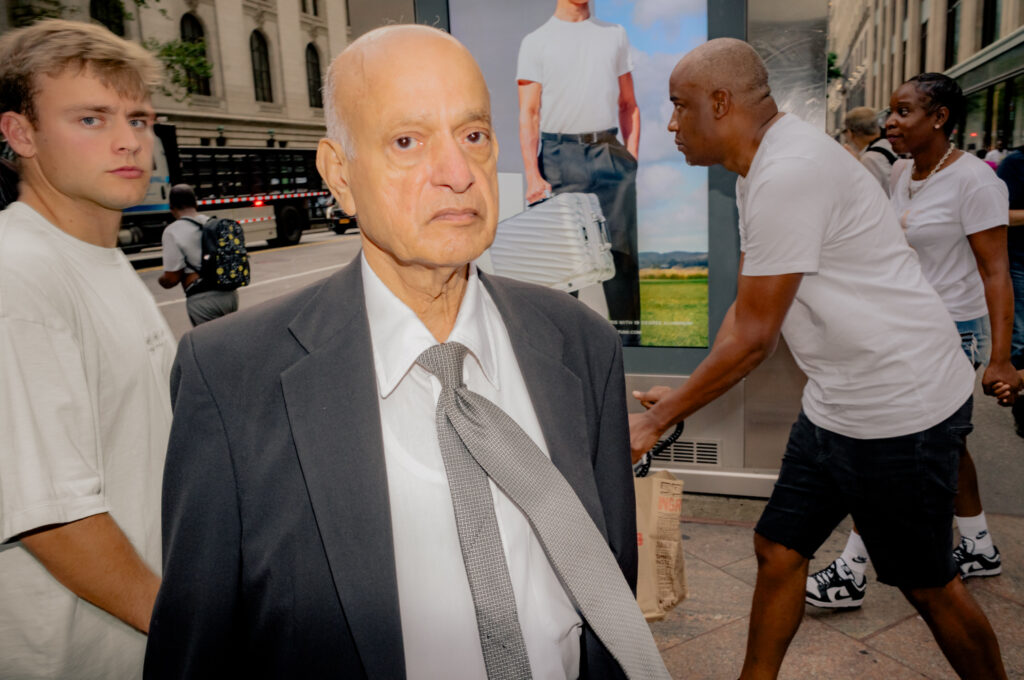
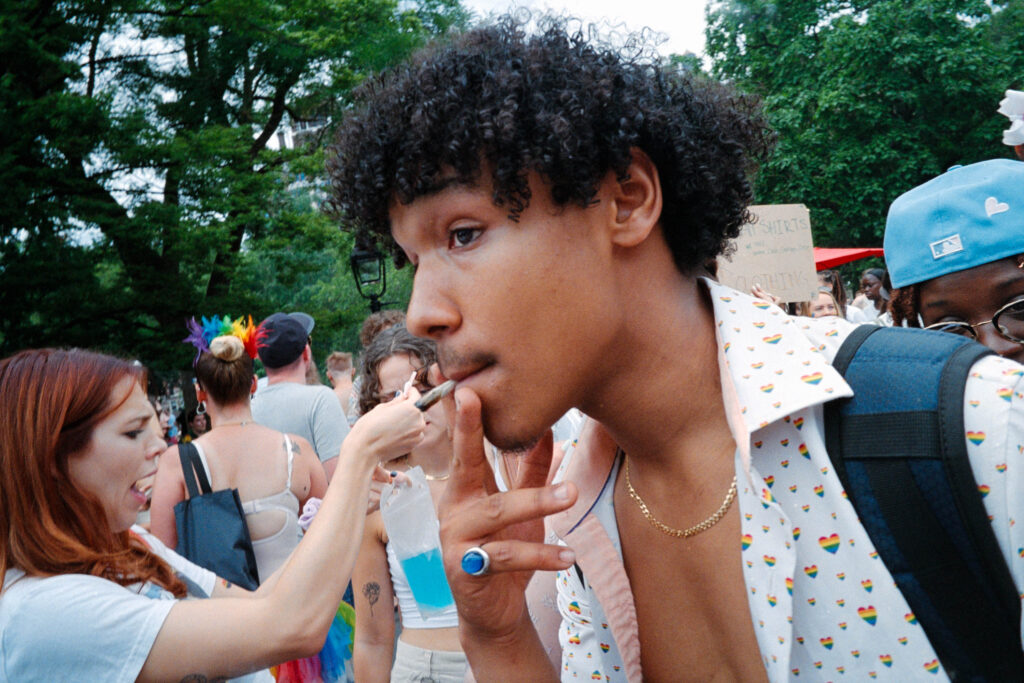
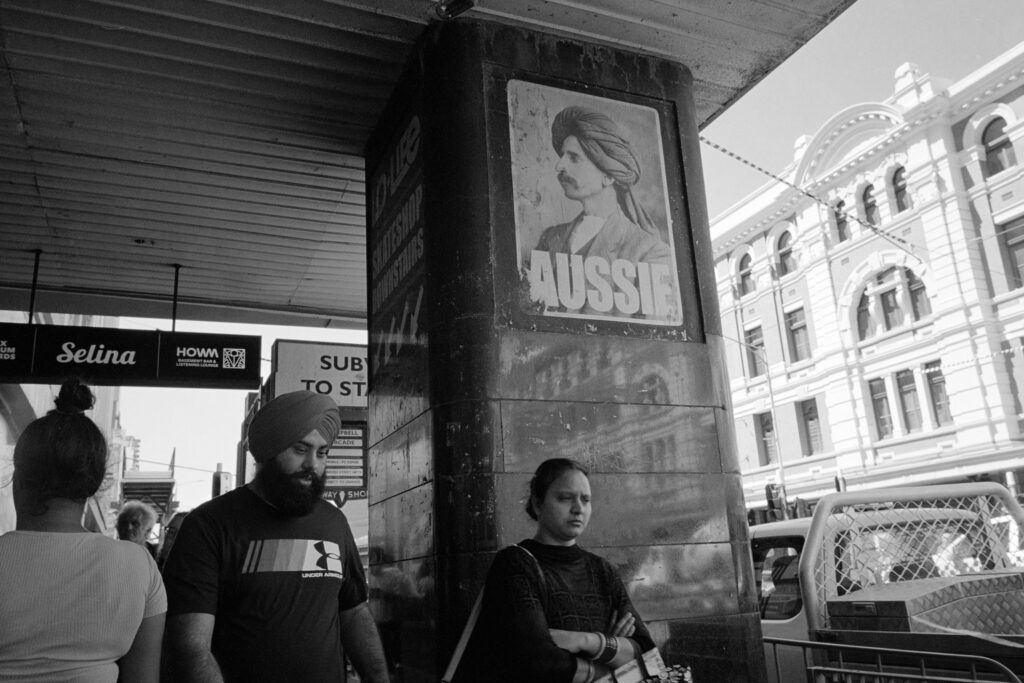
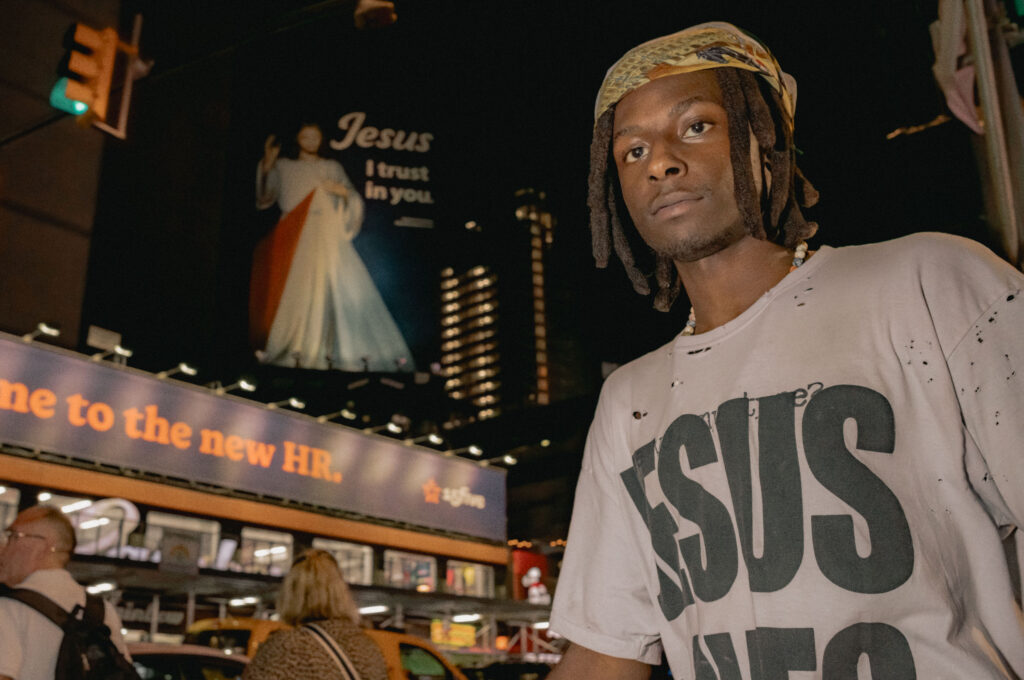
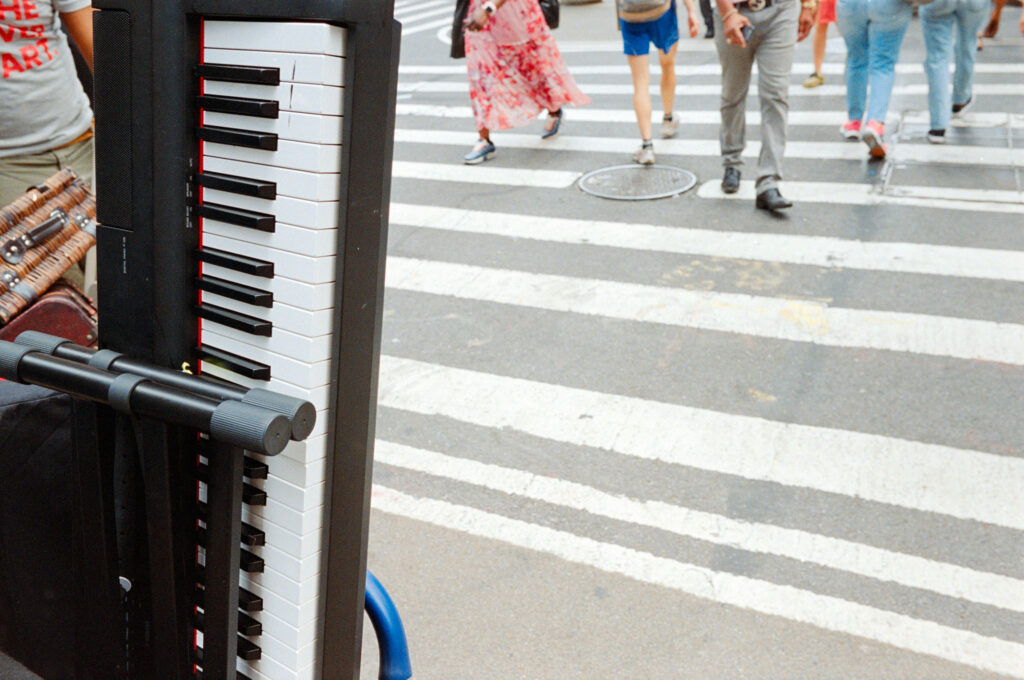
In Synchronicity, ordinary urban environments become sites of visual alignment and discord. The series examines how visual elements converge in ways that expose the ordered chaos and synchronicity underlying city spaces. Through careful framing, these everyday junctions transform into juxtapositions—where symmetry meets disruption, and familiar elements take on unexpected resonance.
The work explores how alignment operates simultaneously as both physical occurrence and metaphoric principle in urban environments. Each image captures a moment where the city’s visual vocabulary—its angles, edges, and intervals—generates its own semantic system. These alignments reveal how municipal order and organic development interact to create a complex urban syntax that shapes how we read and navigate shared spaces.
Beyond documenting visual coincidence, the series considers how these alignments mirror broader patterns of urban life. Like the ancient practice of reading meaning in the arrangement of stars, these modern confluences invite us to find significance in how city elements converge and diverge. Through this examination of urban alignment, the work reveals how the built environment’s apparent randomness contains hidden grammars of form and meaning that structure our experience of collective space.